Uncategorized
Wale Tinubu’s Oando acquires 100% shares of Nigeria Agip Oil Company from ENI


Serial entrepreneur and Group Chief Executive Oando Group, Jubril Adewale Tinubu, has no doubt earned a name for himself through his visionary contributions to Africa’s economy.

It is not for mean achievement that the man is rated among Nigeria’s high- flying tycoons. The billionaire is unarguably a visionary whose contributions to the nation’s economy would forever be cherished. His record of incisive investment and vision to reshape Nigeria’s business climate remains unequal.
For Tinubu, a major player in the oil sector whose intimidating profile dwarfed many of his contemporaries, cutting deals comes as easy as a hot knife slices through butter.
Multiple times, he has proved to the world that he is indeed a genius and a cognoscenti when it comes to investment and the art of making money.
His company Oando Plc a leading indigenous energy solutions provider has entered an agreement with ENI for the acquisition of 100% of the shares of Nigerian Agip Oil Company Limited (NAOC Ltd).
The completion of the acquisition is subject to Ministerial Consent and other required regulatory approvals.
The firm announced this in a statement today on its website.
- The statement reads, “Eni announces the signing of an agreement with Oando PLC – Nigeria’s leading indigenous energy solutions provider listed on both the Nigerian and Johannesburg Stock Exchange – for the sale of Nigerian Agip Oil Company Ltd (NAOC Ltd), the wholly Eni-owned subsidiary focusing on onshore oil & gas exploration and production in Nigeria, as well as power generation.
- “NAOC Ltd is present with interests in Nigeria across 4 onshore blocks (OML 60, 61, 62, 63), which it operates on behalf of NAOC JV (operator NAOC Ltd 20%, Oando 20%, NNPC E&P Limited 60%), in the Okpai 1 and 2 power plants (with a total nameplate capacity of 960MW), and in two onshore exploration leases (OPL 282 and OPL 135, respectively 90% and 48%) for which it also holds operatorship.”
The company is however not selling its 5% stake in the SPDC JV operated by Shell.
Eni to still maintain a presence in Nigeria
However, the company noted that it will still maintain its presence in Nigeria through the Nigeria Agip Exploration (NAE) and Agip Energy. It also said the transaction is in line with the company’s 2023-2026 plan
- It said, “Eni continues to operate in the country focusing on operated offshore activities. Participation in operated-by-others assets, both onshore and offshore, and Nigeria LNG will remain in Eni portfolio too.”
- “The transaction is consistent with the Eni 2023-2026 Plan.
- “The Upstream will supplement the core organically led growth with inorganic high-grading activity, adding resources with incremental value while divesting resources that can offer greater value and opportunities to new owners.”
- “The closing of this transaction is subject to, inter alia, the authorization of all relevant local and regulatory authorities.”
However, finalising the sale is subject to approval of all relevant local and regulatory authorities, it said.
Details of the deal
In a press release signed by Company Secretary, Ayotola Jagun, the acquisition would see Oando’s interests in OMLs 60, 61, 62, and 63 increase from 20% to 40%. Here’s an excerpt from the press statement…
- The transaction increases Oando’s current participating interests in OMLs 60, 61, 62, and 63 from 20% to 40%.
- It increases Oando’s ownership stake in all NEPL/NAOC/OOL Joint Venture assets and infrastructure which include forty discovered oil and gas fields, of which twenty-four are currently producing, approximately forty identified prospects and leads, twelve production stations, approximately 1,490 km of pipelines, three gas processing plants, the Brass River Oil Terminal, the Kwale-Okpai phases 1 & 2 power plants (with a total nameplate capacity of 960MW), and associated infrastructure.
- Based on 2021 reserves estimates, Oando’s total reserves stand at 503.3MMboe and the transaction will deliver a 98% increase.
- The transaction also grows Oando’s exploration asset portfolio through the acquisition of a 90% interest in OPL 282 and 48% interest in OPL 135.
- NAOC Ltd participating interest in SPDC JV (Shell Production Development Company Joint Venture – operator Shell 30%, TotalEnergies 10%, NAOC 5%, 2 NNPC 55%) is not included in the perimeter of the transaction and will be retained in Eni’s portfolio.
More Opportunities for Oando
Commenting on the acquisition, the Group CEO of Oando Plc, Wale Tinubu CON said the deal would help unlock more opportunities for the energy company.
Wale Tinubu also indicated that the acquisition highlights the important role indigenous companies will play in the future of the Nigerian upstream sector. He said:
- “The synergies created by this acquisition will unlock unparalleled opportunities for us to re-align expectations, enhance efficiency, optimize resource allocation, and significantly increase production.
- Furthermore, it is in alignment with our strategy of acquiring, enhancing, appraising, and efficiently developing reserves. Today’s announcement is not just an important milestone for the future of Oando; it brings to bear the important role indigenous actors will play in the future of the Nigerian upstream sector.
- Having achieved this significant milestone, we look forward to closing the transaction and harnessing the full potential of the enhanced platform to accrue value for our local communities, stakeholders and shareholders.”
What You Should Know
Nigerian Agip Oil Company (NAOC) is Eni’s subsidiary operating in the land and swamp areas of the Niger Delta. It operates under a joint venture agreement, popularly referred to as the NAOC JV.
The NAOC JV includes the Nigerian Government, represented by the Nigerian Petroleum Development Company (NPDC), with 60% interest. The other JV partners are NAOC (20%), and Oando (20%).
More insights
In the year 2022, these four OMLs collectively contributed 24,000 barrels of oil equivalent per day to Eni’s net production. The extracted resources are directed towards the Obiafu-Obrikom facility and the Brass terminal.
Eni further exports a significant portion of the gas produced from these licenses to the Nigeria LNG (NLNG) plant, where the company maintains a 10.4% interest.
Additionally, a portion of the gas supply is directed to the Okpai plant, and another open cycle facility located in Rivers State.



Prophet Israel Oladele of the Celestial Church of Christ, Genesis Global International Parish, has unveiled plans for the Luli Prayer Conference 2026, calling on members of the Celestial Church of Christ worldwide to embrace peace, unity and fervent prayers for Nigeria.
The Global Prophet made the announcement during a media briefing in Lagos, where he highlighted the spiritual significance of September 29, the founding day of the Celestial Church of Christ worldwide, describing it as a moment for thanksgiving, renewal and collective intercession.
According to him, this year’s conference will hold on September 29, 2026, at Genesis Global City, Alakuko, Lagos, bringing together Celestials, Christians and people of other faiths for a day of worship and prayer.
Prophet Oladele said the 2026 edition would place particular emphasis on praying for Nigeria as the country approaches another election cycle.
He noted that the church has a divine responsibility to continually seek God’s intervention for the nation’s peace, stability and progress, adding that the conference would extend beyond celebration to become a platform for prayers for Nigeria and the world.
“The Luli Prayer Conference is not just a celebration; it is a divine gathering where we unite in thanksgiving and seek God’s intervention for our nation and humanity,” he said.
The cleric also made a passionate appeal for unity within the Celestial Church of Christ, urging members across different parishes and regions to recognise their shared spiritual heritage.
He stressed that all Celestials are bound together by the legacy of the church’s founder, Reverend Samuel Bilewu Joseph Oshofa, whose vision continues to define the identity of the worldwide church.
According to Prophet Oladele, differences among members should never overshadow the common foundation laid by the founder, as unity remains essential to preserving the church’s mission.
He described Reverend Oshofa’s legacy as a rallying point capable of bringing together Celestials across the globe, regardless of branch, location or personal differences.
Looking ahead, the Global Prophet announced that the 2027 Luli Prayer Conference would coincide with the 80th anniversary of the Celestial Church of Christ, promising what he described as an “explosive” global celebration.
He said preparations for the landmark anniversary would begin immediately after this year’s conference, with activities expected to unite Celestials from around the world in celebrating eight decades of the church’s existence.
Prophet Oladele reiterated that preserving the unity of the Celestial family remains vital to honouring the vision of Reverend S.B.J. Oshofa and ensuring the continued growth of the church worldwide.
He concluded the briefing by urging members to embrace their shared identity, work together in love and continue praying for the peace and prosperity of Nigeria.
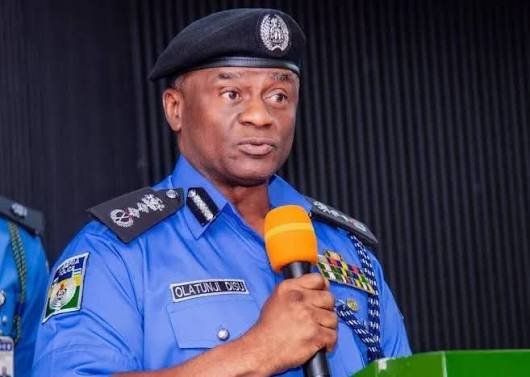
Inspector-General of Police Olatunji Disu has urged Nigerians to exercise restraint when recording police officers, describing the indiscriminate filming of officers as “very, very demoralising” to the force.
Disu made the remarks during a meeting with the leadership of the Nigerian Bar Association in Abuja, where he expressed concern that some Nigerians had begun recording police officers in situations beyond their official duties, including while eating at restaurants.
The IGP, however, acknowledged that citizens have a right to record police officers performing their duties in public. He urged Nigerians not to use such recordings to turn police encounters into social-media skits or entertainment.
The comments followed a March 17, 2026 judgment by the Federal High Court in Warri, Delta State, which affirmed the constitutional right of Nigerians to record police officers carrying out their duties in public spaces.
Justice Hyeladzira Nganjiwa, in the judgment, held that citizens could record police officers during stop-and-search operations and other public interactions for purposes including documenting and reporting their conduct.
The court also held that officers should wear visible identification, including their names and force numbers, while carrying out public duties.
The judgment further restrained police officers from harassing, intimidating or arresting citizens simply for recording their activities in public, or confiscating their devices for that reason.
The court awarded ₦5 million in damages over the violation of the applicant’s fundamental rights and a further ₦2 million in litigation costs.
The case was filed by lawyer Maxwell Nosakhare Uwaifo, who said he attempted to record an encounter with men he believed to be police officers during a stop-and-search operation along the Sapele Roundabout while travelling from Benin to Warri in May 2025.
According to the case, the officers allegedly threatened to arrest him and demanded that he stop recording. Uwaifo argued that citizens have a constitutional right to document the conduct of law enforcement officers performing public duties.
The court’s ruling established a distinction between legitimate documentation of police activity and physical interference with police operations. Citizens can record officers carrying out their duties in public, but the right does not extend to obstructing or interfering with lawful police operations.
Following the IGP’s recent comments, the Nigeria Police Force clarified that Disu was not seeking to ban citizens from recording officers.
Force New Media Officer Aliyu Giwa said the concern was about the misuse of recordings, particularly when police encounters are deliberately turned into entertainment or used to ridicule officers.
Giwa said responsible recording could benefit both citizens and police officers by providing evidence in cases of alleged misconduct while also helping to protect officers against false allegations.
The controversy has therefore centred on how the constitutional right should be exercised, rather than whether citizens possess the right to record police officers in public.

Nigeria’s press freedom environment remains under significant pressure, with journalists and other citizens facing arrests, harassment, intimidation and other restrictions on civic participation.
A 2025 Journalism and Civic Space Status Report by the Wole Soyinka Centre for Investigative Journalism documented 245 verified civic-space violations between January and December 2025, based on systematic monitoring of reports from 54 media organisations.
The report, titled Silenced Voices, Shrinking Space: Civic Freedoms Under Pressure, found that state actors were involved in 219 of the 245 incidents, with the Nigeria Police Force linked to 118 of those cases.
The violations covered more than attacks on journalists alone. They included restrictions affecting citizens, journalists and broader democratic participation, with arrests, detention, harassment and other administrative, legal and institutional measures among the documented forms of infringement.
The report recorded 145 non-violent incidents, representing 59.2 per cent of the total. Arrests accounted for 49 of those cases, while detention accounted for 21 and harassment for 15.
The findings also highlighted difficult working conditions for journalists, with stakeholders raising concerns about threats from state actors, politicians and political party agents.
Participants at a stakeholder dialogue accompanying the report’s presentation also pointed to low pay, insecure employment and economic dependence within parts of the media industry as factors that can weaken journalists’ ability to resist pressure and report independently.
A separate 2025 annual report by Media Rights Agenda documented 86 incidents involving attacks against journalists, media organisations and freedom of expression rights across 27 states and the Federal Capital Territory.
The report recorded arrests and detention as the most common form of violation, with 38 cases. It also documented 21 cases of assault and battery, as well as two killings, one involving a journalist who was killed in the line of duty.
The Nigeria Police Force was identified as the alleged perpetrator in 41 of the 86 cases recorded by Media Rights Agenda, accounting for nearly half of the incidents in its dataset. The organisation also said none of the documented cases resulted in a successful investigation or prosecution of perpetrators.
The wider picture is also reflected in international press freedom assessments. Reporters Without Borders currently describes Nigeria as one of West Africa’s most dangerous and difficult countries for journalists, citing monitoring, attacks and arbitrary arrests. Its 2026 World Press Freedom Index placed Nigeria 112th out of 180 countries, compared with 122nd in 2025.
The Committee to Protect Journalists has similarly documented arrests, attacks and harassment involving journalists in Nigeria. In a 2026 letter to President Bola Tinubu, the organisation said it had documented numerous cases of journalists being detained and mistreated, while also citing data from Nigerian press freedom organisations.
The WSCIJ report warned that the pressure on civic space has implications beyond individual journalists, as restrictions on expression and public participation can weaken accountability and democratic engagement.
-
Politics3 years ago
13 Ondo Assembly Members Disown Endorsement of Aiyedatiwa
-
Politics3 years ago
APC Group, Ondo Govt, Quarrel Over Money for Endorsement
-

 Trending News5 years ago
Stop unsavoury, inciting statements – DSS warns
-

 Others5 years ago
Adron Homes Celebrates 10 Years Of Housing Excellence
-

 Humanity5 years ago
President Buhari Commiserates With Ambassador Maureen Tamuno Over The Loss Of Her Father
-

 Others7 years ago
EX- CUSTOMS BOSS, IBRAHIM MERA’S DWINDLING FAME
-

 Business2 years ago
Bigi Carbonated Soft Drinks Treats 40 Consumers to an Epic Easter Movie Hangout
-

 Business2 years ago
Wema Bank Shines at Global SME Finance Forum Conference Awards 2024 …Awarded: • SME Financier of the Year (Africa) • Platinum Award for Best Financier for Women Entrepreneurs (Africa)