
Economy
Women-Led Enterprises in AfCFTA Key to Africa’s Growth, Says Dele Kelvin Oye


Dele Kelvin Oye says women-led enterprises in AfCFTA are vital for Africa’s economic growth, urging targeted support and trade reforms for greater impact

Women-led enterprises in AfCFTA are central to unlocking Africa’s economic potential, according to Dele Kelvin Oye, immediate past chairman of the Organised Private Sector of Nigeria and 22nd president of NACCIMA.
Also read: UK Investment in Africa Surges as Nigeria Attracts New Business Amid US Trade Decline
Speaking at a high-level forum organised by Zenforte and UNDP in Abuja, Oye stressed that women-owned businesses—which make up 40% of enterprises across Africa—are still underutilised drivers of innovation, economic inclusion, and job creation.
“Women-led enterprises are not just an essential part of the continent’s economy; they represent a profound opportunity for growth and innovation,” Oye said in a statement on Monday.
Oye noted that the African Continental Free Trade Area (AfCFTA) presents a transformational platform to empower women-led businesses through market access, competitiveness, and cross-border opportunities.
“By dismantling trade barriers and promoting economic integration, AfCFTA can empower women-led businesses to tap into new markets and significantly contribute to Africa’s economic growth,” he stated.
However, Oye acknowledged that women-led enterprises face multiple hurdles, including:
- Limited access to finance
- Market accessibility issues
- Capacity and skills gaps
He said these limitations hamper women’s ability to navigate trade regulations and scale their businesses across borders.
Addressing Nigeria’s macroeconomic situation, Oye criticised the Central Bank of Nigeria’s decision not to honour $2.4bn FX forwards, warning that such actions damage investor confidence.
“This unilateral decision has triggered unnecessary litigations and imposed additional financial burdens on already struggling businesses,” he warned.
Oye urged the government to adopt stable and inclusive policies, especially for the private sector, to foster a more resilient economy.
The former NACCIMA president called for sustained partnerships between government, financial institutions, and business leaders to support women-led enterprises.
“We must collaborate on several fronts—improve access to finance, expand market entry, and invest in capacity building,” he added.
Concluding his remarks, Oye reiterated that AfCFTA offers a transformative path for women entrepreneurs.
Also read: Lagos SMEs Export Readiness Programme Empowers Businesses for Global Trade
“By encouraging economic integration and providing targeted support, we can unlock the potential of these businesses and contribute meaningfully to Africa’s development.”


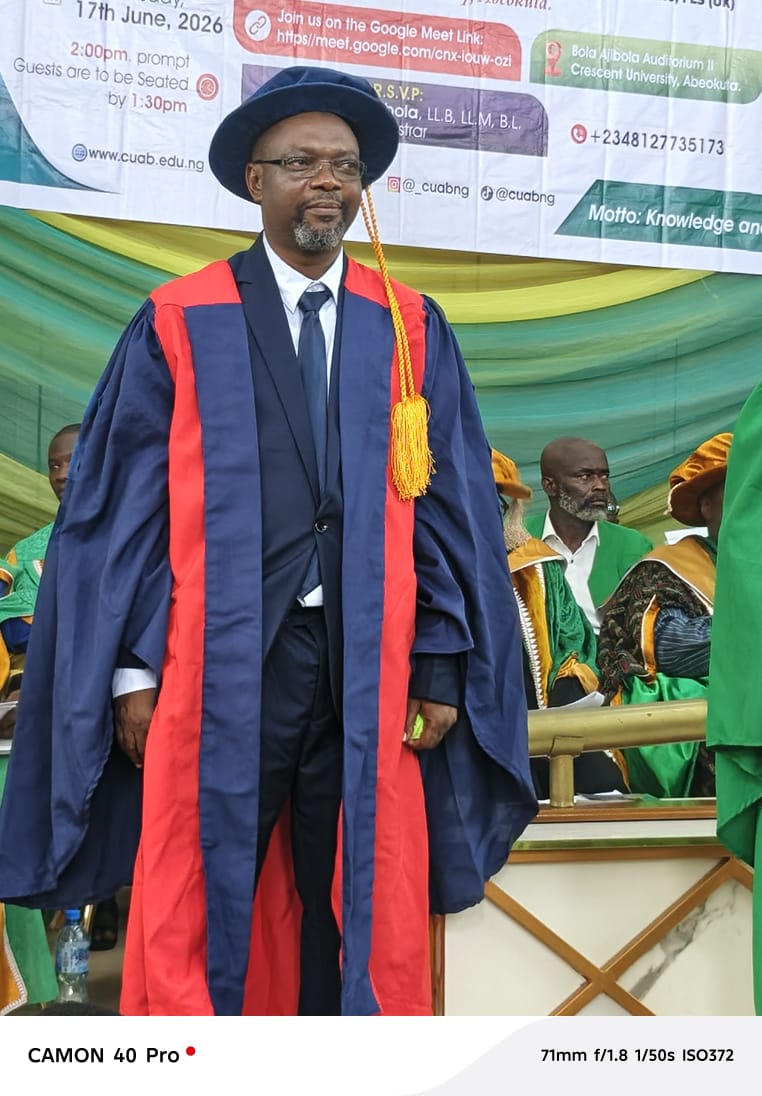
By Daniel Oluwatobiloba Popoola
Professor Rasaki Olufemi Kareem has identified efficient management of resources, rather than their abundance, as the key to Nigeria’s economic transformation and sustainable development.
Speaking at the first ever Inaugural Lecture of the Crescent University, Abeokuta, titled, “Resource Efficiency Vs. Economic Development: Whither Nigeria”, the renowned economist argued that although Nigeria is richly endowed with oil, gas, solid minerals, fertile land and a rapidly growing population, millions of citizens still live in poverty because resources have not been effectively managed and deployed.
Professor Kareem, also the Deputy Vice Chancellor of the University, explained that while Resource Economics focuses on the efficient and sustainable use of scarce resources, Development Economics seeks to improve living standards, reduce poverty and promote economic growth.
According to him, resource efficiency enhances productivity, lowers production costs, stimulates innovation, protects the environment and lays the foundation for long-term development.
Professor Kareem also highlighted the phenomenon known as the Dutch Disease or Resource Curse, noting that countries blessed with abundant natural resources often fail to attain corresponding economic progress because of poor governance, corruption, weak institutions and excessive dependence on resource revenues.
“Nigeria’s challenge is not the absence of resources, but the inefficient management and utilisation of those resources,” he said.
The Professor maintained that sustainable development in Nigeria would depend largely on effective resource management, strong institutions, sound governance, investment in infrastructure, technology and human capital, consistent development policies and active community participation.
Drawing from decades of research in fisheries, agriculture, economic growth, poverty, governance, food security and climate change, Professor Kareem demonstrated that efficient resource use has a direct impact on productivity, economic growth and citizens’ welfare.
He stressed that transparency and responsibility remain indispensable to sustainable development.
“Sustainable economic development can only be achieved when resources are utilised efficiently, transparently and responsibly,” he stated.
The scholar added that resource efficiency is critical to poverty reduction, food security, job creation and the attainment of the Sustainable Development Goals.
As part of measures to reposition the economy, he recommended diversification beyond oil, stronger institutions, improved governance and a more robust anti-corruption framework.
He also advocated increased investment in agriculture and food security, greater support for research, innovation and technology, adoption of sustainable resource management practices and enhanced public awareness on the importance of resource efficiency.
Professor Kareem summed up his message with a call for a paradigm shift in the country’s development strategy.
“Nigeria’s future prosperity depends not on the abundance of its resources, but on how effectively and efficiently those resources are managed for the benefit of all citizens,” he declared.
He urged policymakers and stakeholders to embrace resource efficiency as a pathway to inclusive growth, poverty reduction, food security and sustainable national development.

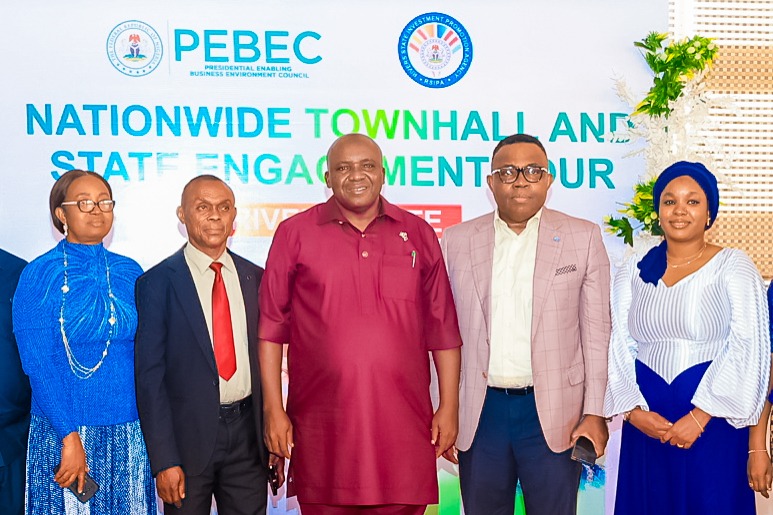
Fubara reaffirms commitment to business-friendly reforms as Rivers State seeks to attract investment, create jobs and boost economic growth

Kano Drainage Crackdown as government halts construction and seals buildings over illegal structures blocking waterways and causing flood risk
-
Politics2 years ago
13 Ondo Assembly Members Disown Endorsement of Aiyedatiwa
-
Politics2 years ago
APC Group, Ondo Govt, Quarrel Over Money for Endorsement
-

 Trending News5 years ago
Stop unsavoury, inciting statements – DSS warns
-

 Others4 years ago
Adron Homes Celebrates 10 Years Of Housing Excellence
-

 Humanity4 years ago
President Buhari Commiserates With Ambassador Maureen Tamuno Over The Loss Of Her Father
-

 Others7 years ago
EX- CUSTOMS BOSS, IBRAHIM MERA’S DWINDLING FAME
-

 Business2 years ago
Bigi Carbonated Soft Drinks Treats 40 Consumers to an Epic Easter Movie Hangout
-

 Business2 years ago
Wema Bank Shines at Global SME Finance Forum Conference Awards 2024 …Awarded: • SME Financier of the Year (Africa) • Platinum Award for Best Financier for Women Entrepreneurs (Africa)