
Trending News
National Assembly to NERC, suspend June electricity tariff hike

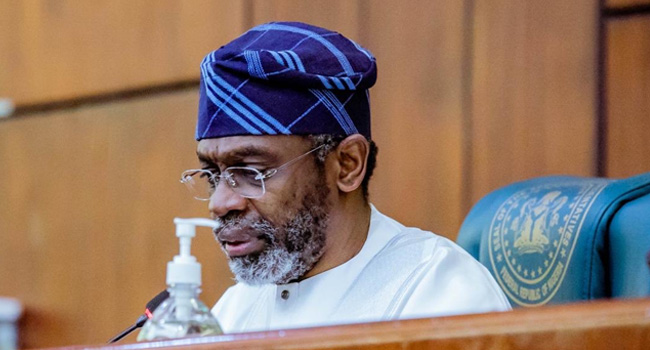
The House of Representatives has directed the Nigerian Electricity Regulatory Commission (NERC) to halt plan to review electricity tariff in June.

The House also condemned electricity distribution companies for transferring debts incurred by former occupants of building to the new occupants or tenants.
During Thursday plenary, the House adopted a motion moved by Aniekan Umanah titled: ‘Call on the Nigerian Electricity Regulatory Commission to Suspend the Proposed Increase in Electricity Tariff’.
Following the adoption of the motion, the House urged the Federal Government to direct NERC to “rescind the decision to further increase electricity tariff proposed for June 2021 in view of the hard times Nigerian masses are currently going through.”
The House further mandated its committees on Power, Poverty Alleviation, and Labour, Employment and Productivity to ensure compliance with the resolution.
Umanah, while moving the motion, noted that the Electric Power Sector Act of 2005 established the NERC with a mandate to license Discos, determine the operating codes and standards, establish customer rights and obligations and set cost-reflective industry tariffs.
The lawmaker also noted that the Act prescribed its funding from 15 per cent of electricity charges paid by customers to the Discos.
He recalled that the NERC, working with the Discos, had increased electricity tariffs five times since 2015, the latest being on January 1, 2021.
Umanah said, “The House is aware that despite those increases, Nigerians have not enjoyed significant improvement in power generation, instead they daily grapple with epileptic services from the Discos and unilateral exploitation in the name of estimated billing arising from non-metering of over 50 per cent of consumers.
“The House observes that poor services by the Discos have impacted negatively on the socio-economic growth of the country as the International Monetary Fund Report of 2020 on Nigeria indicated that the manufacturing sector lost over $200bn to inadequate power supply, while $21bn was said to have been spent by Nigerians on generators within the period under review.
“The House further observes that the Nigerian masses have gone through so much hardship in recent times arising from acts of terrorism, banditry, kidnappings, and farmers herdsmen’s crisis with its toll on agricultural activities, displacement from ancestral homes, loss of loved ones, starvation arising from inability to return to daily occupation and loss of personal properties running into several million of naira.”
The lawmaker added, “The House is concerned that at a time governments all over the world are adopting measures to cushion the devastating effects of the dreaded COVID-19 pandemic on their citizens by providing a wide range of palliatives to losses of loved ones, jobs, businesses and general distortion in the social life, NERC is tinkering with the idea of a further increase in electricity tariff after that of 1 January, 2021, in a country where two-thirds of the 200 million population is grappling with the crippling effects of the pandemic.”
The House also unanimously adopted a motion by Olatunji Shoyinka titled: ‘Need to Investigate Transferred Debts Incurred by Old Electricity Customers to New Users by Distribution Companies in Nigeria’.
The lawmakers consequently resolved to mandate the House Committee on Power to “engage the distribution companies and other relevant regulatory agencies to find a lasting solution and report within four weeks.”



Tinubu audit targets ghost workers and fake agencies as Nigeria confronts costly gaps in payroll, budgets and public-sector governance
News
URGENT APPEAL FOR SUPPORT FOR H.E. ADEBOWALE (DEBO) ADESINA, FORMER NIGERIAN AMBASSADOR TO TOGO.

The former Nigerian envoy to Togo has remained hospitalised in Canada after suffering a massive stroke, with outstanding medical bills exceeding CAD $205,000
-
Politics3 years ago
13 Ondo Assembly Members Disown Endorsement of Aiyedatiwa
-
Politics3 years ago
APC Group, Ondo Govt, Quarrel Over Money for Endorsement
-

 Trending News5 years ago
Stop unsavoury, inciting statements – DSS warns
-

 Others5 years ago
Adron Homes Celebrates 10 Years Of Housing Excellence
-

 Humanity5 years ago
President Buhari Commiserates With Ambassador Maureen Tamuno Over The Loss Of Her Father
-

 Others7 years ago
EX- CUSTOMS BOSS, IBRAHIM MERA’S DWINDLING FAME
-

 Business2 years ago
Bigi Carbonated Soft Drinks Treats 40 Consumers to an Epic Easter Movie Hangout
-

 Business2 years ago
Wema Bank Shines at Global SME Finance Forum Conference Awards 2024 …Awarded: • SME Financier of the Year (Africa) • Platinum Award for Best Financier for Women Entrepreneurs (Africa)