Connect with us

Business

Zenith Bank: Justice Olubunmi Abike-Fadipe Releases Certified True Copy (CTC) of her Judgment, Call Out Fake and Junk Journalist


Published

on

Contrary to the widely reported fake news by some faceless online news platform that Justice Olubunmi Abike-Fadipe of the Ikeja Special Offences Court in his recent judgement allegedly accused foremost financial management in Nigeria, Zenith Bank of fraud and bribery, the astute judge who is bitter with such report have released the original certified True Copy. 

adron lemon friday


In the original certified True Copy, it was confirmed that the respectable Justice never said something of such while delivering her judgement.


According to Justice Olubunmi Abike-Fadipe, all what the online media platforms said she delivered, were all fake and wondered how and where they got their own reports.


The certified True Copy (CTC) of the judgment is now in the open for anyone to see.


These online platforms had reported that the Justice accused Zenith Bank Plc of bribing both the judges and lawyers for 11 years to pervert justice, with several online media outlets alleging that Justice Olubunmi Abike-Fadipe made the claim on Tuesday, March 8, 2022 while delivering judgment in a suit marked LD/ADR/186/2014 between Real Integrated and Hospitality Limited as claimant and Zenith Bank Plc and State Universal Basic Education (SUBEB) as first and second defendants respectively.


One such publication quotes the judge as saying “My recommendation is that Zenith Bank is a fraud and people must be very careful in their dealings with the bank.”


Some of the other quotes read: “Zenith Bank bribed the lawyers in the matter.


“This they have done for 11 years. So many lawyers and judges have been bribed in this matter just perverting justice. What is more embarrassing, the current governor of Central Bank of Nigeria, Godwin Emefiele was the one who came to navigate and begged for the deposit. He has not been able to do anything to Zenith Bank because he was the managing director of the bank at the time of this transaction.”


However, nowhere in the Certified True Copy (CTC) of the judgment that was made available to credible news platforms showed that the Judge did not make such statements.


While the Judge did make a scathing criticism of the bank, Justice Fadipe did not accuse Zenith bank of bribing judges and lawyers for 11 years to fraudulently alter the course of justice, as claimed by the online mediums.


There was also no mention of the Central Bank of Nigeria, Godwin Emefiele in the CTC of the judgment.


The judge’s comments, as contained in the judgement, include: “The 1st defendant has been the beneficiary of the malevolent game of chess it plunged both claimant and the 2nd defendant into, holding the sum of N872,780,552.84 in its custody without paying interest thereon from 17th February 2011 until 2nd February 2016 when the Court ordered that the money be paid into an interest yielding account in the names of the claimant and the 2nd defendant pending determination of the suit, which order was curiously varied by the consent of all the parties on 20th September 2016 so that the money remained in the 1st defendant’s custody without interest.


“The act of the 1st defendant was unconscionable and detrimental to the goodwill of the claimant and its trade credit with its customers. It was a deliberate and malicious act against the interest of the claimant and the 1st defendant continues to enjoy the largesse in bad faith. Exhibits C4 and C5 clearly state that the funds to be transferred were to offset part of the claimant’s indebtedness for the importation of dictionaries, but the 1st defendant was impervious to this need. I therefore find and hold that the claimant is entitled to substantial damages against the 1st defendant for the injury caused to it.”


The judge made the comments while granting the claimants four reliefs.


The reliefs are that the 1st defendant (Zenith) was in breach of contract when on 7th October, 2011 it refused the claimant to draw from its account No. 1012465427 “despite the fact that the said account was in enough credit to cover the withdrawals sought to be made on the said date.”


The judge further restrained the bank “from disturbing or refusing the claimant from operating its account No. 1012465427 in the 1st defendant’s bank or from honouring the claimant’s transfer or payment obligations to third parties from the said account as long as same is in credit.”


It granted an “interest of 15% per annum on the sum of N872,780,552.84 from 7th October 2011 when the 1st defendant denied the claimant access to the funds in its account which was in credit at that date till judgment.


“Interest on the judgment sum at the rate of 10% per annum from judgment date till final liquidation thereof.


“Costs of this action in the sum of N2.5million.”


Of a truth, Zenith Bank has had a record of open and transparent operations, this earned the organization four SERAS CSR Africa Awards that include “Best Company in Reporting and Transparency”, “Best Company in Infrastructure Development”, “Best Company in Gender Equality and Women Empowerment”, and the coveted “Most Responsible Organisation in Africa”.


In recognition of its track record of excellent performance, Zenith Bank was voted as Best Commercial Bank in Nigeria in the World Finance Banking Awards 2021, Best Bank in Nigeria in the Global Finance World’s Best Banks Awards 2020 and 2021, Bank of the Year (Nigeria) in The Banker’s Bank of the Year Awards 2020, and Best in Corporate Governance ‘Financial Services’ Africa 2020 and 2021 by the Ethical Boardroom. Also, the bank emerged as the Most Valuable Banking Brand in Nigeria in the Banker Magazine Top 500 Banking Brands 2020 and 2021, Number One Bank in Nigeria by Tier-1 Capital in the “2021 Top 1000 World Banks” Ranking by The Banker Magazine and the Retail Bank of the year at the BusinessDay Banks and Other Financial Institutions (BOFI) Awards 2020 and 2021.


Zenith Bank has continued to distinguish itself in the Nigerian financial services industry through superior service offerings, unique customer experience and sound financial indices. The bank remains a clear leader in the digital space with several firsts in the deployment of innovative products, solutions and an assortment of alternative channels that ensure convenience, speed and safety of transactions.


9 / 100 SEO Score

Business

Wale Tinubu Leads Oando’s Return to Operating Profit as Revenue Hits ₦2.78tn

Published

on

Oando Plc, under the leadership of its Group Chief Executive, Jubril Adewale Tinubu, has recorded a significant improvement in its operating performance, returning to profitability at the operating level as revenue rose to ₦2.78 trillion in the first nine months of 2026.

adron lemon friday

The indigenous energy company reported revenue of ₦2.776 trillion for the nine months ended September 30, 2026, representing a nine per cent increase from the ₦2.541 trillion recorded during the corresponding period of 2025.

The latest unaudited results, released on October 30, also showed a substantial recovery in gross profit, which increased to ₦174.5 billion from ₦29.8 billion in the previous year.

One of the most notable developments was the company’s return to operating profit. Oando recorded an operating profit of ₦159.7 billion, reversing the operating loss of ₦109.7 billion reported in the corresponding period of 2025.

The improvement reflects stronger performance across its operations, supported by higher production volumes, improved realised prices and the absence of a significant fair value loss recorded in the previous year.

The figures provide an indication of the progress made by the company as it continues to pursue its expansion and operational efficiency objectives under Tinubu’s leadership.

Oando’s production performance also improved during the reporting period. Average daily production increased by 14 per cent to 42,985 barrels of oil equivalent per day, compared with 37,614 barrels in the corresponding period of 2025.

The growth was supported by higher output from crude oil, natural gas and natural gas liquids operations.

The company also reported a 22 per cent reduction in production operating costs, which fell to $15.39 per barrel of oil equivalent from $19.67 recorded a year earlier.

Facility uptime improved to 96.1 per cent from 85 per cent, indicating greater reliability across its production infrastructure.

These improvements reflect the impact of drilling activities, workover programmes and efforts to restore previously constrained facilities. Oando said the measures helped increase production and improve operational efficiency across its enlarged asset base.

During the period, the company generated ₦285 billion in cash from operations and invested ₦110.7 billion in capital expenditure, with a significant portion directed towards drilling activities across its operated OML 60–63 assets.

Its seven-well drilling programme for 2026 also progressed, with two new wells completed and brought on stream, while workovers and additional drilling activities continued.

Oando further reported an improvement in its debt position, with total borrowings declining by 20 per cent from ₦2.70 trillion at the end of December 2025 to ₦2.16 trillion as of September 30, 2026.

Net debt also fell by ₦286 billion to ₦1.99 trillion during the nine-month period.

The reduction forms part of the company’s broader capital management strategy, which is aimed at lowering acquisition-related debt, reducing financing costs and strengthening its balance sheet.

Despite the stronger operating performance, however, Oando’s profit after tax declined by 47 per cent to ₦106.5 billion, compared with ₦201.3 billion recorded in the corresponding period of 2025.

The company attributed the decline largely to the swing from net finance income in the previous year to net finance costs in 2026, alongside the continuing burden of acquisition-related debt.

Its results showed finance costs of ₦244.2 billion during the period, while the company also recognised a tax credit of ₦181.1 billion arising from the reversal of previously recognised tax provisions.

The figures underline the distinction between Oando’s improved operating performance and the financial pressure it continues to face from its debt obligations.

Nevertheless, the return to operating profitability, higher production, lower unit operating costs and declining borrowings represent important developments in the company’s financial and operational position.

For Tinubu, who has remained central to Oando’s corporate transformation, the latest results provide further evidence of the company’s efforts to consolidate its position in Nigeria’s energy industry and expand its presence across Africa.

The company has also outlined plans to continue its seven-well development programme, sustain production reliability and strengthen its financial position through an equity-raising initiative.

With its operating performance improving and debt reduction remaining a priority, Oando’s next challenge will be to translate its production and revenue growth into stronger bottom-line earnings while managing the cost of financing its expansion.

66 / 100 SEO Score
Continue Reading

Business

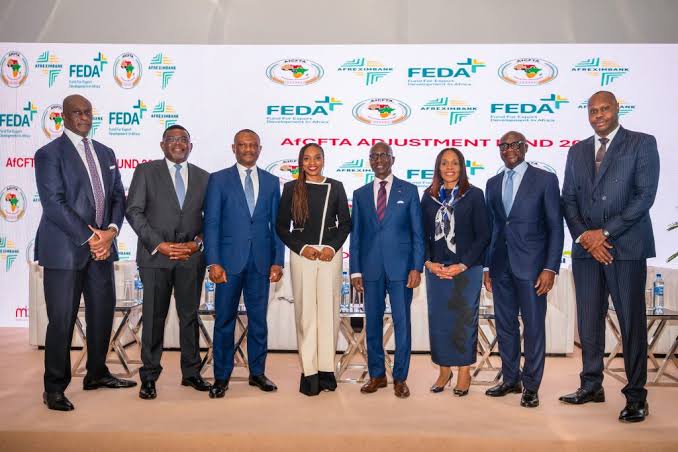
Ehi Braimah Urges Afreximbank, AfDB to Drive AfCFTA

Published

on

Ehi Braimah urges Afreximbank and AfDB to strengthen Africa’s economic integration through trade finance, infrastructure and industrial investment

(more…)

adron lemon friday

69 / 100 SEO Score
Continue Reading

Business

Nigerian Breweries Celebrates 80 Years With N80m Reward

Published

on

Nigerian Breweries celebrates its 80th anniversary with an N80m consumer reward initiative and the unveiling of Legendary Christmas 2026

(more…)

adron lemon friday

75 / 100 SEO Score
Continue Reading

Trending News