Connect with us

Politics

Major Osun Political Defections Hit PDP, Bolstering APC

Published

on

PDP Response to ADC Coalition

Over 100 members from the Omoluabi Progressive Group and the PDP officially joined the APC in Ejigbo, Osun State, marking significant Osun Political Defections

adron lemon friday

A significant Osun Political Defections event occurred over the weekend in Osun State, as more than 100 members from the Omoluabi Progressive Group, led by former Governor Rauf Aregbesola, officially defected to the All Progressives Congress (APC).

Also read: 2026 Guber Race Heats Up: Osun APC Rocked by Allegations and Counter-Allegations

This strategic political realignment also saw scores of Peoples Democratic Party (PDP) loyalists join the APC in Ejigbo Local Government Area, indicating a notable shift in local political allegiances and strengthening the APC’s grassroots presence.

The official reception for these new members, marking a major setback for both the Omoluabi Group and the PDP, was organised by the Ejigbo Local Government APC.

The event took place at the Ilupeju Multipurpose Hall in Ejigbo, Osun State, drawing a considerable crowd and signalling a growing momentum for the APC in the region.

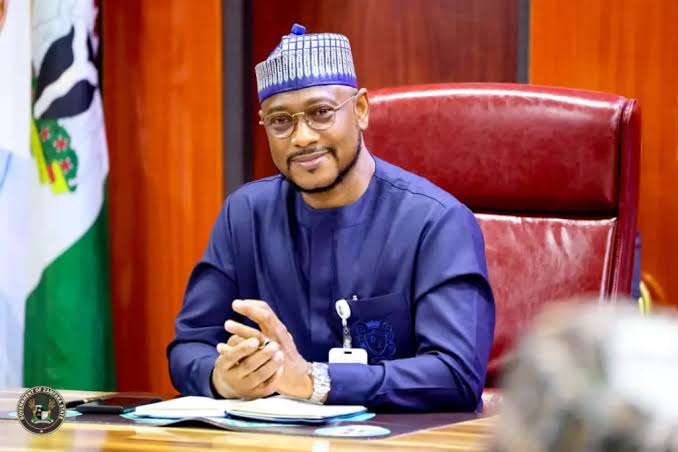
Senator Mudashiru Husain, the Ejigbo APC Apex Leader, officially received the hundreds of defectors into the party. He promised fairness and inclusivity within the APC fold.

Senator Husain expressed his delight and awe that the party continues to attract more members and increase its ranks, despite currently being in the opposition in Osun State. This growth highlights the party’s continued appeal.

The frontline gubernatorial aspirant further emphasised that the defectors had made the most astute political decision.

He asserted that the APC remains the sole party deeply connected with social welfarism, economic transformation, and human capital development, citing President Bola Ahmed Tinubu’s exemplified leadership as a model for these principles.

According to Senator Husain, “The unprecedented number of people cross-carpeting from PDP and particularly, Omoluabi Progressive Tendency, is a product of purposeful and collective leadership for which I’ve been pushed forward to spearhead by other Ejigbo progressive leaders as the Apex Leader. Our teamwork has paid off and it’s just starting.” This indicates a coordinated effort.

He articulated the core mission of the Ejigbo progressive family. “Ours in Ejigbo progressive family is to unite ourselves as a strong force behind our leader, former Governor Adegboyega Oyetola and ensure we continue to gain more grassroots mobilisers that can put us ahead of other political parties in the upcoming 2026 gubernatorial election, and especially, for the success of our father, His Excellency, President Bola Ahmed Tinubu.”

This underscores strategic planning for future elections.

Senator Husain urged all the new defectors to remain steadfast and dedicated to the progressive ideals of the APC.

He assured them of the party’s continued commitment to fairness and inclusivity, promising benefits for all members. This welcome message aims to integrate the new members seamlessly into the party structure.

Addressing his own governorship ambition, he opined, “On my governorship ambition, we should first know that it’s not a do or die affair and that our party is one with rules of engagement as well as strong leadership.”

He further stated, “We’ve been doing what’s expected of us as required by the tradition and ideals of our party – consultation, visitation and many close meetings.” This showcases his disciplined approach to his aspirations.

He added, “While I can tell you that I’m highly qualified for the top job in terms of leadership experience, loyalty to the progressive tendency and necessary grassroots support base.”

Expressing confidence, he concluded, “Therefore, I’m optimistic I will be the one to bear the flag of our party and confident to lead APC to victory come 2026 so as to re-write the many wrongs of Governor Ademola Adeleke in government. With this, I can then be able to replicate the Renewed Hope agenda of Mr. President in Osun.”

In their separate remarks, key local APC officials acknowledged the new additions. Honourable Ayegbayo Gbolahan, Chairman of Ejigbo Local Government, his counterpart from West LCDA, Honourable Olayanju Kolapo, and Ejigbo LG APC Chairman, Honourable Lateef Adegoke, all expressed their appreciation to the defectors for their thoughtful decision.

They collectively pledged their unwavering commitment to tirelessly working for the party’s growth ahead of future elections.

Speaking on behalf of the Omoluabi defectors, Honourable Wole Olajire articulated their reasons for returning to the mainstream progressive family.

He stated their decision was “hinged on their decision to leave uncertainty for certainty,” while simultaneously declaring their unwavering allegiance to the APC. They pledged active mobilisation for the party’s success in 2026 and beyond, highlighting a significant element of these Osun Political Defections.

The leader of the PDP defectors, Honourable Kareem Mubarak, also offered his remarks.

He expressed his profound dissatisfaction with the ruling PDP, citing its failure to uphold internal democracy and deliver good governance.

Also read: The Untold Story Of Degeneration Of Osun APC Crisis By Aladelola Adisa

He strongly emphasised that the APC remains a party that consistently prioritises socio-economic development and high-quality leadership that benefits all citizens, providing a clear rationale for their move.

69 / 100 SEO Score

News

Zamfara Governor, Dauda Lawal Shakes Up Cabinet, Moves Budget Commissioner to Education

Published

on

Zamfara

Dauda Lawal cabinet reshuffle Zamfara sees key commissioner redeployments aimed at strengthening governance and improving service delivery across ministries (more…)

73 / 100 SEO Score
Continue Reading

Politics

Rescue Mission 2.0: Why Zamfara Must Return Governor Dauda Lawal in 2027

Published

on

By

Oladapo Sofowora

adron lemon friday

The scorching sun rises over Gusau, Zamfara State, casting golden rays of light on a city that once knew only bleak shadows. Construction cranes, heavy-duty lifting machines adorn the skyline like mechanical giraffes, their arms dangling gracefully as they lift heavy steel and pour concrete into place. The rhythmic sound of hammers, rammers, and drilling machines, and the steady hum of generators fill the air; the unmistakable symphony of a state being reborn becomes all too visible. This is the vivid picture of the Zamfara of today made possible by the Chief Rescuer; Governor Dauda Lawal. As Machiavelli said; “Whoever wishes to foresee the future must consult the past; for human events ever resemble those of preceding times.” But to understand where it is going, one must first understand where it has been.

Just over three years ago, Zamfara State was bleeding dry from every deep cut one can ever imagine. Schools were roofless shells where children sat on bare floors, their dreams of education slowly suffocating under the weight of total neglect. Hospitals were little more than abandoned buildings, their empty beds and peeling paint serving as grim monuments to a government that had abandoned its people. Bandits roamed freely across the state, burning villages, kidnapping children and killing with sheer impunity. Civil servants hadn’t been paid in months and retirees from as far back as 2011 were still waiting for their hard-earned gratuities. Clean portable water became a luxury. There was no ray of hope in the distance. Zamfara had become a byword for failure, poor, a cautionary tale whispered across Nigeria about what happens when governance collapses. Like the true messiah, God’s gift to the state Governor Dauda Lawal came into the picture to rewrite the story of the state.

When he took office on May 29, 2023, Governor Lawal inherited a state in ruins, people in despair and a system that had ceased to function. But rather than tiptoe around the crisis by offering empty promises, he knew he couldn’t keep, he did something unprecedented. He declared states of emergency on all aspects of the nonfunctional state. On November 14, 2023, he declared a State of Emergency in Education. On January 30, 2024, he declared a State of Emergency in Health. Some called it drastic. He called it the necessary action.

Across the length and breadth of Zamfara State, a revolution began. In the dusty villages of Bukkuyum, in the crowded neighbourhoods of Gusau, in the remote hamlets of Maru and Anka, the governor’s rescue mission began to take shape. Over eight hundred schools have been rebuilt or renovated, their fresh paint and new roofs standing as defiant statements that education matters in Zamfara. The Adolescent Girls Initiative for Learning and Empowerment project alone has renovated 174 schools in its first phase, with forty more already approved for intervention. Solar-powered boreholes now provide clean water in 115 schools, liberating children from the burden of walking miles to fetch water before class. Seven hundred and fifty new toilet units have been constructed, restoring dignity to students who once had no choice but to relieve themselves in the open. Nearly ten thousand three-seater desks have been provided to children who once sat on cold, hard floors. When his administration discovered that WAEC results from 2018 to 2022 had been withheld because the government hadn’t paid examination fees, he authorised the immediate release of N1.4 billion to clear those debts. Results were released. Futures were restored. Young people who had given up on their dreams of higher education suddenly saw those dreams within reach again. NECO fees were paid for every public-school candidate. Children who had been written off by a failed system were given a second chance.

No achievement has resonated more deeply with Zamfara’s people than the governor’s handling of security. For years, bandits held the state hostage, their reign of terror so complete that entire communities were reduced to ghost towns. Villages burned. Children were abducted from their schools, farmers deserted their farmlands and traders couldn’t trade. The government seemed powerless, reduced to negotiating with terrorists and paying ransoms that only emboldened the criminals more until Governor Lawal took a different approach stating boldly that his administration would never enter into peace deals with terrorists. “We will never negotiate with bandits. We will hunt them down. We will dismantle their networks and we will restore peace to Zamfara.” He said in one of his briefings. Reiterating his commitment to securing the lives and properties of his people as the Chief Security Officer of the State.

In a series of coordinated operations that demonstrated both strategic brilliance and unwavering resolve, security forces neutralised some of the most notorious bandit kingpins in the state and by extension the region. Habibu Sububu, the kingpin who terrorised the entire North West, was eliminated. Kachalla Ali Kawaje, who abducted students from Federal University Gusau, met his Waterloo. Kachalla Jafaru, Kachalla Barume, Yellow Sirajo, Isyaka Gwarnon Daji among others had their reign of terror ended by Governor Lawal’s administration. The governor also invested heavily in security infrastructure, handing over 140 operational vehicles to security agencies and establishing the Community Protection Guards, a volunteer force of local hunters and vigilantes who were trained, equipped and integrated into the security architecture. Weekly Security Council meetings ensured that intelligence was shared, strategies were coordinated and action was swift. For the first time in years, Zamfara’s farmers are returning to their farmland, markets are reopening and children are walking to school without fear of being attacked.

The health sector has undergone an unprecedented transformation. In Maradun, a once-neglected town where the general hospital had become a death trap with its leaky roofs, broken equipment and complete absence of medicines, the facility now stands as a modern healthcare centre where mothers give birth safely and children receive treatment for diseases that once killed them. Maradun is not an isolated case. Hospitals in Maru, Kaura Namoda, Gusau and Anka have all been renovated and upgraded with state-of-the-art equipment. Their pharmacies have been restocked as health workers are being recruited and trained to meet the teeming demands of the state. Medications are now available to the dispensed while lives are being saved daily. Governor Lawal’s vision extends beyond bricks and mortar. The Huriyya Dauda Lawal Sexual Assault Referral Centre, an initiative by the First Lady of Zamfara State; the first of its kind in Zamfara, now provides medical care, counseling and support to victims of gender-based violence. Through partnerships with UNFPA, eighty women have been trained in vocational skills, gaining economic independence and dignity.

Gusau itself is almost unrecognisable from what it was three years ago. New roads cut through the city like arteries of progress. Streetlights brighten neighbourhoods that were once dark and dangerous, where residents lived in constant fear of nighttime attacks. The JB Yakubu State Secretariat gleams with fresh paint and thorough renovations. The Sardauna Memorial Stadium has been restored to its former glory, a source of pride for a state that had forgotten what pride felt like. Clean, potable water flows from taps in communities that had been forced to drink from rivers, their children suffering from waterborne diseases that should have been eradicated decades ago. The Broadcasting Organisations of Nigeria recognised Governor Lawal as Infrastructure Governor of the Year for this transformative work, but for the governor, the award is secondary to the impact on people’s lives.

The governor also tackled the water crisis head-on, building solar-powered boreholes in five communities and constructing earth dams for irrigation. The government invested in mechanised farming and agro-processing, creating jobs and improving food security in a state where hunger had become a weapon of mass destruction. But perhaps most importantly, Governor Lawal demonstrated that governance could be efficient and accountable. He inherited a bloated bureaucracy that was draining the state’s resources without delivering services and he acted decisively, reducing ministries from twenty-eight to sixteen and permanent secretaries from forty-eight to twenty-three. The savings were redirected to the people. Four months of salary arrears were cleared for state and local government workers. Thirteen billion naira in outstanding gratuities was paid to retirees who had been waiting since 2011. Civil servants received a leave grant of ten per cent of their annual salary during Ramadan 2024, a first in Zamfara’s history.

Governor Lawal’s vision is not limited to his current term. He has unveiled a comprehensive ten-year development plan, a roadmap for Zamfara’s transformation built on six pillars: economy, infrastructure, social welfare, human capital, governance and environmental sustainability. The plan has attracted international attention and support, with representatives from the African Development Bank expressing confidence that Zamfara is poised to become a benchmark for transformative economic growth in Nigeria and across Africa. The state is harnessing its potential in agriculture and natural resources leveraging mechanised farming, agro-processing and its value chains to create more jobs, improve food security and reduce poverty-driven insecurity to ensure generational transformation.

In May 2026, APC stakeholders in Zamfara endorsed Governor Dauda Lawal as their consensus candidate for the 2027 governorship election. The endorsement was not a rubber stamp nor a political calculation, but a recognition of the governor’s unprecedented performance and the urgent need for unhindered continuity.

The rescue mission is underway, but it is far from complete. The foundations have been laid, the seeds have been planted, the first fruits have been harvested, but the harvest is not yet fully gathered. Zamfara needs time to consolidate the gains, to build on the progress, to ensure that the transformation is irreversible. Governor Lawal himself makes no apologies for seeking a second term. He has started a rescue mission where he has rebuilt over eight hundred schools, renovated hospitals, restored water, neutralised bandit kingpins, paid salaries and restored dignity. But the job is not done yet, the foundation has been laid, it’s time to build the house. The seeds have been planted, harvest needs time. The race has started, but the finish line is yet to be crossed.

The people of Zamfara have seen what is possible. They have witnessed a governor who keeps his promises, who works tirelessly, who governs with integrity and vision. They have experienced the difference between a leader who serves and a leader who rules. When they go to the polls in 2027, they will not be voting for a man. They will be voting for a shared future, continuity, progress and for Zamfara. Governor Dauda Lawal has already proven himself worthy of their trust. Now it is time for them to allow him to complete the good work he has started. The rescue mission continues; with Governor Dauda Lawal at the helm, Zamfara will continue to rise.

45 / 100 SEO Score
Continue Reading

Politics

Obasa Swears in Oshinowo as First Female Clerk of Lagos Assembly

Published

on

Obasa

Speaker Mudashiru Obasa swears in Adenike Abolanle Oshinowo as Lagos Assembly Clerk, the first female to hold the position, while celebrating the distinguished retirement of Olalekan Onafeko.

(more…)

adron lemon friday

44 / 100 SEO Score
Continue Reading

Trending News