
Opinion
Daniel Bwala, Mehdi Hasan, and the Art of the Political Interview: A Professional Critique


For the past week, Al Jazeera’s Head to Head interview with presidential spokesman Daniel Bwala has dominated social media in Nigeria.
Also read: Tinubu Appoints Ibrahim Masari as Special Adviser on Political Affairs
As a communications professional who preps senior executives for high-stakes interviews like this, it was difficult to watch Mr Bwala fall into one trap after another, but what followed was even worse.
His post-interview press release, in which he asserted that he was “ambushed” by Mehdi Hassan with questions about his past, was a bigger professional misstep than the grilling interview.
In claiming an ambush, Mr Bwala admitted to being unprepared for the scrutiny his current role demands.
For communications professionals, particularly spokespersons representing high-profile political elites, here is my professional take on Bwala’s encounter with Mehdi Hassan and what it teaches us about handling grilling interviews.
Lack of accountability: First, when you are a spokesperson to a major political figure as controversial as President Tinubu, and you have moved from ‘fiercest critic to official defender, everything is on the table the past, the present and the future.
Especially when being interviewed by an astute journalist like Mehdi Hassan on a show designed to be adversarial.
The show is called Head to Head for a reason; it’s ‘gladiatorial’, and Mehdi Hassan is renowned for his prosecutorial style.
Claiming ambush when a journalist pulls your past soundbites signals a lack of accountability and poor preparation.
Flat-out denial of publicly available information: The interview is a classic case study on the popular saying, “The internet never forgets.”
On seven distinct occasions, Mr Bwala denied past utterances or the accuracy of quotes attributed to him, even when confronted with transcripts of his exact words that were publicly available.
These rejections stripped away his credibility, one denial after the other.
Frequent “I am not aware” response: To be well-informed is one of the most potent weapons a spokesperson can take to an adversarial interview.
In addition to denying past utterances, Mr Bwala appeared to simply avoid difficult confrontation by frequently saying, “I am not aware.”
He used the phrase on four different occasions during the interview.
Repeatedly saying he was ‘not aware’ ceded control to the journalist and undermined his authority as a spokesperson, who should be a well-informed representative of the President of Nigeria.
False equivalence: During the interview, Mr Bwala repeatedly made comparisons to normalise some of the criticisms that came up.
Comparing insecurity in Nigeria to street crime in London is not only a false equivalence; it amounts to trivialising a national crisis that risks insulting the families of the over 11,000 victims.
On another occasion, when asked about why he chose to work for President Tinubu, he equated his switching allegiances to Mr Hassan’s career evolution, moving from BBC to Sky and MSNBC.
While comparisons can be a good way to lend credibility to arguments, they can be counterproductive if the analogy is spurious or not used in the right context.
This was largely the case in Mr Bwala’s Head-to-Head interview with Mr Hassan.
A few golden rules for navigating hostile media interviews
1. Build a bridge, not a wall
This is one of the first things spokespeople learn in media interview training.
When confronted with difficult facts about your past utterances, do not build a wall with denials or “I’m not aware” responses.
Neutralise the weaponisation of your past by owning your historical utterances briefly, then use clear transition sentences to bridge to your prepared message e.g., the evolution of your position.
If the journalist keeps bringing up your past criticisms, you keep pivoting to reinforce how and why your position has evolved.
This gives you more control to reinforce the present rather than constantly defending the past.
2. Master your data
As a spokesperson, data is one of the strongest armours you can use against a combative interviewer.
While preparing for the interview, it is important to organise your talking points, but equally important are the data you will present as proof points to support your arguments and counter criticisms.
When challenged about the rising death toll in Nigeria, Mr Bwala could have provided the ratio of combatants killed versus civilian casualties to underscore targeted military operations against terrorists.
The number of schools or pupils successfully relocated to safer locations would be more compelling than simply mentioning the ‘Save the School’ initiative.
The number of families who have benefited from tuition fee grants and cost-of-living interventions would be stronger than simply stating increased foreign reserves.
Vague phrases like ‘context matters’ don’t work in tough intellectual debates. Specific, verifiable metrics do.
3. Question the methodology, not facts
Instead of saying the data of a poll was derived from “drunken people”, as Mr Bwala did, challenge the methodology or question the bias of the source if you have grounds for such. For example, you could say something like: “While we respect the work of Amnesty International, their methodologies often overlook the nuanced security challenges of Northern Nigeria.”
4. Prepare! Prepare! Prepare!
Preparation is the key determinant of how your media interview will go.
It is not only about gathering information, but also about boosting confidence.
Journalists like Mehdi Hassan prepare obsessively for high-stakes political interviews, and you must match that energy by conducting a forensic audit of your past to anticipate your vulnerabilities.
Never assume that you will be treated with deference, as most Nigerian officials often expect.
Stay humble but firm in standing your ground when the grilling starts.
Overall, as a spokesperson, you cannot always control the questions you get asked, so you must focus on controlling your responses.
If you don’t like to be ambushed with difficult questions, then you aren’t ready to represent a president.
Also read: Ogun @ 50: The Daniel Era — Policies, Progress and Political Legacy
And more importantly, you aren’t ready for the scrutiny of 200 million Nigerians.


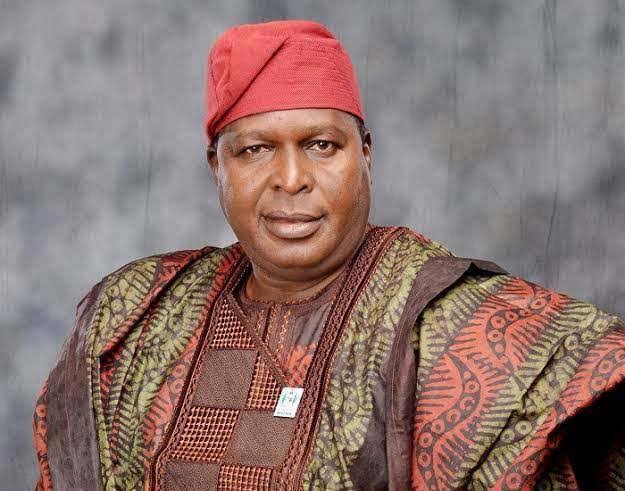
Former Director-General of the National Council for Arts and Culture (NCAC), Otunba Olusegun Runsewe, has warned against the increasing misuse of Artificial Intelligence (AI) on social media.
Runsewe said AI was not inherently harmful but could be exploited to misinform, disinform and spread fake narratives, thereby posing threats to societal peace and stability.
He noted that AI was freely available and could enhance communication, research, content creation and solutions to difficult problems when used responsibly.
However, he said its unguided use could become a major liability to society, particularly through the creation and circulation of false images and fabricated content.
According to him, such content could cause serious damage to families, social institutions and government, while creating tension within society.
“Fake AI images and voices are capable of tearing families apart, creating social tension, fuelling inter-religious and inter-ethnic strife and even discrediting and destabilising government,” Runsewe said.
He advised Nigerians to be wary of information circulated on social media, stressing the need to fact-check such information before accepting or sharing it.
Runsewe cited widespread AI-generated voices and cloned images of prominent political figures and other members of society circulating online as examples of AI’s capacity to mislead.
He also decried the negative impact of AI on institutions of higher learning, particularly students’ increasing dependence on the technology for assignments and research.
According to him, excessive reliance on AI has promoted plagiarism, intellectual laziness, lack of originality and the production of graduates without adequate knowledge and skills.
As Nigeria prepares for the 2027 general election, Runsewe cautioned against AI-generated content deliberately designed to heat up the polity and create social tension.
He called on stakeholders in the electoral process to develop proactive and effective information dissemination strategies to counter fake narratives pushed into the public domain.
Runsewe also advocated greater use of conventional media to disseminate relevant and credible information promptly and prevent rumours, fake news and sensational reports.
“Members of the public should scrutinise every piece of information from social media and cross-check with relevant government agencies rather than swallowing it hook, line and sinker.
“Artificial Intelligence, an innovative technology in the global information and communication system, can be counterproductive in Nigeria if citizens consume social media information without proper scrutiny,” Runsewe said.
(NAN) www.nannews.ng

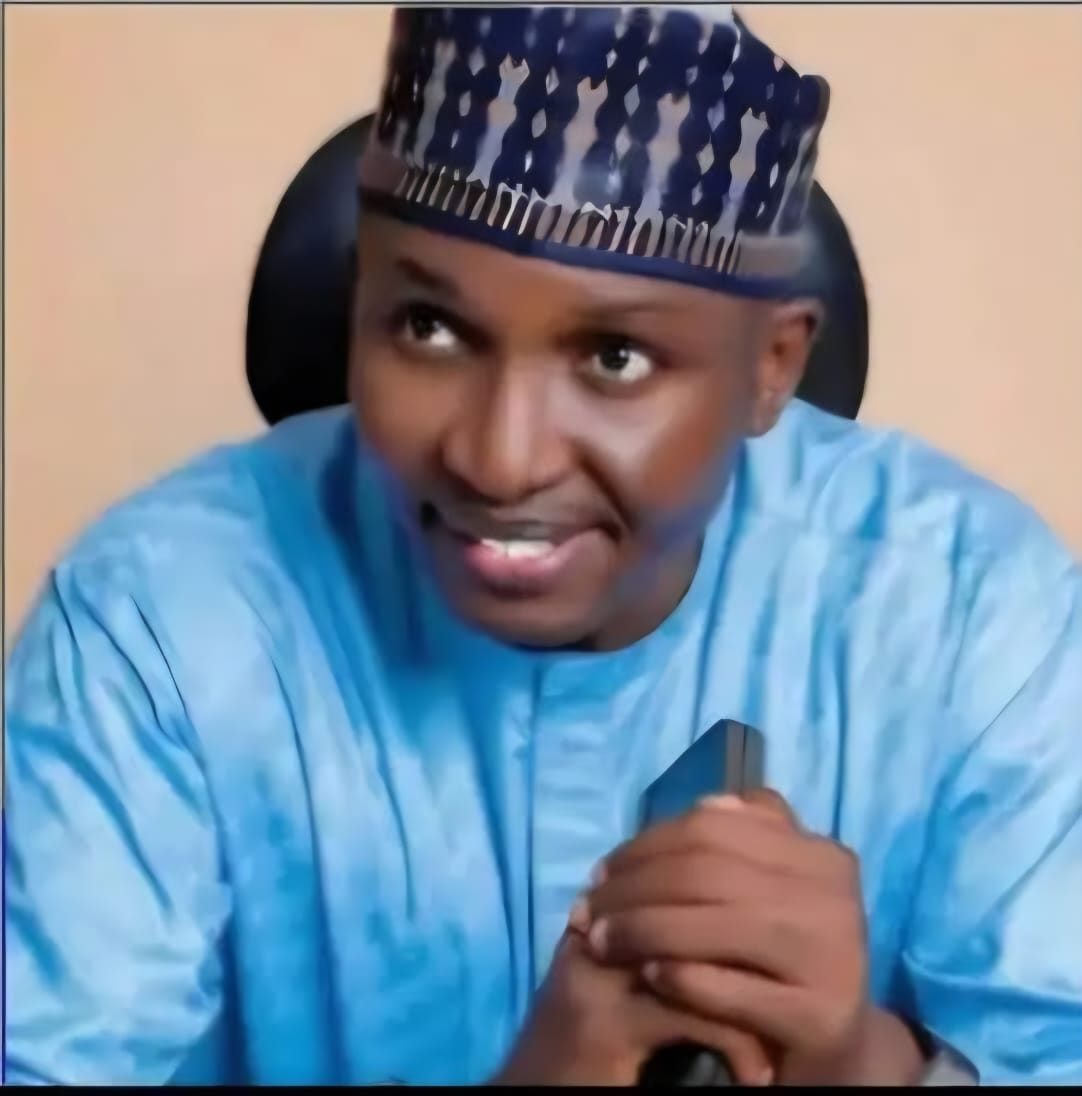
By Sufuyan Ojeifo,
There is a point at which a country’s electricity problem ceases to be merely an electricity problem. It becomes a problem of economic geography.
Also read: What Emmanuel Emefienim’s story teaches us about Nigeria’s possibilities
Where can factories operate with confidence? Where can businesses plan beyond the next appearance of a generator? Where can hospitals, schools, technology companies, markets and households begin to organise their lives around the reasonable expectation that electricity will be there?
This is the thinking behind the latest initiative from the Minister of Power, Joseph Tegbe, to develop what the Federal Government calls Energy Zones – defined corridors where homes, businesses and industries could receive stable, 24-hour electricity.
The proposed zones cover the Lagos axis, the Abuja-Kaduna-Kano corridor and the Enugu-Port Harcourt corridor. Tegbe’s latest move is a meeting with selected electricity distribution companies to begin working through what it would take to make the idea real.
At first glance, it sounds like another promise of uninterrupted electricity in a country that has heard too many such promises. However, there is something more consequential in the architecture of the proposal.
Tegbe is asking Nigerians to look at the power problem differently.
For years, the national conversation has been dominated by generation. How many megawatts are being produced? How much can the transmission grid carry? How many generating plants are working? These are important questions. But electricity does not become useful simply because it has been generated.
It must travel. It must be received. It must be distributed. And ultimately, somebody must be able to use it. That last part has often been treated as the end of the conversation when, in reality, it is where the economic value of electricity begins.
Tegbe has put the point plainly. The constraint is not limited to generation and transmission; it also includes how much electricity can be taken up and delivered at the distribution end.
The proposed Energy Zones are intended to address precisely that gap while improving commercial demand and the revenue performance of the distribution companies.
There is an important idea here.
Nigeria does not necessarily have to wait for every weakness in the electricity value chain to be solved simultaneously before beginning to create pockets of reliability.
A country of more than 200 million people, with enormous differences in industrial activity, population density and commercial demand, may have to proceed through carefully selected economic corridors while the wider system is repaired.
This is not an argument for abandoning the national grid. It is an argument for making the grid more economically purposeful.
The three corridors selected by the Ministry are revealing. Lagos and its adjoining industrial axis represent perhaps the country’s most concentrated commercial and industrial demand.
The Abuja-Kaduna-Kano corridor connects the political capital with major commercial and industrial centres in the North. Enugu-Port Harcourt links important commercial, manufacturing and energy-producing communities in the South-East and South-South.
These are not simply lines on a power map. They are lines on Nigeria’s economic map. That distinction matters.
For too long, Nigerians have experienced electricity largely as a household inconvenience. The light goes off. The generator comes on. A business buys diesel. A manufacturer factors self-generation into production costs. A hospital makes contingency arrangements.
A young entrepreneur learns, often painfully, that the real price of electricity is not what appears on the bill but what it costs to keep the business alive when the supply fails.
A reliable electricity corridor changes that equation.
If a factory knows that a particular industrial cluster has dependable power, investment decisions begin to change.
If a commercial district can plan around predictable electricity, operating costs become easier to manage.
If businesses can depend on supply for most of the day, generators can move from being the first line of defence to being what they were always supposed to be: backup.
This is where Tegbe’s technocratic instincts may prove significant.
His background is not that of a career power-sector operator. His professional experience has largely been in consulting, fiscal and economic reform, institutional transformation and advisory work. That background has been visible in his early approach to the ministry – diagnosis, audits, financial questions, infrastructure bottlenecks, and attempts to identify where one part of the system is preventing another from functioning properly.
His Energy Zones proposal fits that pattern. It treats the electricity market less as a single machine waiting for one dramatic repair and more as a system of interconnected constraints that can be isolated, diagnosed and addressed.
Tegbe had already identified the three corridors as priorities for grid stabilisation, with technical audits intended to establish the condition of critical infrastructure. The latest engagement with DisCos suggests that the idea is now moving beyond technical diagnosis towards the more difficult question of how distribution will work within those corridors.
That is where the hard work begins.
A 24-hour power zone cannot be created by a press statement. It requires generation that is available when needed, transmission capacity that can carry it, distribution infrastructure capable of receiving it, transformers and feeders that can withstand the load, metering that properly captures consumption, customers willing and able to pay, and a commercial structure in which the various participants have an incentive to keep the system working.
It also requires protection. Vandalism and energy theft do not respect administrative boundaries. Neither do faulty equipment, unpaid bills or poor collection practices. Tegbe himself has acknowledged that the sector’s problems reinforce one another. Weak collections affect the market. Market weakness affects maintenance and gas payments. Unreliable supply in turn depresses collections.
This is why the Energy Zone experiment, if it is to succeed, must be judged by more than the number of hours electricity is available.
The real test will be whether reliability begins to produce economic consequences. Does industrial output increase? Do businesses spend less on self-generation? Does investment respond? Do DisCos collect more because customers are receiving a service they can trust? Does the government recover enough value from improved commercial activity to justify further infrastructure investment?
Those are the questions that should eventually accompany the glossy language of 24-hour power.
And there is another question that Tegbe and the Federal Government will have to confront: what happens outside the zones?
Nigeria cannot become a collection of electrically privileged corridors surrounded by communities waiting indefinitely for their turn.
The logic of concentrating investment in high-demand areas can be defended economically, especially if the resulting commercial activity strengthens the wider electricity market.
But the strategy will ultimately have to demonstrate how successful zones become stepping stones towards broader reliability.
That is the difference between an experiment and a system.
There is also a danger in admiring the architecture of reform from the comfort of an office.
It has to be said here that the statement issued by the minister’s media aide was long on ambition and conspicuously short on the details that matter. No timeline. No capacity targets. No specific investment figures. It is the kind of announcement that has, historically, been the precursor to nothing at all.
So Nigerians should watch the idea with interest, but also with the healthy scepticism that comes from decades of promises about electricity.
The minister deserves a measure of credit for at least diagnosing an important part of the illness.
For once, the conversation has shifted from the head to the feet – from generation to distribution, from megawatts to money.
At the same time, the Nigerian people have been given blueprints before. They have learned to admire the drawings while the building crumbles.
The Energy Zones remain a proposal. The government has not yet announced the detailed capacity requirements, implementation timetable or precise infrastructure investments that would make 24-hour supply possible.
That is not necessarily a fatal flaw. It may simply mean the idea is still being worked out.
But it does mean that the language of 24-hour power should be treated as an aspiration until it is matched by the machinery of implementation.
Yet the proposal deserves attention because it reflects a potentially important shift in the way the power problem is being conceived.
Nigeria may not fix its electricity crisis in one heroic sweep. It may have to build reliability corridor by corridor, demand centre by demand centre, and economic cluster by economic cluster.
There is nothing inherently glamorous about such work. It is engineering, finance, regulation, distribution and relentless attention to the weak link in the chain. But perhaps that is precisely the point.
The country has spent decades waiting for the great national electricity breakthrough.
Tegbe’s emerging approach suggests something less dramatic and potentially more practical: make a few economically critical parts of the system work properly, learn from them, strengthen the model, and expand it.
The success of that approach will ultimately be measured not in speeches or megawatts, but in what Nigerians can do with the electricity when it arrives.
Does the factory run a second shift? Does the business hire more workers? Does the hospital keep its equipment running through the night? Does the young entrepreneur stop budgeting for diesel and start budgeting for growth?
Also read: What Emmanuel Emefienim’s story teaches us about Nigeria’s possibilities
That is where the real power story begins. And that is the standard against which Tegbe’s Energy Zones should ultimately be judged: not by whether 24-hour power sounds impressive in a press release, but by whether the lights stay on long enough for Nigerians to build something with them.
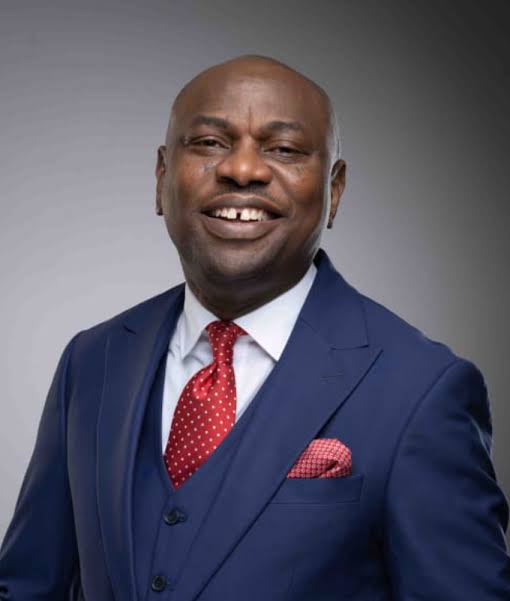
By Ehi Braimah,
I joined The Platform live on Channels Television on Thursday October 1 to listen to inspiring conversations about Nigeria. What I heard from Dr. Emmanuel Emefienim, Founder and Managing Director/CEO of Premium Trust Bank, was much more than a motivational speech.
Also read: Nigeria @66: Obasa Says Tinubu’s 2027 Re-election Will Secure Reform Gains
It was a masterclass in resilience, ambition, leadership, relationships, knowledge, faith and the power of refusing to give up.
The Platform, organised by The Covenant Place under the leadership of Senior Paster Poju Oyemade, has become an important public conversation that brings Nigerians together around ideas, experiences and possibilities.
Held on May 1 and October 1 in a town-hall setting and televised live, it has consistently provided a platform for Nigerians to share stories that can inspire particularly the younger generation to believe in themselves and in their country.
Dr. Emefienim’s story deserves to be told beyond the walls of The Platform because it is not simply the story of one successful banker; it is a Nigerian story about what can happen when adversity meets determination. After completing his NYSC, Emefienim applied for 70 jobs.
Only four organisations, according to him, responded. He eventually joined Oceanic Bank at the age of 22.
At some point, he was transferred from Lagos to Asaba. His career subsequently took him to Savannah Bank in Port Harcourt, where he became a regional manager.
Then came the shock that could have destroyed everything. I mean, everything: his plans, big dreams and bright future.
One weekend, Emefienim travelled to Warri to spend time with his family. When he returned to work on Monday, he discovered that Savannah Bank had been liquidated. There were no members of staff waiting for him.
Instead, officials of the Central Bank of Nigeria and the Nigeria Deposit Insurance Corporation were there. There had been no warning.
Suddenly, the man who had an official car and driver was without a job. He was married, in his 30s, and his wife was a civil servant. His professional world had collapsed almost overnight. What did he do? He did not give up.
His driver took him to Benin City. From there, he travelled to Lagos, using a public transport service, to see a manager at FSB, a bank that had previously offered him a job while he was still at Savannah Bank. He had declined the offer then.
Now, Emefienim needed the job, but the manager, obviously angry and wanted to have his pound of flesh back, ignored him and kept him waiting for three days.
It would have been easy to interpret the experience as humiliation and walk away. But Emefienim remained focused. Eventually, the manager saw him and offered him a job – but at a lower level.
He moved from senior manager to deputy manager and was posted to Yenagoa in Bayelsa State which he accepted as he had no choice at the time.
That decision contains a profound lesson: sometimes, starting again is not failure; it is strategy. There are moments in life when circumstances force us to take a step backwards so that we can eventually move forward.
The important thing is not the temporary position we occupy, or feelings of rejection experienced or disappointments that we face, but whether we can continue moving towards the destination.
Emefienim had a big dream. He recalled telling the Managing Director of Oceanic Bank and some colleagues that one day he would become the managing director of a bank himself. While the MD encouraged him to pursue his goal, his colleagues laughed at him.
His response is one of the most memorable lines from his presentation: when people don’t laugh at your dream, perhaps the dream is not big enough. That is a message Nigeria’s young people need to hear.
Too many young people allow their current circumstances to define their future, but the future does not necessarily resemble the present.
A young person who is struggling today may become an employer tomorrow, and someone rejected for a job may eventually build an institution that employs hundreds or thousands of people.
Emefienim’s own journey demonstrates this. He continued to rise through Equatorial Trust Bank and later Sterling Bank, following mergers and acquisitions in the Nigerian banking industry.
He rose through the ranks – AGM, DGM, GM and Executive Director – while continuing to acquire knowledge.
He attended Harvard Business School several times. But perhaps more importantly, he did not keep the knowledge to himself – he invested in people.
He personally sponsored some of his managers to also attend Harvard. When the time came for him to leave Sterling Bank and establish Premium Trust Bank, six of the seven managers he had trained agreed to join him.
That is a powerful definition of leadership. A leader is someone who reaches the top and helps others rise.
This is particularly important in Nigeria, where the quality of human capital will ultimately determine how competitive our economy becomes. Buildings, technology, capital and infrastructure matter, but people make institutions work.
Emefienim also spoke about relationships and networks as critical elements of success.
This is another lesson worth emphasising. Knowledge is important, but relationships create opportunities for knowledge to be applied.
Networks create access, partnerships and possibilities because nobody succeeds entirely alone.
His story also contains an important lesson about family resilience. After experiencing the trauma of losing his job without warning, he empowered his wife to start a business.
He wanted to ensure that his family would never again be placed in such a vulnerable position because one person’s employment had suddenly disappeared resulting in loss of income.
That was more than a financial decision – it was an act of foresight. Today, the story has come full circle. The young man who once submitted 70 applications looking for employment is now the founder and owner of a bank.
Premium Trust Bank, which commenced commercial banking operations as a regional bank in April 2022, has grown into a national banking institution with 35 branches.
Emefienim spoke proudly about its growth and profitability and its successful participation in the banking industry’s recapitalisation programme, raising N200 billion, the threshold for national banks, and achieving a historic milestone as one of Nigeria’s 10 most profitable banks.
There is something profoundly Nigerian about this story. Nigeria is often described in terms of its problems – unemployment, infrastructure deficits, insecurity, poverty, weak institutions and other challenges. These problems are real and should not be minimised.
But Nigeria is also a country of extraordinary human possibilities. Our greatest resource is not oil neither is it our large population; it is the capacity of Nigerians to create, innovate, adapt, build businesses, solve problems and compete. This is one of the central ideas behind my forthcoming book, How Naija can conquer the world.
The book is about Nigeria’s economic potential, global ambition and the strategies required to achieve greater prosperity. I argue that Nigeria’s success should not be measured simply by the size of its economy.
Instead, we should be concerned about rising incomes, productivity, exports, globally competitive companies, human capital and the ability to create value for the world.
Emefienim’s story illustrates several of these principles. He acquired knowledge, built relationships, invested in people, remained focused, executed consistently, understood his environment, adapted when circumstances changed, dreamed beyond his immediate reality, and remained anchored in faith.
His reference to what he calls “revelational knowledge” – spiritual insight and instruction he believes come from God – adds another dimension to his philosophy.
For him, formal education and professional experience are important, but they exist alongside faith and spiritual guidance.
There is another lesson here for Nigeria: we need more people who are prepared to build institutions rather than merely look for opportunities. When Nigerians build strong companies, they create jobs, and when they invest in people, they create human capital.
We have the capacity to develop globally competitive products and services for exports. Clearly, the moral of Emefienim’s story is that we should build institutions that survive beyond their founders and contribute to national prosperity.
This is how a nation moves from potential to prosperity.
Listening to Dr. Emefienim, I was reminded that Nigeria does not lack stories of courage, enterprise and achievement.
Perhaps what we lack is a sufficiently organised effort to tell these stories and convert them into a powerful national narrative.
We need to tell young Nigerians that setbacks are not destinies. An entrepreneur’s small business today can become tomorrow’s major institution.
We need to tell professionals that continuous learning matters; tell leaders that investing in people is one of the highest forms of leadership, and also tell the world that Nigeria is much more than the challenges that frequently dominate international headlines. Dr. Emmanuel Emefienim has done well.
From a young graduate searching for his first job, to a banker who survived the collapse of a major institution, got another job within four days, to a senior executive, and an entrepreneur who built his own bank, his journey is a powerful reminder of what determination can accomplish.
His story is not an invitation to ignore Nigeria’s problems, but he is simply saying we should confront them with courage.
Nigeria needs more dreamers – but also more doers. We need people who can dream big, acquire knowledge, build relationships, invest in others and execute with consistency.
That is how nations are built.
Also read: Nigeria @66: Obasa Says Tinubu’s 2027 Re-election Will Secure Reform Gains
Perhaps that is the deeper message of The Platform: Nigeria’s future will be created by Nigerians who believe that something better is possible – and then roll up their sleeves and build it.
-
Politics3 years ago
13 Ondo Assembly Members Disown Endorsement of Aiyedatiwa
-
Politics3 years ago
APC Group, Ondo Govt, Quarrel Over Money for Endorsement
-

 Trending News5 years ago
Stop unsavoury, inciting statements – DSS warns
-

 Others5 years ago
Adron Homes Celebrates 10 Years Of Housing Excellence
-

 Humanity5 years ago
President Buhari Commiserates With Ambassador Maureen Tamuno Over The Loss Of Her Father
-

 Others7 years ago
EX- CUSTOMS BOSS, IBRAHIM MERA’S DWINDLING FAME
-

 Business2 years ago
Bigi Carbonated Soft Drinks Treats 40 Consumers to an Epic Easter Movie Hangout
-

 Business2 years ago
Wema Bank Shines at Global SME Finance Forum Conference Awards 2024 …Awarded: • SME Financier of the Year (Africa) • Platinum Award for Best Financier for Women Entrepreneurs (Africa)