
Politics
Edo PDP Urges Members To Stop Reckless Utterances

The Edo chapter of the Peoples Democratic Party (PDP) has charged its members to stop reckless and careless utterances capable of distracting the party leadership.

The state party chairman, Dr. Tony Aziegbemi, made the appeal in a statement in Benin on Tuesday.
He said they were worried over the recent trend in which party members including some leaders make careless and reckless utterances.
According to him, the party leadership is exploring ways to address its internal squabbles.
“We encourage political engagements and contestations which must be guided by the tenets of our constitution.
“We, however, frown at political indiscipline that brings disrepute to our brand.
“While we encourage our leaders and members to exercise their democratic right of free speech, respect, restraint, and decorum should be their watchword.
“The party concedes that in any new marriage especially in one that was consummated in the circumstances that gave birth to our government, some challenges were bound to arise”, he said.
Aziegbemi said that various committees had been set up by the party to resolve all contentious issues and proffer workable and acceptable solutions.
He added that the leader of the party in the state, Gov. Godwin Obaseki had been clear that the constitution of the party must always guide the action of members.
The party chairman, therefore, enjoined all members to focus on assisting the state government to deliver on its ‘MEGA agenda’.
He stressed that party members must remember at all times that individual interests, important as they were, could not supersede that of the general interest of the people.
“As a party in government, we must live and operate by example.
“We must be seen to follow due process, abide by the rule of law and always be conscious of the message we send to the general public especially the voting population at all times.
“We are answerable to them. We must highlight and boastfully report the successes of our governor and government,” he added.
Aziegbemi urged the party members to work on building Edo, not for a few, but all the people.
“On behalf of the Edo PDP family, I appeal to our members across the state to keep their eyes on the ball. Do not be distracted.
“The party is aware of the internal challenges it faces and mechanisms have been put in place to finding a lasting and acceptable solution,” he said.


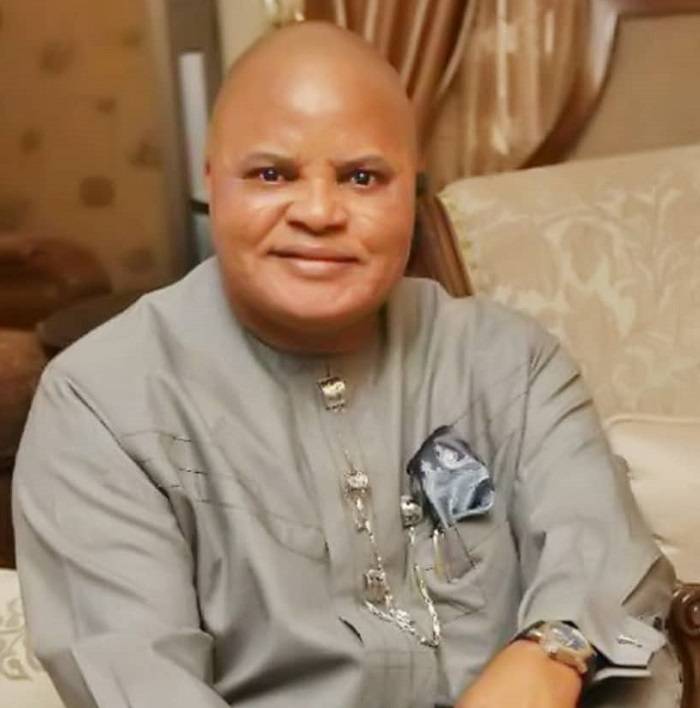
A group, the Imo First Group (IFG) has described the purported Magistrate court order to arrest Senator Ifeanyi Araraume and the former governor of Imo State, Rochas Okorocha, over alleged criminal conspiracy and forgery, as a ruse and fake news
The group stated this in a statement issued on Saturday in Abuja.
IFG challenged those peddling the fake news to make the court order public.
The statement reads ” The fabricated and concocted story was first posted on social media by Hon. Ambrose Nwaogwugwu, a media aide to Governor Hope Uzodimma, before it was picked up by other media outfits, including Arise TV.
According to the statement, those behind the report claimed that a Senior Magistrate Court sitting in Abuja issued a Bench Warrant dated September 9, 2026, following a petition written by the Resident Electoral Commissioner (REC) in Imo State, Barr. Chukwuemeka Ibejiako, to the Police and DSS on October 8, 2026, over alleged presentation of fake APC primary results.
The Group debunked the existence of any such order.
“We want to state categorically and unequivocally that no jSenior Magistrate ordered or issued any bench warrant for the arrest of Araraume”
IFG however challenged anyone in possession of the purported court order to publish it.
“If you claim to have a court order present same for the public to see,
“This fabricated bench warrant contain in the report is filled with inconsistencies, the bench warrant was dated September 9, 2026, while the REC’s petition that supposedly triggered it was dated October 8, 2026, with case number CR/M/084/2026.
The statement further stated that the purveyors and harbinger of the fake news tried to trick the magistrate via exparte order but was rebuked
“The magistrate bluntly refused to grant their exparte and threatened to arrest them, yet they carried their falsehood about. What’s the problem of occupants of office that never won free and fair elections and tried to destroy reputable Imo sons that have won elections. We challenge anyone in this macabre surugede dance to show the court order or warrant of arrest. It’s preposterous to blackmail decent Imo sons on the altar of dirty politics.”

News
Panic-stricken Enugu APC begins flag-off of already flagged of roads in Nsukka after PDP’s Chijioke Ugwu’s homecoming


-
Politics3 years ago
13 Ondo Assembly Members Disown Endorsement of Aiyedatiwa
-
Politics3 years ago
APC Group, Ondo Govt, Quarrel Over Money for Endorsement
-

 Trending News5 years ago
Stop unsavoury, inciting statements – DSS warns
-

 Others5 years ago
Adron Homes Celebrates 10 Years Of Housing Excellence
-

 Humanity5 years ago
President Buhari Commiserates With Ambassador Maureen Tamuno Over The Loss Of Her Father
-

 Others7 years ago
EX- CUSTOMS BOSS, IBRAHIM MERA’S DWINDLING FAME
-

 Business2 years ago
Bigi Carbonated Soft Drinks Treats 40 Consumers to an Epic Easter Movie Hangout
-

 Business2 years ago
Wema Bank Shines at Global SME Finance Forum Conference Awards 2024 …Awarded: • SME Financier of the Year (Africa) • Platinum Award for Best Financier for Women Entrepreneurs (Africa)