
Politics
Fani-Kayode Flags Jingir’s Comments as Threat to Tinubu’s 2027 Bid

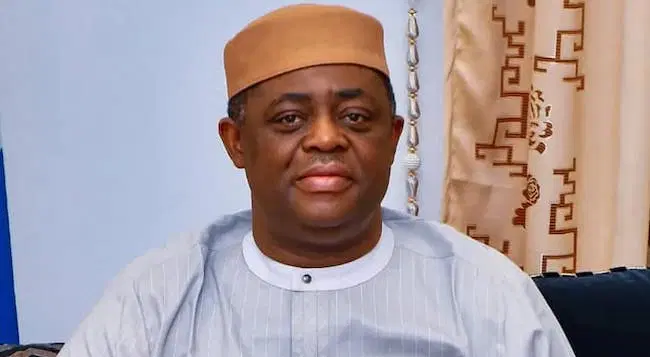
The ambassador-designate says religious rhetoric could alienate Christian voters and hand the opposition a potent campaign issue ahead of 2027

Nigeria’s Ambassador-designate to South Africa, Femi Fani-Kayode, on Monday warned that recent comments by Islamic cleric Sheikh Sani Yahaya Jingir in support of retaining a Muslim-Muslim presidential ticket could damage President Bola Tinubu’s re-election prospects in 2027.
Also read: Tinubu Approves Fani-Kayode’s Redeployment as Ambassador to South Africa
Fani-Kayode, a former Minister of Aviation, raised the concern in a Facebook post while reacting to remarks attributed to Jingir at a recent gathering in Kano, where the cleric reportedly advocated continued support for Muslim-Muslim presidential tickets.
The intervention has added a fresh dimension to an already sensitive debate over religion and politics ahead of the 2027 presidential election.
Jingir, the national chairman of the Council of Ulama of Jama’atu Izalatil Bid’ah Wa’ikamatis Sunnah, has previously made his support for the Tinubu-Kashim Shettima ticket clear.
In February, he reiterated his backing for the President and Vice-President, saying those who supported the ticket had made a commitment to Tinubu.
Fani-Kayode, however, argued that openly framing the 2027 contest around religious identity could alienate sections of the electorate, particularly Christians, while giving opposition parties an opportunity to portray the ruling All Progressives Congress as pursuing a religious agenda.
He said he had received numerous calls and messages from Nigerians of different faiths following the circulation of Jingir’s latest comments, describing the reaction as a warning that the issue could become politically consequential.
“There is only one thing worse and that saddened me more than what he said and that is to have seen my friend and brother, the Governor of Kano State, cheering him on and celebrating it,” Fani-Kayode said.
The ambassador-designate also urged political leaders and religious figures to exercise restraint, warning that the use of faith as a political weapon could deepen divisions in a country where Christianity and Islam are both major religions.
“We will not keep quiet and watch our faith being dragged all over the floor because of politics,” he said. “This divisive rhetoric has to stop and we should stop playing with fire.”
Fani-Kayode’s argument was not, however, a rejection of the Muslim-Muslim ticket itself.
He said his own support for retaining the religious configuration of the Tinubu-Shettima ticket was based on his assessment of the two politicians rather than their faith.
“We are supporting a Muslim/Muslim ticket for 2027, as we did in 2023, only because of the calibre, ability, sincerity of purpose, character, utility and electoral strength of our Presidential and Vice Presidential candidates and their ability to deliver and not because they are Muslims,” he said.
He maintained that the same principle should apply regardless of the religious composition of a future ticket, arguing that Nigerians should judge candidates primarily on competence, character, policies and performance.
“We must leave religion out of politics and consider issues, policies and personalities instead,” he added.
Fani-Kayode also sought to distance Jingir’s position from the wider APC and the Nigerian Muslim community, stressing that the cleric was speaking for himself.
“Jingir does not represent the feelings of the APC and neither does he speak for us. He only speaks for himself,” he said.
The distinction is significant as Jingir’s position has previously generated debate beyond the APC.
Earlier this year, his public endorsement of Tinubu and the Muslim-Muslim ticket drew criticism and counterarguments from political and religious commentators.
Fani-Kayode said the issue could become particularly damaging because Nigeria is religiously diverse and because international scrutiny of religious freedom and violence remains a prominent part of the country’s diplomatic and political discourse.
He argued that remarks perceived as dismissive of Christians could inadvertently reinforce narratives about religious marginalisation that the Nigerian government and its supporters have repeatedly disputed.
“You do not talk like that in a country with over 120 million Christians,” he said, while warning that such rhetoric could make the APC’s task of building a broad electoral coalition more difficult.
The former minister also claimed that Jingir’s comments could weaken the political standing of Tinubu and Shettima by allowing opposition parties to frame the ruling ticket through the prism of religious identity rather than governance.
“Jingir has done immense damage to President Tinubu and Vice President Kashim Shettima by talking in this way,” Fani-Kayode said.
He went further by calling on the Department of State Services to invite and caution the cleric, arguing that inflammatory religious rhetoric could heighten tensions as political activity intensifies ahead of the 2027 election.
Fani-Kayode also urged Jingir to apologise to Christians and Nigerians more broadly, saying political leaders and influential religious figures had a responsibility to avoid language capable of deepening existing divisions.
The controversy comes well ahead of the 2027 election, but the religious composition of presidential tickets has already become a significant political issue.
Tinubu and Shettima ran on a Muslim-Muslim ticket in 2023, a configuration that attracted criticism from sections of the Christian community before the election. Jingir has since remained a prominent supporter of retaining the arrangement for 2027.
For the APC, the challenge will be to defend its record and mobilise voters across Nigeria’s religious and regional divides without allowing the presidential contest to become dominated by identity politics.
Fani-Kayode’s intervention reflects that concern from within the wider political camp supporting the administration.
His central argument is that the strength of the 2027 ticket should rest on performance and electoral appeal rather than religious solidarity, and that inflammatory rhetoric from influential figures could prove an unnecessary political liability.
Also read: Fani-Kayode Blasts ADC as Power-Hungry and Discredited
As the parties begin positioning themselves for the next presidential contest, the debate over whether religion should shape Nigeria’s electoral choices is likely to remain one of the most sensitive issues in the country’s political conversation.


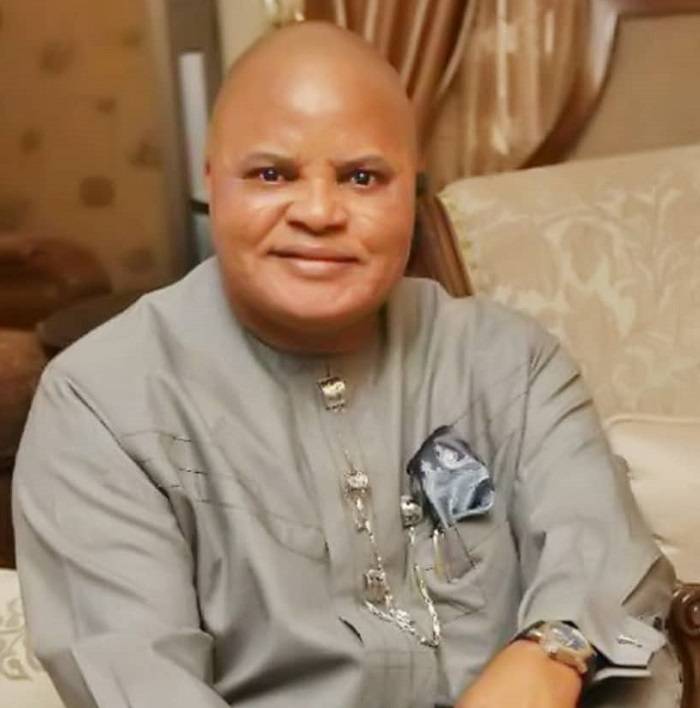
A group, the Imo First Group (IFG) has described the purported Magistrate court order to arrest Senator Ifeanyi Araraume and the former governor of Imo State, Rochas Okorocha, over alleged criminal conspiracy and forgery, as a ruse and fake news
The group stated this in a statement issued on Saturday in Abuja.
IFG challenged those peddling the fake news to make the court order public.
The statement reads ” The fabricated and concocted story was first posted on social media by Hon. Ambrose Nwaogwugwu, a media aide to Governor Hope Uzodimma, before it was picked up by other media outfits, including Arise TV.
According to the statement, those behind the report claimed that a Senior Magistrate Court sitting in Abuja issued a Bench Warrant dated September 9, 2026, following a petition written by the Resident Electoral Commissioner (REC) in Imo State, Barr. Chukwuemeka Ibejiako, to the Police and DSS on October 8, 2026, over alleged presentation of fake APC primary results.
The Group debunked the existence of any such order.
“We want to state categorically and unequivocally that no jSenior Magistrate ordered or issued any bench warrant for the arrest of Araraume”
IFG however challenged anyone in possession of the purported court order to publish it.
“If you claim to have a court order present same for the public to see,
“This fabricated bench warrant contain in the report is filled with inconsistencies, the bench warrant was dated September 9, 2026, while the REC’s petition that supposedly triggered it was dated October 8, 2026, with case number CR/M/084/2026.
The statement further stated that the purveyors and harbinger of the fake news tried to trick the magistrate via exparte order but was rebuked
“The magistrate bluntly refused to grant their exparte and threatened to arrest them, yet they carried their falsehood about. What’s the problem of occupants of office that never won free and fair elections and tried to destroy reputable Imo sons that have won elections. We challenge anyone in this macabre surugede dance to show the court order or warrant of arrest. It’s preposterous to blackmail decent Imo sons on the altar of dirty politics.”

News
Panic-stricken Enugu APC begins flag-off of already flagged of roads in Nsukka after PDP’s Chijioke Ugwu’s homecoming


-
Politics3 years ago
13 Ondo Assembly Members Disown Endorsement of Aiyedatiwa
-
Politics3 years ago
APC Group, Ondo Govt, Quarrel Over Money for Endorsement
-

 Trending News5 years ago
Stop unsavoury, inciting statements – DSS warns
-

 Others5 years ago
Adron Homes Celebrates 10 Years Of Housing Excellence
-

 Humanity5 years ago
President Buhari Commiserates With Ambassador Maureen Tamuno Over The Loss Of Her Father
-

 Others7 years ago
EX- CUSTOMS BOSS, IBRAHIM MERA’S DWINDLING FAME
-

 Business2 years ago
Bigi Carbonated Soft Drinks Treats 40 Consumers to an Epic Easter Movie Hangout
-

 Business2 years ago
Wema Bank Shines at Global SME Finance Forum Conference Awards 2024 …Awarded: • SME Financier of the Year (Africa) • Platinum Award for Best Financier for Women Entrepreneurs (Africa)