
News
Israel Elects Kahana as Knesset Speaker

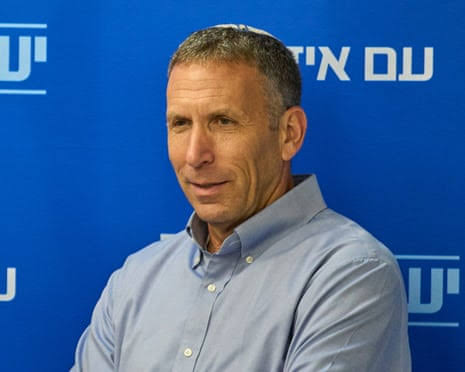
Israel’s parliament elects Matan Kahana as speaker, giving opposition parties greater influence as Gadi Eisenkot seeks to form a coalition government
Israel’s parliament, the Knesset, has elected Matan Kahana, an ally of opposition leader Gadi Eisenkot, as its new speaker, giving the opposition greater influence over parliamentary proceedings while efforts continue to form a government to replace Prime Minister Benjamin Netanyahu.
Also read:Doherty Pledges Tax Relief for Lagos Teachers, Doctors

Kahana secured 66 votes in the 120-member parliament on Tuesday, November 17, 2026, defeating Ofir Katz, the candidate backed by Netanyahu’s Likud bloc, who received 52 votes.
He replaces Amir Ohana, a close ally of the outgoing prime minister.
The election followed more than six hours of heated parliamentary debate, during which lawmakers aligned with Netanyahu attempted to delay the vote.
Kahana eventually secured the support of Eisenkot’s political allies and two Arab-led parties, Ra’am and the Joint List.
The result gives Eisenkot’s bloc greater control over the Knesset’s leadership and legislative agenda, even though coalition negotiations to establish a new government are still ongoing.
Kahana, a member of Eisenkot’s Yashar party, pledged to serve all citizens and respect the country’s democratic institutions.
In his first address after the election, he said the Knesset was the home of all Israelis, regardless of their religion, race or gender.
Eisenkot welcomed the outcome, describing it as an important development in the effort to bring political change.
He said the parliament should function as an effective oversight body and represent the interests of the wider population.
The speaker’s position carries considerable influence over parliamentary business, including the scheduling and consideration of proposed legislation.
Kahana’s appointment therefore gives the opposition an opportunity to advance parts of its legislative programme before a new government is established.
The development comes weeks after Israel’s October 27 parliamentary elections, in which Netanyahu and his political allies lost their majority. President Isaac Herzog subsequently gave Eisenkot the mandate to form a new government after factions representing 67 lawmakers recommended him for the task, compared with 46 who supported Netanyahu.
Under Israel’s Basic Law: The Government, Eisenkot has 28 days to form a coalition, with the possibility of a further 14-day extension if required.
While negotiations continue, Eisenkot’s bloc and Arab-led parties have enough parliamentary support to pursue legislative proposals, although passing them will require several stages of debate, committee consideration and voting.
Among the proposals under consideration are measures to introduce term limits for the prime minister, establish a state commission of inquiry into the Hamas-led October 7, 2023 attacks, and reverse aspects of Netanyahu’s controversial judicial reforms.
The proposed judicial changes have been criticised by opponents who argue that they weakened the independence of the judiciary and increased the government’s influence over judicial appointments and the legal system.
According to analysis by Assaf Shapira of the Israel Democracy Institute, control of the speaker’s office gives the opposition an important advantage because the position influences the pace and scheduling of legislative business.
However, the opposition’s ability to push through its agenda will depend partly on whether Eisenkot succeeds in forming a government.
If he fails, Herzog could give Netanyahu another opportunity to assemble a coalition, potentially changing the balance of influence over parliamentary committees and proceedings.
Shapira also noted that reversing existing judicial legislation could be less complicated than establishing a new commission of inquiry, which may carry greater legitimacy if approved by a newly formed government.
The proposed investigation into the October 7 attacks remains a particularly sensitive issue in Israeli politics.
The Hamas-led assault resulted in widespread killings and abductions and exposed serious failures in Israel’s security and intelligence systems.
Netanyahu’s critics have repeatedly called for an independent investigation into the events leading up to the attacks, accusing his government of avoiding political accountability.
The prime minister and his allies have faced sustained pressure over the handling of the security failures.
For now, Kahana’s election changes the leadership of the Knesset but does not itself remove Netanyahu as prime minister.
Also read:Doherty Pledges Tax Relief for Lagos Teachers, Doctors
The next major political test will be whether Eisenkot can secure the coalition support required to form a government.



Mohd Hafizuddin Roslin loses his right arm in a motorcycle crash, prompting support from Malaysia as he begins recovery.

GTA VI launches after 13 years of anticipation, with analysts projecting up to $3.2bn in sales by the end of 2026.
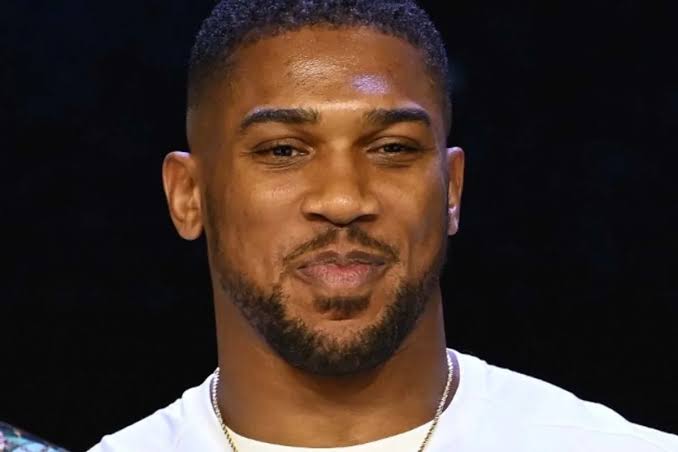
Anthony Joshua announces the birth of his baby girl ahead of his scheduled fight with Tyson Fury, describing fatherhood as a blessing.
-
Politics3 years ago
13 Ondo Assembly Members Disown Endorsement of Aiyedatiwa
-
Politics3 years ago
APC Group, Ondo Govt, Quarrel Over Money for Endorsement
-

 Trending News6 years ago
Stop unsavoury, inciting statements – DSS warns
-

 Others5 years ago
Adron Homes Celebrates 10 Years Of Housing Excellence
-

 Humanity5 years ago
President Buhari Commiserates With Ambassador Maureen Tamuno Over The Loss Of Her Father
-

 Others7 years ago
EX- CUSTOMS BOSS, IBRAHIM MERA’S DWINDLING FAME
-

 Business3 years ago
Bigi Carbonated Soft Drinks Treats 40 Consumers to an Epic Easter Movie Hangout
-

 Business2 years ago
Wema Bank Shines at Global SME Finance Forum Conference Awards 2024 …Awarded: • SME Financier of the Year (Africa) • Platinum Award for Best Financier for Women Entrepreneurs (Africa)