
Trending News
Monday Is No More Work-free Day In Anambra- Commissioner

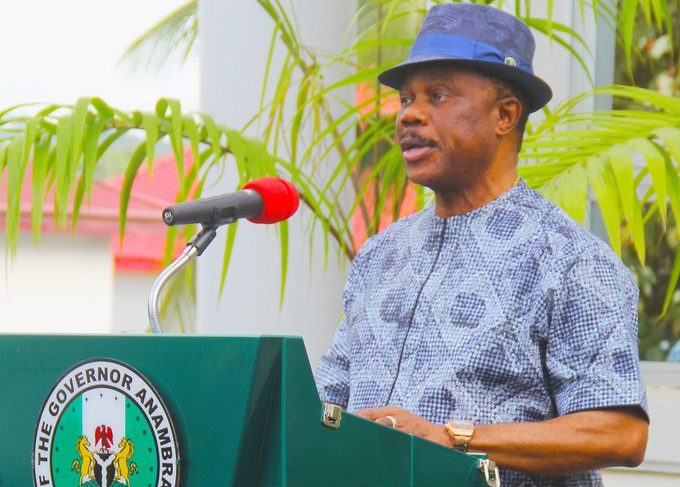
Mr C. Don Adinuba, the Anambra Commissioner for Information and Public Enlightenment, has informed all public service workers in the state that Monday is no more a work-free Day in the state, effective from Nov. 22.

Adinuba said that Anambra Government wishes to remind all individuals and organizations in the state that work has resumed in earnest in Anambra.
Adinuba said this in a press statement cited by Crystal Nes on Sunday.
He said, “This reminder became imperative in view of the tendency of some people to observe in the last few months every Monday as a work-free day.
“Work free day was being observed in the state in compliance with the directive by some non-state actors in an effort to press the Federal Government to free the leader of the Indigenous People of Biafra (IPOB), Mazi Nnamdi Kanu.
“Kanu is standing trial for some charges in Abuja, brought by the federal administration.
“The IPOB leadership has suspended the directive requiring people to stay at home every Monday which it said would start from Monday, Sept.15, throughout the Southeast geopolitical zone.
“The IPOB leadership has in the last few days reiterated the suspension, warning that any person who still tries to enforce the earlier decision is on his or her own and will, therefore, be dealt with accordingly.
“The IPOB leadership has kept every pledge it has made, including rescinding its decision to thwart the November 6 gubernatorial election in Anambra State.
“In fact, far from disrupting the election, IPOB encouraged the people of Anambra State to come out in their numbers and exercise their democratic right on Nov. 6.
“The election is now recognised as easily the most peaceful and the fairest election since the state was created in 1991,” he said.
Adinuba said that a group of Igbo leaders, including worthy sons of Anambra, met with President Muhammadu Buhari, in Abuja, on Friday, Nov. 19, to plead that Kanu be released and the issues around his arrest and trial resolved in a political way.
The commissioner said that in view of all efforts being made by elders of the zone to secure Kanu’s release, people of Anambra are enjoined to go about their normal business every Monday.
He urged the public not to entertain any fear of disruption of their work or any kind of harassment from any quarters from Monday, Nov. 22.
Adinuba said that the month of December is almost here and it is the month mankind marks the birth of Jesus Christ, defined by peace, unity, love, solidarity and merrymaking.
He noted that the festive period ushers in a new year which itself is a festive period and Anambra public like many other Nigerians, use the period to launch community and church development projects.
“We hold cultural festivals and conduct important personal, family and community events such as marriages, weddings and title taking. All this requires a lot of money.
“What is more, parents and guardians pay the educational fees of their children and wards during this period, thus making January the longest month in the year, as it is described in common parlance.
“It is in the interest of our people that all markets, all businesses, all offices and all schools in Anambra operate fully every Monday, with effect from Nov. 22.
All our people are once again assured that they will not face any kind of molestation on any day of the week from any quarters henceforth,” Adinuba reassured.


FESCANG urges tougher laws against kidnappers, calling for stricter penalties, intelligence reforms and special courts to combat insecurity

Zamfara NYSC allowances receive major boost as Governor Dauda Lawal approves stipends for corps members in Batch A to C, recognising their vital contributions to state development

Digital-First PR is transforming reputation management by prioritising search, social media and measurable online engagement
-
Politics2 years ago
13 Ondo Assembly Members Disown Endorsement of Aiyedatiwa
-
Politics2 years ago
APC Group, Ondo Govt, Quarrel Over Money for Endorsement
-

 Trending News5 years ago
Stop unsavoury, inciting statements – DSS warns
-

 Others4 years ago
Adron Homes Celebrates 10 Years Of Housing Excellence
-

 Humanity4 years ago
President Buhari Commiserates With Ambassador Maureen Tamuno Over The Loss Of Her Father
-

 Others7 years ago
EX- CUSTOMS BOSS, IBRAHIM MERA’S DWINDLING FAME
-

 Business2 years ago
Bigi Carbonated Soft Drinks Treats 40 Consumers to an Epic Easter Movie Hangout
-

 Business2 years ago
Wema Bank Shines at Global SME Finance Forum Conference Awards 2024 …Awarded: • SME Financier of the Year (Africa) • Platinum Award for Best Financier for Women Entrepreneurs (Africa)