
ENERGY
Regulatory Conflicts Could Undermine Power Reforms, Oke Warns

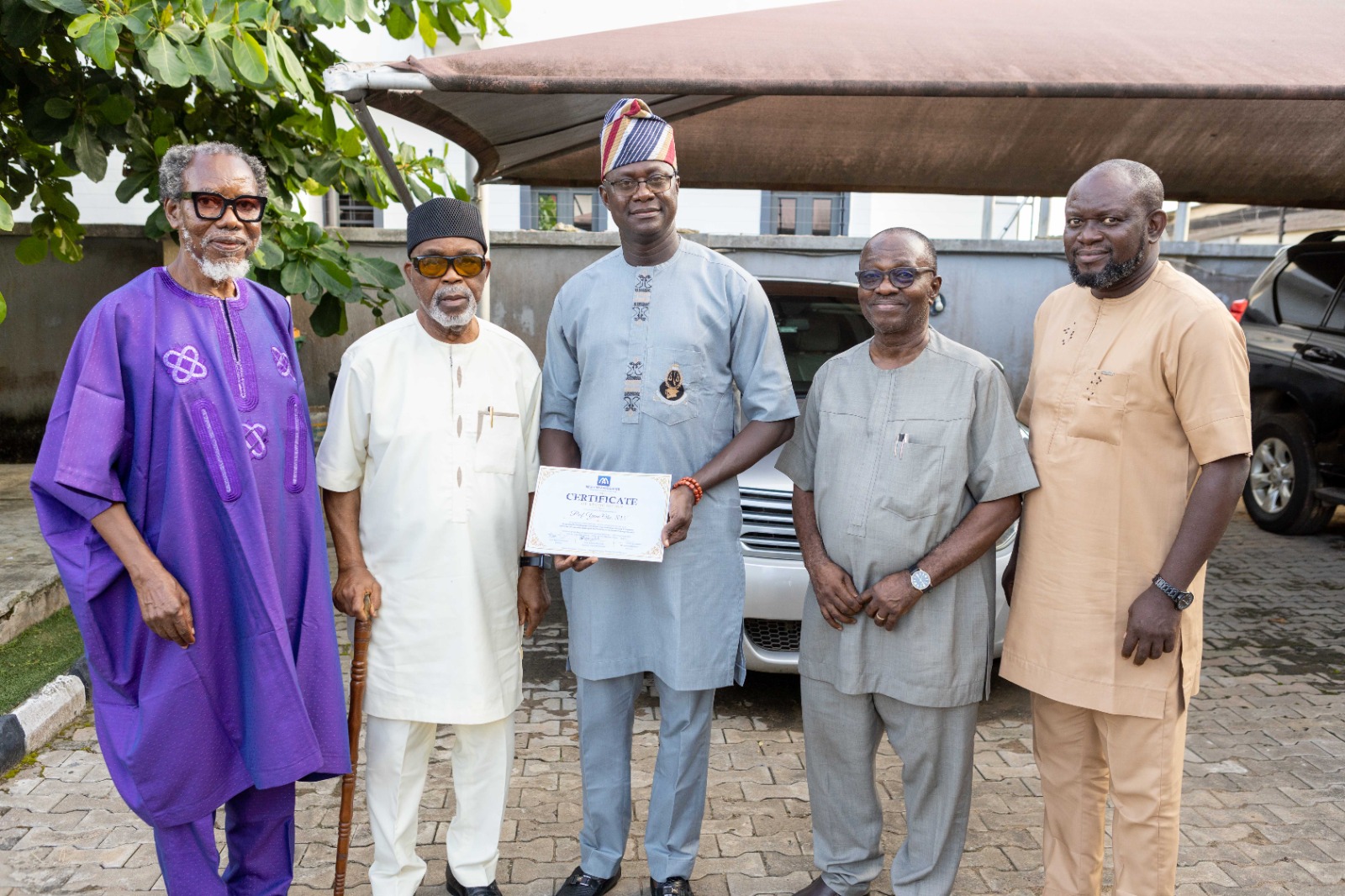
Power sector regulatory conflicts could undermine Nigeria’s electricity reforms, Professor Yemi Oke warns, calling for clearer federal and state roles
Professor Yemi Oke, SAN, Professor of Energy and Electricity Law at the University of Lagos, has warned that power sector regulatory conflicts and overlapping institutional responsibilities could undermine Nigeria’s ongoing electricity reforms unless federal and state authorities establish clearer boundaries.
Also read: NGE Sounds Fresh Warning on Press Freedom Before 2027

Oke raised the concern at the Magodo Associates Policy Dialogue Session on Sunday, where he examined the implications of the Electricity Act 2023 and the growing participation of states and private investors in Nigeria’s electricity market.
The professor said the legislation represented a significant shift from Nigeria’s traditionally centralised electricity structure by enabling states to play a larger role in generation, transmission and distribution within their territories.
The reform has already produced a substantial change in the regulatory landscape.
The Nigerian Electricity Regulatory Commission (NERC) said in May 2026 that 15 states had transitioned to regulating their own electricity markets under the Electricity Act 2023.
The states listed by NERC are Enugu, Ekiti, Ondo, Imo, Oyo, Edo, Kogi, Lagos, Ogun, Niger, Plateau, Abia, Nasarawa, Anambra and Bayelsa. The transitions have taken place progressively since October 2024.
Oke, however, said the decentralisation process could create difficult regulatory questions where federal and state responsibilities intersect.
He cited the relationship between NERC and the Imo State Electricity Regulatory Commission as an example of the need for careful coordination, arguing that areas of jurisdiction must be sufficiently clear to prevent uncertainty for operators and investors.
The transition in Imo illustrates how the new framework is intended to work.
NERC issued an order transferring regulatory oversight of the state’s intrastate electricity market to the Imo State Electricity Regulatory Commission, with the transfer taking effect on 1 July 2024 following the required process.
NERC’s current explanation of the framework states that state regulators oversee intrastate generation, distribution, supply and trading, while NERC retains responsibility for interstate and international electricity activities, national-grid matters and states that have not assumed regulatory authority.
That division of responsibilities is at the heart of the challenge identified by Oke.
He warned that overlapping functions involving NERC, the Transmission Company of Nigeria, the Nigerian Electricity Management Services Agency and the Rural Electrification Agency could create uncertainty if their respective mandates are not effectively coordinated.
The concern is particularly relevant as electricity markets become more decentralised and new participants enter the sector.
Regulatory uncertainty can affect decisions by investors, operators and consumers, particularly where licensing, technical standards, grid access or market oversight involve more than one institution.
NERC itself describes the Electricity Act 2023 as a framework designed to strengthen accountability, market transparency, system reliability and coordination among institutions.
Its published guidance sets out separate responsibilities for federal regulation, electrical safety, rural and off-grid electrification and state-level market oversight.
The reform therefore does not simply transfer electricity responsibilities from Abuja to the states. It creates a more complex institutional architecture in which federal and subnational authorities must operate alongside one another.
For Oke, the effectiveness of that architecture will depend on whether the boundaries are sufficiently clear to avoid competing claims of authority.
The broader discussion at the Magodo Associates session also placed the power sector debate within the association’s wider interest in national development.
Surv. ‘Remi Aromiwura, FN/S, Chairman of Magodo Associates, said the association’s quarterly policy sessions were intended to contribute to national discourse and generate ideas capable of supporting a more just and equitable society.
Aromiwura commended the ThinkTank Committee for organising the September session and said the association would continue using its platforms to examine issues of national importance.
He recalled that the association’s 14 June 2026 meeting focused on corruption and featured Professor Babafemi Badejo, Chairman of the Nigerian Bar Association Anti-Corruption Committee.
That earlier seminar examined corruption as a wider institutional and moral challenge rather than solely a question of law enforcement.
Aromiwura said Magodo Associates would assess the reach and impact of its activities at its December Annual General Meeting, with the aim of strengthening its interventions and establishing a consistent direction for future policy discussions.
The latest electricity debate comes at a consequential stage of Nigeria’s power-sector reforms.
The Electricity Act 2023 replaced the previous centralised framework and opened the way for states to establish their own electricity markets.
NERC has described the transition as part of a broader effort to promote competition, investment and improved electricity service delivery.
The emerging challenge is therefore less about whether decentralisation should occur and more about how the different institutions can make the new structure work predictably.
For consumers, the significance is practical. Clear regulatory responsibilities can determine where customers take complaints, who approves tariffs, which authority issues licences and which institution is responsible when electricity infrastructure or service crosses state boundaries.
For investors, clarity can be equally important. A predictable regulatory environment can reduce uncertainty over approvals, compliance obligations and market participation.
Oke’s warning consequently places institutional coordination alongside generation capacity, transmission infrastructure and distribution performance as an important part of Nigeria’s electricity reform agenda.
Also read: NGE Sounds Fresh Warning on Press Freedom Before 2027
As more states assume responsibility for their electricity markets, the success of the reform will depend not only on the powers granted by the law but also on how effectively the institutions created by the law work together.


Community development
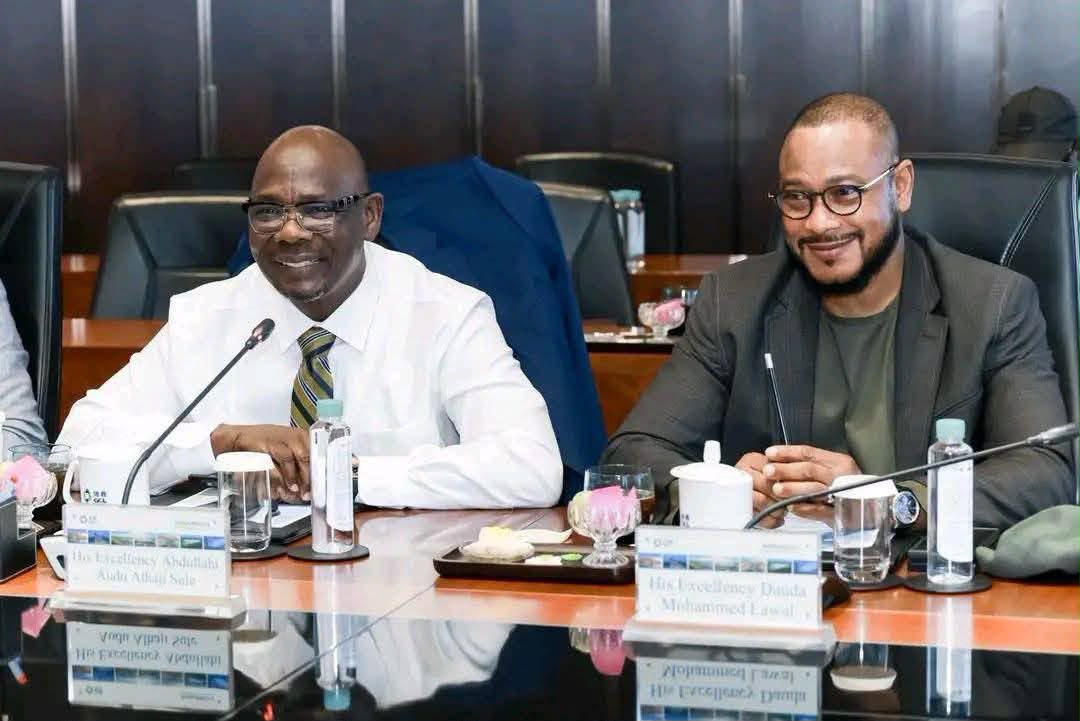
Governor Dauda Lawal Holds High-Level Investment Talks With GCL Group on Zamfara Solar Projects

By Adebayo Adeoye
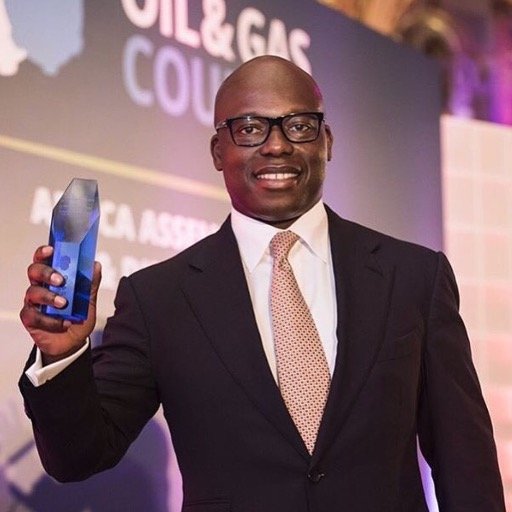
By the time most entrepreneurs have found their footing, Jubril Adewale Tinubu CON, had already begun reshaping the contours of Africa’s energy landscape. Three decades on, the Group Chief Executive of Oando Group shows no signs of slowing down.
There is a particular kind of leader who does not merely respond to circumstances but bends them to his will. Jubril Adewale Tinubu — fondly referred to in energy circles as the “King of African Oil” — is precisely that kind of leader. Methodical where others are reactive, visionary where others are cautious, and relentlessly forward-looking where others pause to celebrate, Tinubu has spent the better part of three decades building one of Africa’s most consequential indigenous energy enterprises.
As he approaches his 59th birthday, the Oando Group chief executive can reflect on a career that has been, by any credible measure, extraordinary. Yet those who know him well will tell you that reflection, for Tinubu, is never an end in itself. It is simply preparation for what comes next.
To appreciate the scale of what Tinubu has achieved, one must first appreciate the environment in which he achieved it. Nigeria’s oil and gas sector is not for the faint-hearted. It is a terrain defined by regulatory complexity, infrastructure deficits, geopolitical uncertainty, and the ever-present volatility of global commodity markets. Businesses have risen and collapsed within it; reputations have been made and unmade.
Against this backdrop, Tinubu has guided Oando from a fledgling indigenous player into one of Africa’s leading integrated energy companies — expanding its footprint across the continent and attracting the kind of institutional confidence that does not come cheaply. The journey has demanded not only financial acumen and sector expertise, but also what might best be described as a refined instinct for risk — knowing when to advance, when to consolidate, and when to absorb short-term pain in pursuit of long-term positioning.
That instinct, refined over decades, has distinguished him from a generation of peers and earned him a reputation that extends well beyond Nigeria’s borders.
A Philosophy of Perpetual Ascent
What drives a man who has already, by conventional standards, arrived? Those close to Tinubu suggest the question itself misunderstands him. In his worldview, every milestone is not a destination but a vantage point — a higher elevation from which the next horizon becomes visible.
This philosophy of perpetual ascent has shaped both his personal conduct and his corporate strategy. Oando under his stewardship has never been content to consolidate around comfortable positions. It has consistently sought new markets, new models, and new opportunities — even when the prevailing climate counselled restraint.
It is a disposition that has earned him international recognition and, more importantly, sustained the kind of institutional credibility that endures long after individual transactions are forgotten.
Philanthropy Without Fanfare
Beyond the boardroom, Tinubu’s legacy is being quietly written in communities far removed from the world of billion-dollar negotiations. His philanthropic commitments, grounded in personal faith, are characteristically understated — a deliberate choice that reflects a deeply held conviction that genuine generosity neither seeks nor requires public validation.
The beneficiaries of his support span education, healthcare, and community development — interventions that speak to a belief that enterprise, at its best, must create value beyond the balance sheet. In this regard, he embodies a model of business leadership that Nigeria, and indeed the continent, urgently needs: one in which commercial success and social responsibility are not competing priorities but complementary imperatives.
Oando and the Renewable Energy Frontier
Perhaps the most consequential chapter of Tinubu’s career is only now beginning to be written. As Nigeria grapples with a chronic power deficit that continues to constrain economic growth, Oando is positioning itself at the centre of the country’s energy transition. The company is making significant investments in the renewable energy sector, with a strategic vision aimed squarely at transforming Nigeria’s power generation landscape.
The move reflects both sound commercial logic and a broader sense of responsibility. Nigeria’s energy challenge is also its single greatest economic opportunity, and Tinubu appears determined that Oando will be among those who define how that opportunity is realised.
For a leader who has spent three decades navigating one of the world’s most demanding business environments, it is, in many ways, a fitting next frontier.
-
Politics3 years ago
13 Ondo Assembly Members Disown Endorsement of Aiyedatiwa
-
Politics2 years ago
APC Group, Ondo Govt, Quarrel Over Money for Endorsement
-

 Trending News5 years ago
Stop unsavoury, inciting statements – DSS warns
-

 Others5 years ago
Adron Homes Celebrates 10 Years Of Housing Excellence
-

 Humanity5 years ago
President Buhari Commiserates With Ambassador Maureen Tamuno Over The Loss Of Her Father
-

 Others7 years ago
EX- CUSTOMS BOSS, IBRAHIM MERA’S DWINDLING FAME
-

 Business2 years ago
Bigi Carbonated Soft Drinks Treats 40 Consumers to an Epic Easter Movie Hangout
-

 Business2 years ago
Wema Bank Shines at Global SME Finance Forum Conference Awards 2024 …Awarded: • SME Financier of the Year (Africa) • Platinum Award for Best Financier for Women Entrepreneurs (Africa)