
Opinion
FIFA World Cup 2026: Football’s Ultimate Quest for Immortality

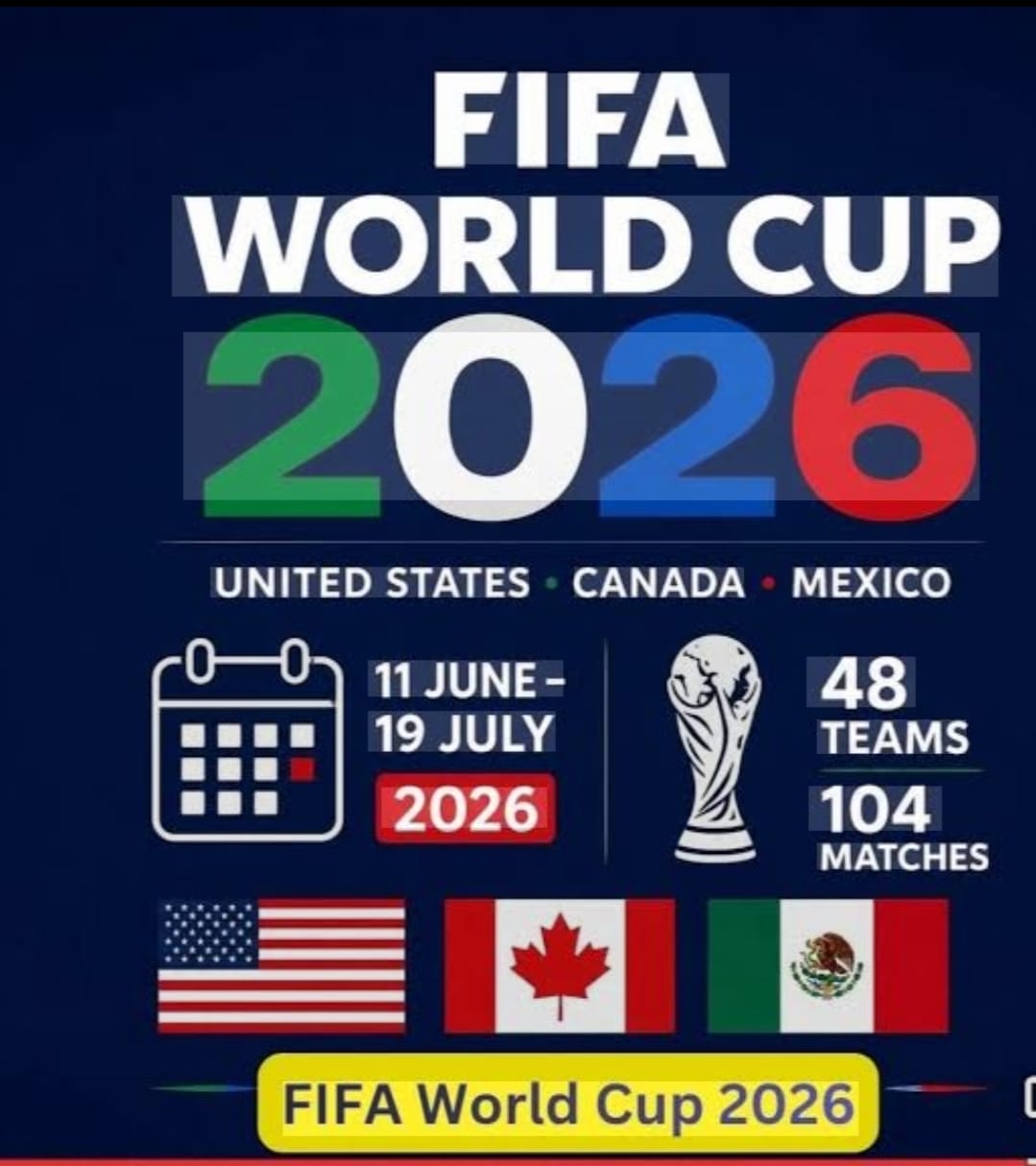
Ronaldo World Cup Glory takes centre stage as the expanded FIFA World Cup 2026 promises history, drama and football immortality
Who will rule the world in American?
Also read: FIFA, CAF Hail DR Congo After Historic 2026 World Cup Qualification

“Some people think football is a matter of life and death. I assure you, it’s much more serious than that.” — Bill Shankly
Football is more than a game.
It is diplomacy without suits. War without bullets. Religion without temples. Business without borders.
It is the heartbeat of the streets, poetry written with boots, and the only beautiful game powerful enough to unite tribes, races, religions and languages under one emotion.
Every four years humanity gathers beneath one global flag.
Football.
For ninety magical minutes, the world forgets politics, economic hardship, social divisions and conflict.
Presidents become fans.
Millionaires scream like children.
Unknown boys become heroes.
And legends become immortal.
Now the world prepares for the greatest football festival ever staged.
The FIFA World Cup 2026 is not merely another tournament. It is the largest World Cup in history.
Hosted jointly by the United States, Canada and Mexico, the competition will feature 48 nations, 104 matches, 16 host cities and 39 unforgettable days of drama, passion and history.
More countries.
More cultures.
More fans.
More rivalries.
More dreams.
And perhaps the greatest storyline football has ever produced.
The final World Cup mission of Cristiano Ronaldo.
THE HISTORY OF FOOTBALL’S GREATEST SHOW
The FIFA World Cup was born in Uruguay in 1930 with only thirteen participating nations.
Nearly a century later, it has become the most influential sporting event on earth, attracting billions of viewers across television, streaming platforms, mobile devices, sports bars, fan parks and viewing centres across every continent.
The World Cup has produced some of sport’s most unforgettable moments.
Pelé announcing himself to the world as a teenage sensation in 1958.
Diego Maradona producing the “Hand of God” and moments later scoring the “Goal of the Century” in Mexico 1986.
Roger Milla dancing at the corner flag while Africa celebrated Cameroon’s historic run in Italia ’90.
Ronaldo Nazário leading Brazil to glory in 2002.
Andrés Iniesta breaking Dutch hearts in Johannesburg.
Lionel Messi lifting football’s ultimate prize in Qatar.
As legendary coach Vittorio Pozzo once said:
“Champions are made by sacrifice, discipline and courage.”
No tournament tests those qualities more than the FIFA World Cup.
THE KINGS OF WORLD FOOTBALL
Only eight nations have ever conquered the world.
Brazil — 5 titles
Germany — 4 titles
Italy — 4 titles
Argentina — 3 titles
France — 2 titles
Uruguay — 2 titles
England — 1 title
Spain — 1 title
Winning a World Cup is difficult.
Defending it is even harder.
Remaining relevant for generations is almost impossible.
That is why football immortality belongs only to a select few.
THE RECORD BOOK OF IMMORTALS
Most World Cup Goals:
Miroslav Klose — 16
Ronaldo Nazário — 15
Gerd Müller — 14
Just Fontaine — 13
Lionel Messi — 13
Kylian Mbappé — 12
Pelé — 12
Cristiano Ronaldo enters America 2026 with eight World Cup goals and nearly 970 career goals, making him one of the most prolific goalscorers in football history.
THE MASTERMINDS ON THE TOUCHLINE
World Cups are won not only by players but also by visionaries.
Vittorio Pozzo.
Mario Zagallo.
Franz Beckenbauer.
Carlos Alberto Parreira.
Didier Deschamps.
Helmut Schön.
Among the coaching stars expected to shape 2026 are Carlo Ancelotti, Didier Deschamps, Lionel Scaloni, Roberto Martínez, Julian Nagelsmann and Luis de la Fuente.
The World Cup is now as much a battle of ideas as a battle of players.
THE BIGGEST AND RICHEST WORLD CUP EVER
Three host nations.
Sixteen host cities.
Forty-eight countries.
One hundred and four matches.
More than six million expected spectators.
Billions of viewers worldwide.
The tournament opens in Mexico City and concludes at MetLife Stadium in New Jersey.
FIFA has approved a record financial package worth approximately $727 million, making America 2026 the richest World Cup in history.
Prize Money Structure
Champions — $50 Million
Runners-Up — $33 Million
Third Place — $29 Million
Fourth Place — $27 Million
Quarter-Finalists — $19 Million
Round of 16 — $15 Million
17th–32nd Place — $11 Million
33rd–48th Place — $9 Million
Every qualified nation also receives preparation funding before the tournament begins.
Never before has so much money been attached to football’s greatest prize.
THE MOST VALUABLE PLAYERS ON EARTH
America 2026 will showcase some of the world’s most expensive football talents.
Kylian Mbappé.
Jude Bellingham.
Vinícius Júnior.
Lamine Yamal.
Florian Wirtz.
Jamal Musiala.
Pedri.
Ousmane Dembélé.
These stars represent billions of dollars in football value and commercial influence.
THE RETURN OF NEYMAR
Brazil remains football’s greatest World Cup nation.
A major storyline is the return of Neymar.
After years of injuries and setbacks, he returns to lead the Samba Boys alongside Vinícius Júnior, Rodrygo and Brazil’s new generation.
Brazil seeks a historic sixth world title.
Neymar seeks redemption.
THE LAST DANCE OF CRISTIANO RONALDO
“Talent without working hard is nothing.” — Cristiano Ronaldo
At 41 years old, Ronaldo arrives in North America for what is expected to be his sixth and final FIFA World Cup.
Five Ballon d’Or awards.
European Championship glory.
Nations League success.
Multiple Champions League titles.
Nearly 970 career goals.
Yet one trophy remains missing.
The FIFA World Cup.
This is his final mountain.
His final audience.
His final opportunity for football immortality.
THE NATIONS THAT WILL BE MISSED
Even with 48 teams, some famous football nations will not grace the World Cup party.
The biggest absentee is Italy, four-time world champions and one of football’s most historic nations.
Nigeria, one of Africa’s football powerhouses and one of the most colourful fan bases in the world, will also be absent.
Other notable football nations missing the celebration include:
Nigeria
Mali.
China.
Russia.
Venezuela.
The World Cup will proceed.
But football lovers know the tournament is always richer when great football nations are present.
NIGERIA MAY BE ABSENT — BUT NIGERIA WILL STILL BE PRESENT
The World Cup may miss the Super Eagles.
But it will not miss Nigerian influence.
Players of Nigerian heritage expected to feature include:
Bukayo Saka.
Eberechi Eze.
Noni Madueke.
Jamal Musiala.
Felix Nmecha.
Michael Olise.
David Alaba.
Manuel Akanji.
Noah Okafor.
Folarin Balogun.
Tani Oluwaseyi.
Promise David.
Nigeria may not appear on the fixture list.
But Nigerian football DNA will be everywhere.
AFROBEATS GOES GLOBAL
Football and music continue to move together.
Davido.
Burna Boy.
Rema.
Ayra Starr.
These global stars continue to project Nigerian culture onto the world stage.
Football travels with music.
And Nigeria continues to excel at both.
NEW FIFA RULES FOR AMERICA 2026
The tournament will introduce significant reforms designed to improve the spectacle.
Five-second countdown for throw-ins.
Eight-second goalkeeper possession rule.
Faster substitutions.
Expanded VAR intervention.
Hydration breaks.
Referee body cameras.
The objective is simple.
More football.
Less time wasting.
Greater transparency.
Better entertainment.
FINAL WHISTLE
“Success is no accident. It is hard work, perseverance, learning, sacrifice and love of what you are doing.” — Pelé
The FIFA World Cup 2026 will be remembered for its scale.
Its economics.
Its entertainment.
Its politics.
Its records.
Its heroes.
Its dreams.
Yet when the final whistle sounds in New Jersey, one question may define the tournament.
Can Cristiano Ronaldo finally conquer the one mountain he has never climbed?
Can football’s greatest goalscorer complete the perfect career?
Can Portugal help their captain achieve the dream that has escaped him for more than two decades?
The stadiums are ready.
The sponsors are investing.
The coaches are calculating.
The young stars are rising.
The legends are preparing.
And humanity prepares once again to gather around one ball.
Because football has returned to America.
And the battle for immortality has begun.
Also read: FIFA Starts 100-Day Countdown to 2026 World Cup Amid Nigeria vs DR Congo Dispute
Catch you at the World Cup.


By Seun Oloketuyi,
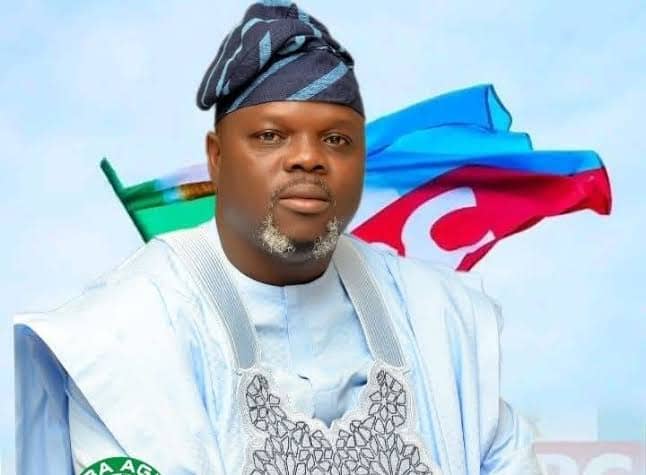
The All Progressives Congress in Oyo State has settled on a two-man ticket for the 2027 governorship election, with Senator Sharafadeen Abiodun Alli as its candidate and Hon. Adesoji Michael Adedeji as his running mate.
Also read: Onaiyekan Urges Nigeria to End Election Rigging, Political Abuse
The two were formally presented on July 2, 2026, in Ibadan, where Alli also received the party’s nomination form.
Since then, one phrase has followed the ticket: “two for the price of one.” It is a simple description, but there is some thinking behind the pairing.
Who is Adesoji Adedeji?
At 46, Adesoji Adedeji is the younger half of the ticket. He studied Economics at Obafemi Awolowo University, Ile-Ife, and is from Iwo-Ate in Ogo Oluwa Local Government Area of Oyo State, in the Ogbomoso zone.
He is also the younger brother of Dr Zacch Adedeji, Executive Chairman of the Nigeria Revenue Service.That family connection has brought some attention to his emergence, but the APC ticket also gives Adedeji an opportunity to build his own political profile.
Unlike Alli, who has spent years in politics and currently represents Oyo South in the Senate, Adedeji is relatively new to elective politics. His emergence therefore brings a younger face and a different background to the ticket.
There is also the question of geography.
Alli is from Ibadan, while Adedeji comes from Ogo Oluwa. In a state where the different zones often feature prominently in political calculations, that is part of what makes the pairing notable.
Why ‘2 for 1’?
The idea behind the phrase is fairly straightforward.
On one side is Alli, a politician with years of experience in public office. On the other is Adedeji, a younger candidate with an Economics background and a different professional experience. Then there is the geographical spread.
Ibadan has long been a major centre of political activity in Oyo State. Adedeji’s roots in the Ogbomoso axis allow the APC to present the ticket as one that extends beyond the state capital.
Whether that will translate into votes is another matter. For now, the choice gives the party a ticket that brings different parts of the state into the same political arrangement.
What Adedeji says he wants
Since emerging as Alli’s running mate, Adedeji has also spoken about some of the issues he wants the ticket to address. At a stakeholders’ meeting, he talked about improving infrastructure across Oke-Ogun, Ogbomoso, Ibarapa, Oyo and other parts of the state.
He also spoke about the need for functional hospitals in every local government and greater financial and administrative autonomy for local councils.“Every local government will receive all that is due to them,” he said.
The message is centred largely on taking development beyond the major urban areas and ensuring that local communities also benefit from government programmes.
The politics behind the pairing
Adedeji’s emergence came after Alli secured the APC governorship ticket in a primary that featured several notable aspirants, including former Deputy Governor Rauf Olaniyan, Akeem Agbaje and former Minister of Power, Chief Adebayo Adelabu. The primary has ended, but bringing the party together after a contest involving several interests is now part of the work ahead. That was evident at the unveiling, where party leaders repeatedly stressed the need for unity.
Oyo APC Chairman, Chief Moses Alake Adeyemo, called on party members to put their differences aside and work towards the 2027 election. “By the grace of God, come May 29, 2027, our governor and deputy governor will be Senator Sharafadeen Alli and Hon. Adesoji Adedeji,” he said.
Alli also called on his former opponents and their supporters to work with the party’s ticket. The task now goes beyond simply presenting the two candidates.
Alli and Adedeji will have to bring their different backgrounds together and show party members and voters across the state how they intend to work as a team.
Two Men, One Ticket
So, what exactly does the APC have in Alli and Adedeji?
It has a sitting senator with years of political experience and a younger running mate from a different part of the state. It has Ibadan and Ogo Oluwa. And it has two men with different professional and political backgrounds coming together on the same ticket. That is where the “2 for 1” description comes from.
Also read:
But a slogan is only one part of a political campaign. Alli and Adedeji will still have to explain what they want to do with the mandate they are seeking and how their plans would work across Oyo State. For now, the APC has made its choice.
The next stage is taking that ticket to the people.
By Sola Fajobi,
The governorship contest for Ogun State in 2027 has officially begun.
INEC has blown the whistle, full campaigns have started, and anyone who lives, does business, or has family in Ogun State knows the political space is fully activated.
Also read: Nigeria’s Press Freedom Under Pressure as Civic Violations Rise
The billboards are up, the consultations are nightly, and the debates in beer parlours, market stalls and WhatsApp groups are getting intense.
I write from Lagos, but with business and family interests across Abeokuta, Ijebu-Ode, and Ota, Ogun politics is not abstract to me. It affects my daily reality.
At the centre of this unfolding drama are two leading contenders whose names dominate every conversation.
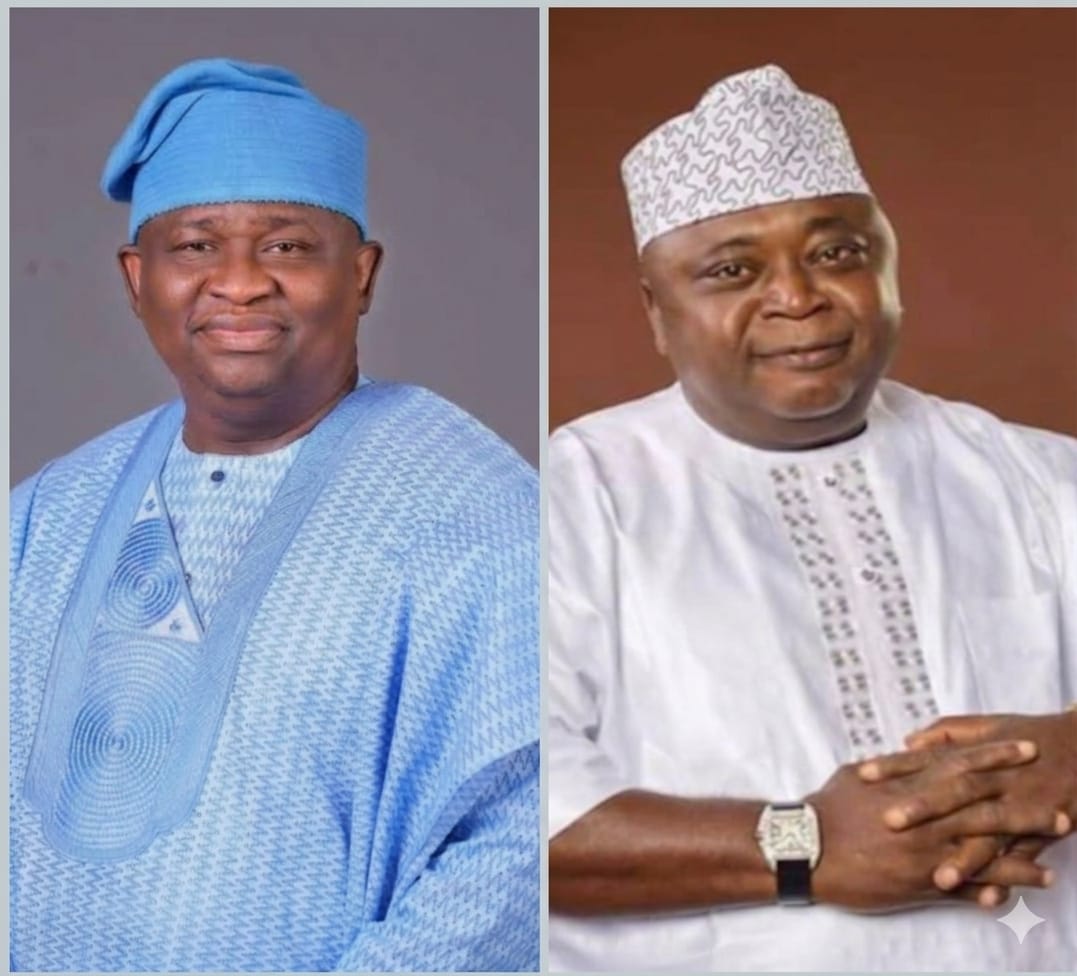
The Two Leading Contenders
First is Senator Solomon Olamilekan Adeola, popularly known as Yayi. A three-term federal lawmaker, from Lagos West to Ogun West, and currently Chairman of the Senate Appropriation Committee.
Yayi is known for a very unusual brand of senatorial representation – heavily focused on facilitation of projects and mass empowerment programmes across all wards of Ogun West. He has built a reputation as a highly networked politician with a formidable structure across the state.
Second is Hon. Oladipupo Adebutu, widely known as Lado. A thoroughbred Ogun politician. Member of the House of Representatives in the early 90s, governorship candidate of the PDP in 2019 and 2023, and a grassroots mobilizer with deep roots in Remo.
He is from Iperu-Remo, the same town as the incumbent Governor, Prince Dapo Abiodun. As the son of Sir Kessington Adebukunola Adebutu, a man whose philanthropic footprint is legendary across Nigeria, Lado brings both political experience and enormous goodwill.
Both men are experienced, both are prepared, and by all indications, both have the financial capacity to run a full-scale governorship campaign across 236 wards. This is not going to be a contest for the faint-hearted.
The Noise Around Nativity
One narrative that has unfortunately dominated the last few weeks is the question of nativity.
Whispers about where a candidate’s father was buried, where he originally hails from, and whether he is truly from Ogun State.
I think this is a disservice to Ogun people. Ogun State, the cradle of the educated elite in Nigeria, has always voted based on capacity and promise, not narrow identity politics.
During a visit to Abeokuta recently, I overheard a conversation among some young graduates that summarized the mood of many.
Their point was simple: they have seen tangible empowerment programmes executed by Senator Yayi as a serving Senator in Ogun West, and they are more interested in who can scale that to the entire state than in debates about origin.
Whether one supports Yayi or Lado, we must agree that Ogun people deserve an issues-based campaign.
The two leading candidates have a responsibility to tell their supporters to focus on manifestos, not personal attacks. That is the Ogun way.
The Deeper Conversation: Equity and Zoning
If we move past the noise, Ogun faces a deeper, more structural conversation – equity.
Let us look at history:
– 1979-1983: Chief Olabisi Onabanjo – Ogun East (Ijebu)
– 1992-1993: Chief Olusegun Osoba – Ogun Central (Egba)
– 1999-2003: Chief Olusegun Osoba again – Ogun Central
– 2003-2011: Otunba Gbenga Daniel – Ogun East (Ijebu)
– 2011-2019: Senator Ibikunle Amosun – Ogun Central (Egba)
– 2019-Date: Prince Dapo Abiodun – Ogun East (Remo/Iperu)
Ogun State was created in February 1976. About 50 years after its creation, Ogun West – the Yewa-Awori zone comprising 5 local governments with huge industrial potential in Ota/Agbara and massive agricultural land in Imeko, Ipokia and Yewa North – has never produced a Governor.
This is not a small statistic. It is a historical imbalance.
This is where the Iperu question becomes unavoidable. If Governor Abiodun, who is from Iperu-Remo in Ogun East, completes his term in 2027, how do we justify another Governor from the same town, Iperu, immediately succeeding him? Even within Ogun East, there are Ijebu, Remo North, Shagamu, and other areas who would also feel shortchanged.
Can one town produce two Governors back-to-back in a diverse state of four divisions? That question bothers many neutral stakeholders I have spoken to.
Philanthropy, Structure and Performance
Hon. Adebutu has undeniable strengths. He is a grassroots politician who understands Ogun East politics deeply. He has been consistent since 1992, and he has shown resilience.
He also carries the enormous goodwill of the Adebutu family name – a family that has given so much to education, sports and employment in Ogun State. For many, supporting Lado is a way of appreciating Sir Kessington Adebutu’s decades of philanthropy.
Senator Adeola on the other hand brings a different strength – a record of what he did with the legislative power he had.
His model in Ogun West has been to turn a senatorial district office into a quasi-development agency – facilitating schools, ICT centres, market support schemes, bursaries, and training programmes. For many outside Ogun West, the question is: can this model be scaled to the whole state?
Interestingly, both offer different answers to the same question Ogun people are asking: Who can create jobs for our graduates, fix our rural roads in Ogun East, address insecurity on our farmlands in Yewa, bring order to our industrial hubs in Ogun Central, and truly empower our market women?
*My Final Take*
I have friends in both campaigns and I respect both candidates. Both have paid their dues and both are eminently qualified to aspire to lead Ogun State.
But Ogun State at this junction must make a choice that goes beyond individual ambition. It must make a choice about inclusion, about fairness, and about performance.
For about 50 years, Ogun West has waited. The agitation for Ogun West to produce the next Governor is not just about Yayi, it is about giving every part of Ogun a sense of belonging in the Gateway State project.
At the same time, Ogun needs a Governor who has shown empathy, who has shown he can use public office to touch ordinary people even before becoming Governor, and who can work tirelessly across all zones.
Also read: Nigeria’s Press Freedom Under Pressure as Civic Violations Rise
I leave Ogun people to judge who best fits that description.
Let Ogun choose wisely.

By Bola BOLAWOLE,
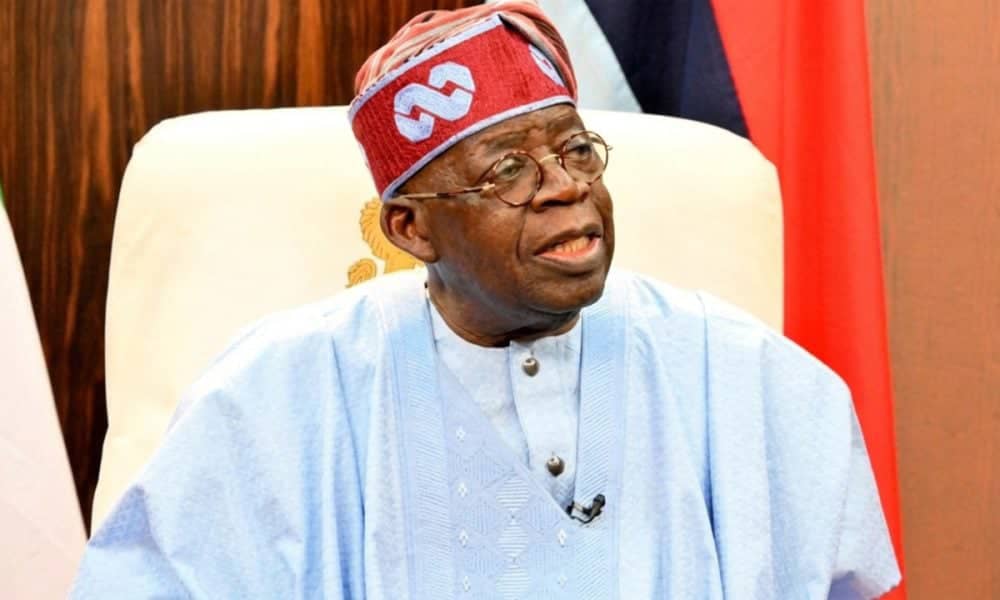
President Bola Ahmed Tinubu’s decision to skip the ongoing 81st session of the United Nations General Assembly, the third such abstention in a row, has raised eyebrows and sparked speculations.
Also read: Governor Dauda Lawal Approves 95% Salary Increase for Health Workers
Expectedly, opposition politicians have wasted no time in feasting on the official announcement that the vice-president, Kashim Shettima, will, once again, stand in for the president.
This trumps an earlier announcement by Jimoh Ibrahim, the country’s Ambassador to the United States/Permanent Representative to the United Nations, that not only would the president attend the annual meeting of world leaders at the UN headquarters in New York, USA, but that a vantage position had been secured for him to sit very close to the maverick United States’ president, Donald Trump!
Since he assumed the country’s leadership in 2023, Tinubu has yet to attend a single UNGA meeting; so also has he yet to pay either official or private visit to the United States despite that he has reportedly embarked, so far, on 52 foreign trips. He has visited at least 30 different countries across Europe, Asia, Africa, and the Americas, spending approximately 261 days.
As we speak, the president is out of the country on holidays, first to the UK after which he is expected in France. So, is there anything that aileth Tinubu about the United States? That is where the speculation begins; however, it does not end there!
Is President Tinubu deliberately avoiding the United States? Has it got anything to do with the unending controversy and legal battles over the FBI files and Tinubu’s past activities in the United States? He schooled there; he also worked there before returning to Nigeria decades back.
During the giddy days of the Sani Abacha military dictatorship, the US provided succour and a safe haven for Tinubu and many other pro-democracy activists. What has since changed is the question to ask if the suspicion is that the president is deliberately avoiding the United States.
Or has it got anything to do with the unpredictability of President Trump and the activities of anti-Tinubu politicians here at home and the paid groups doing their bidding in the US? Who dare put anything beyond a president that organized the storming, arrest, and rendition of a sitting foreign leader, hauling him and his wife to the US for trial on drug-related charges, with the country of the leader concerned and the international community as a whole helpless to do anything about it! “What if” then becomes the question should Tinubu set foot on US soil! Is it not better, then, to err on the side of caution?
Another school of thought is that Tinubu’s health might need attention. Unlike in much of the Western world, the secrecy that surrounds the health conditions of Nigerian, nay, African leaders makes it difficult to speak authoritatively on their health conditions.
And this is not new. Babangida, Abacha, Abdulsalami, Yar’Adua all had rumours swirling around their health conditions while in office. Abacha and Yar’Adua died in office. Buhari spent close to one-third of his tenure shuttling between the country and his doctors in the UK. It has been said, this time around, that Tinubu’s doctors are in France.
With part of his holiday reportedly scheduled to be spent in Charles de Gaulle’s country, could this holiday be another disguised medical tourism? Health is wealth, as they say, and prioritizing one’s health and wellbeing over and above a meeting, no matter how important, can be justified, especially when we have been told that the president can be (adequately?) represented at the UNGA.
Then I asked Google: Is it compulsory that the president lead his country’s delegation to the UNGA? The answer is: No, it is not compulsory for a president or prime minister to lead their country’s delegation to the UNGA.
Alternatively, the president or prime minister can be represented by the vice president or deputy prime minister, the foreign affairs minister or the country’s permanent representative at the UN who can speak, vote and act on behalf of the country or member-state concerned.
History records that many world leaders have frequently failed to personally attend UNGA due to divergent reasons, such as pressing domestic issues, disasters or local crises needing their personal attention or for health reasons.
Super-power rivalry and politics, and the need to remain non-committal or stay neutral from taking sides on volatile issues have also been known to compel foreign leaders to skip personally attending UNGA.
When a country’s leader attends the United Nations General Assembly (UNGA) in person, it provides several distinct strategic, diplomatic, and political advantages that cannot be replicated through virtual participation or lower-level delegation.
Some of these advantages are: High-level bilateral diplomacy (the “Margin” meetings); spontaneous networking whereby leaders hold informal, face-to-face meetings on the sidelines (the “margins”) of the assembly, allowing them to resolve disputes or advance treaties quickly.
It also affords the opportunity of building rapport. Personal presence helps build trust and personal relationships between heads of state, which can be critical during international crises.
Other advantages include enhanced global visibility and influence as UNGA gives leaders a global or world stage to operate from.
A speech delivered in person by a head of state commands significantly more international media attention and diplomatic weight than a pre-recorded video or speech read by a representative.
Some world leaders have been noted for setting agendas on issues of national, regional or international importance at UNGA. Leaders can directly pitch their nation’s foreign policy priorities, economic opportunities, or security concerns to a global audience.
Personal attendance at UNGA also helps to facilitate efficient multilateral engagement or what is called “mini-Summits” among leaders.
Leaders can participate in localized, high-level side events or regional summits (such as G7, BRICS, or regional blocs like the EU and the African Union) that have been known to convene in New York during the UNGA week. When leaders attend UNGA in person, direct access to decision-makers is made possible.
Smaller or developing nations also can seize the opportunity to have direct, unmediated access to leaders of superpower nations as well as heads of major international organizations like the UN itself, the World Bank and IMF. We can go on and on!
At the level of individual nations, attending UNGA is said to project an image of strength, global respect, and statesmanship to citizens back at home.
Newly-elected leaders especially use UNGA to announce themselves to the international community to garner support and recognition, to state their goals and set agendas as well as make profound statements on their administration’s foreign policy direction.
UNGA also serves as a formal introduction to the international community and signals the leader’s commitment to global cooperation.
From the above, it is, without doubt, a disadvantage when leaders absent themselves from UNGA. No matter how “powerful” a substitute representation is, it cannot be the same as when the president or prime minister of a country leads it.
There is what is called “bragging rights” among leaders. Presidents prefer to deal with presidents; vice presidents or foreign ministers will be shuffled down the ladder to discuss with their equivalents or counterparts.
The reverse is the case, however, where presidents of less powerful countries queue or consider it a privilege to have an audience with the foreign affairs minister or envoy of powerful countries such as the US, China, Russia, etc.
One narrative for Tinubu’s recurring absence at UNGA being spinned by his detractors is the fear of the unknown over the FBI files and Tinubu’s alleged past encounter with the US judicial system.
But a man, once tried and acquitted of criminal charges, cannot be tried again on the same offence except fresh evidence pops up that possesses the likelihood of affecting the outcome of the trial in the opposite direction.
Furthermore, can any harm come the way of a visiting president attending UNGA? Or, put more directly and blatantly, can a foreign leader attending UNGA in New York, USA be arrested for any reason whatsoever by the US authorities? The answer is, no; leaders attending UNGA cannot be arrested, charged or tried in the US because they enjoy immunity.
Under the UN Headquarters Agreement, the United States has an international obligation to allow accredited representatives entry and transit to the UN as well as respect their diplomatic inviolability.
In like manner, no US state, city, local government or county official possesses the legal power to arrest a protected visiting foreign leader.
From the above, it is most unlikely that President Tinubu stands the risk of being arrested in the US if he chooses to personally attend UNGA.
What may happen is that demonstrators may mass at the UN headquarters venue of UNGA, organize protests and heckle him and his delegation.
That will be embarrassing enough. For sure, it will portray the country in bad light and dent its image – which all Nigerians, including the president’s adversaries, will suffer from.
Also read: Governor Dauda Lawal Approves 95% Salary Increase for Health Workers
To avoid such an embarrassment and the deleterious effects it may have on the country’s image appears as the most germane reason why Tinubu has kept away – and may continue to keep sway – from UNGA until, maybe, a more predictable president mounts the saddle in the United States. And the losers? – Nigeria and Nigerians!
(Published in the TREASURES column on the back page of the NEW TELEGRAPH newspaper edition of Wednesday, 23 September, 2026).
-
Politics3 years ago
13 Ondo Assembly Members Disown Endorsement of Aiyedatiwa
-
Politics3 years ago
APC Group, Ondo Govt, Quarrel Over Money for Endorsement
-

 Trending News5 years ago
Stop unsavoury, inciting statements – DSS warns
-

 Others5 years ago
Adron Homes Celebrates 10 Years Of Housing Excellence
-

 Humanity5 years ago
President Buhari Commiserates With Ambassador Maureen Tamuno Over The Loss Of Her Father
-

 Others7 years ago
EX- CUSTOMS BOSS, IBRAHIM MERA’S DWINDLING FAME
-

 Business2 years ago
Bigi Carbonated Soft Drinks Treats 40 Consumers to an Epic Easter Movie Hangout
-

 Business2 years ago
Wema Bank Shines at Global SME Finance Forum Conference Awards 2024 …Awarded: • SME Financier of the Year (Africa) • Platinum Award for Best Financier for Women Entrepreneurs (Africa)