Opinion
Three Years of President Bola Ahmed Tinubu: Reform, Progress and Work in Progress

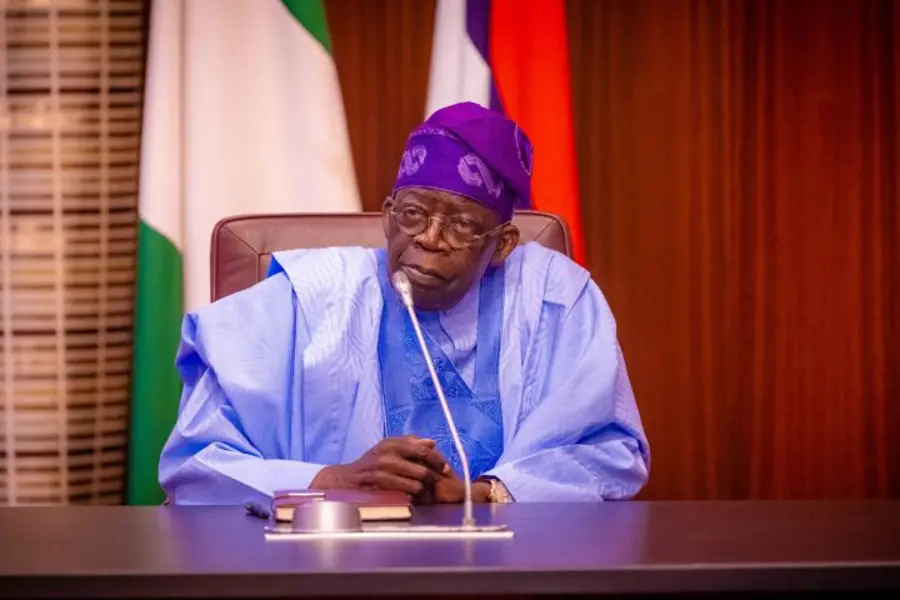
Tinubu economic reform gains: Nigeria records progress in fiscal, infrastructure and energy reforms, with inflation and insecurity still challenging
Reform, Renewal and the Repositioning of Nigeria (2023–2026)
Also read: Chief Abiola Ogundokun Visits President-Elect, Bola Ahmed Tinubu

INTRODUCTION
On May 29, 2023, Nigerians entrusted the leadership of the nation to President Bola Ahmed Tinubu at one of the most difficult periods in Nigeria’s modern economic history.
The country faced a crippling fuel subsidy regime, mounting debt obligations, a fragmented foreign exchange market, weak investor confidence, insecurity, deteriorating infrastructure, declining industrial productivity, inflationary pressure, and severe strain on public finances.
The administration inherited an economy many analysts described as structurally weak and fiscally distressed.
Foreign exchange obligations had accumulated into billions of dollars. Fuel subsidy payments had become unsustainable. NNPCL remittances into the Federation Account had weakened significantly. States struggled financially. Local governments had little developmental impact at the grassroots. Several sectors of the economy were surviving largely through borrowing and unsustainable government intervention.
Under previous administrations, many states struggled repeatedly to pay salaries. During the Jonathan administration, over twenty-seven states reportedly faced severe salary payment challenges. Under former President Muhammadu Buhari, bailout interventions became necessary for several states, while Ways and Means financing expanded significantly as government increasingly relied on Central Bank financing to sustain the economy.
At one point, debt servicing reportedly consumed almost all federal revenues, while the country borrowed heavily to sustain fuel subsidies and recurrent obligations.
Nigeria was also operating a multiple exchange-rate system widely criticised as vulnerable to corruption, arbitrage, leakages, and unfair access to foreign exchange.
Crude oil production faced serious challenges, oil theft expanded, pipelines deteriorated, and even future crude production was reportedly committed in advance under forward-sale arrangements.
From his very first day in office, President Bola Ahmed Tinubu signalled that difficult decisions would be required to stop what many viewed as national economic bleeding.
His declaration that “fuel subsidy is gone” immediately defined the tone of an administration prepared to undertake painful but structural reforms rather than continue unsustainable economic practices.
Many observers believe the President faced two choices: either continue the old system and join the cycle of unsustainable spending, or confront the structural distortions directly.
The administration chose the more difficult path.
Three years later, Nigeria still faces major economic and security pressures, but many Nigerians, investors, development institutions, and private sector stakeholders believe the country is undergoing one of the boldest economic and institutional reform programmes since the return to democracy in 1999.
This assessment examines the administration under three broad categories:
THE BEST
Areas where reforms have produced the strongest visible structural impact.
BETTER
Areas showing major progress and positive institutional direction.
GOOD / WORK IN PROGRESS
Areas where reforms are ongoing but where Nigerians still expect deeper results and broader national impact.
THE BEST
1. Fiscal Reforms & Financial Restructuring
One of the biggest structural reforms under the administration has been the removal of fuel subsidies and the strengthening of public revenues.
The reforms significantly increased allocations to states and local governments through FAAC.
In May 2023, the final FAAC allocation under the Buhari administration was approximately ₦600 billion.
By June 2023, the first full month under President Tinubu, approximately ₦1.9 trillion reportedly entered the Federation Account, with about ₦1.2 trillion shared among the three tiers of government while substantial reserves were retained.
Average Monthly Gross FAAC Allocation to States
2023 — ₦379 billionQ1 2026 — ₦816.41 billionIncrease — +115.4%
Average allocations to the 774 local governments reportedly now exceed ₦400–₦500 billion monthly in several periods.
As a result:
States now execute larger infrastructure projects
Salary payments improved significantly
Local projects increased
Social intervention programmes expanded
Dependence on salary bailout funds reduced substantially
Today, many states are so financially stronger that several are competing to:
Build airports
Establish state airlines
Expand transportation systems
Develop industrial corridors
Upgrade healthcare and education infrastructure
Nigeria is gradually attempting to build its economy from the bottom up.
However, stronger transparency and accountability are still required.
2. Electricity Autonomy & Energy Reforms
One of the most historic constitutional reforms under the administration has been electricity autonomy for states.
Before President Tinubu, states could not independently generate, license, regulate, and fully manage electricity markets within their territories.
Today, every state now possesses greater constitutional authority to:
License electricity operators
Generate power
Regulate electricity markets
Build state electricity systems
As a result, many states are now competing among themselves to become the first to achieve stable 24-hour electricity supply.
This reform fundamentally changed electricity from being almost exclusively controlled at the federal level to becoming a shared national development responsibility.
The administration also intensified:
Rural electrification
Renewable energy projects
Transmission improvements
Metering reforms
Independent power investments
The CNG initiative also emerged as a major transportation and energy reform designed to reduce fuel costs and improve affordability.
Private sector participation expanded significantly through:
Dangote Group
BUA investments
Independent energy investors
Aliko Dangote also announced long-term electricity ambitions capable of contributing up to 20,000MW over time.
3. Oil, Gas & Refining Transformation
The oil and gas sector witnessed major restructuring.
Nigeria gradually moved away from heavy dependence on imported refined petroleum products toward becoming an emerging exporter through:
Dangote Refinery
Refinery rehabilitation
Increased local refining capacity
One of the most strategic interventions was allowing local crude transactions in naira for domestic refining support.
This policy helped reduce pressure on foreign exchange demand while supporting local refining operations.
Pipeline restoration improved significantly.
Oil theft reportedly reduced sharply through:
Enhanced surveillance
Metering reforms
Security coordination
Crude Oil Production
2023 — 1.19 million bpd2026 — 1.49 million bpdIncrease — +25%
NNPCL reforms under Mr. Bayo Ojulari introduced stronger professionalism and operational restructuring.
4. Infrastructure Revolution & Railway Expansion
The administration embarked on some of the largest infrastructure projects in modern Nigerian history.
Signature Projects
Lagos-Calabar Coastal Highway
Sokoto-Badagry Super Highway
Railway modernisation projects
Federal highways and bridges
Both mega highways include future rail infrastructure integration.
Expected Benefits
Tourism growth
Coastal industrialisation
Agricultural logistics
Interstate commerce
Housing expansion
Marine economy growth
Regional integration
Between 16 and 18 states are expected to benefit directly from the Sokoto-Badagry corridor.
The administration also granted railway autonomy to states.
Before these reforms, rail transportation remained largely under exclusive federal control.
Today, states can:
Develop rail systems
Partner with investors
Expand transportation infrastructure
Lagos State is already taking major advantage of this reform through rail expansion.
Nigeria’s long-term railway master plan is expected to significantly reduce:
Transportation costs
Human movement costs
Logistics expenses
Cargo movement challenges
5. Education Revolution & Human Capital Development
One of the administration’s most transformative interventions has been in education.
Key Programmes
NELFUND
3MTT
TVET
DL4ALL
The student loan programme is increasingly viewed as a major game changer.
Many Nigerians now believe that any child can begin and complete tertiary education regardless of financial background.
JAMB applications reportedly rose significantly partly due to expanded access to educational financing.
Students in several programmes also receive monthly support stipends.
In addition:
Federal technical and vocational schools became tuition-free
Students receive upkeep support
Technical education expanded nationwide
Every state now has expanded technical and vocational opportunities through federal government interventions
The administration’s broader objective appears aimed at moving Nigeria from a purely consumption-driven economy toward industrialisation and skills-based production.
Another major achievement is industrial peace within tertiary education.
Unlike previous years marked by prolonged ASUU strikes, students who entered universities in 2023 are progressing toward graduation without nationwide disruptions.
6. Local Government Autonomy & Regional Development
One of the most historic governance reforms under the administration was direct allocation to local governments.
This reform has the potential to:
Deepen grassroots governance
Improve accountability
Expand rural infrastructure
Strengthen the micro economy
The six regional development commissions also represent deeper decentralisation of development planning.
Each geopolitical region now possesses stronger institutional platforms to coordinate:
Regional infrastructure
Economic planning
Development priorities
Strategic investments
7. Banking, Capital Market & Financial Stability
The administration introduced major banking recapitalisation reforms through the Central Bank of Nigeria.
The reforms strengthened:
Bank balance sheets
Investor confidence
Industrial financing capacity
Long-term lending potential
Nigerian Stock Market Growth
May 2023 — 52,751.432026 — 249,738.84Growth — +373%
Nigeria’s stock market became one of the strongest-performing markets globally during the period.
Foreign Reserves
2023 — Approximately $3–4 billion under severe pressure levels2026 — Approximately $48–49 billion
The administration also reportedly:
Cleared major FX backlogs
Stabilised the CBN
Reduced direct monetary financing
Cleared IMF obligations
Nigerians can increasingly use naira bank cards internationally in selected countries without relying heavily on cash dollars or pounds.
BETTER
8. Telecommunications & Digital Economy
The digital economy received major policy attention.
Major Achievements
National fibre optic backbone expansion
Rural telecom infrastructure growth
Data hosting improvements
Broadband expansion
Increased digital connectivity
Nigeria is gradually positioning itself as a major digital economy hub in Africa.
9. Aviation & Ease of Doing Business
Before 2023, several foreign airlines threatened to reduce operations due to trapped funds.
The administration cleared major obligations and restored confidence.
Aviation Improvements
More direct international flights
Aircraft leasing partnerships
Aviation maintenance investments
Airport automation reforms
Nigeria’s aviation industry is now among the fastest-growing aviation markets globally.
Ease of Doing Business Reforms
Visa-on-arrival systems
Contactless passport processing
Airport automation
Cross-border banking expansion
10. Economic Diversification
Nigeria is gradually moving away from dependence on a mono-product oil economy.
Growth sectors increasingly include:
Agriculture
Mining
Telecommunications
Manufacturing
Housing
Technology
Marine economy
Aviation
Logistics
Mining reforms attracted increasing international attention.
The administration maintains that reforms are opening doors for private enterprise to help drive Nigeria toward a one-trillion-dollar economy.
Over two million Nigerians are reportedly working directly or indirectly across federal, state, and local government infrastructure and development projects nationwide.
GOOD / WORK IN PROGRESS
11. Inflation & Cost of Living
Despite reforms, inflation and purchasing power remain major concerns.
Inflation Rate
2023 — 20.06%2026 — 15.69%
Though inflation moderation is positive, many Nigerians still face:
High food prices
Transportation costs
Energy costs
Reduced purchasing power
However, food inflation has moderated compared to peak crisis periods.
The reforms remain painful for many households.
Citizens must also recognise that stable electricity, telecommunications, and modern infrastructure require realistic pricing and sustainable investment.
12. Security Challenges
Security investments increased substantially through:
Military hardware
Surveillance systems
Intelligence coordination
Forest guards recruitment
However:
Banditry
Kidnapping
Terrorism
Organised crime
remain major national concerns.
One of the most significant security improvements recorded during the period occurred in Nigeria’s South-East region.
When President Tinubu assumed office in 2023, many parts of the region were heavily affected by insecurity, armed separatist violence, illegal militia activities, and the enforcement of sit-at-home orders every Monday.
In several areas, criminal elements and armed groups had created severe fear within communities, disrupted businesses, paralysed economic activities, and challenged state authority.
However, through increased cooperation between the Federal Government, security agencies, and South-East governors, major security operations were intensified across the region.
Several militia camps were dismantled, many suspects were arrested and prosecuted, while enforcement of illegal sit-at-home orders weakened significantly.
State governments in the region also took firmer positions by insisting that:
Markets must open
Citizens must return to work
Economic activities must continue normally
As a result, the 2025 festive season in many South-East states was widely regarded by residents and travellers as one of the safest and most economically active periods in recent years.
Many Nigerians travelled across the region by road during the Christmas and New Year celebrations with significantly improved confidence compared to previous years.
Important National Reflection
Insecurity must never be tribalised, sectionalised, politicised, or trivialised.
Nigeria’s enemies are common enemies.
Those who benefited from:
Subsidy scams
Oil theft
Foreign exchange arbitrage
Economic sabotage
Corruption networks
may naturally resist reforms threatening entrenched interests.
The administration itself survived intense political and economic pressures during the reform process.
Many Nigerians believe there is still coordinated resistance against ongoing reforms.
Yet there remains belief that the country can overcome these challenges.
RECOMMENDATIONS
To strengthen ongoing reforms and deepen national impact, the following recommendations deserve serious consideration:
1. Strengthen Local Government Transparency
Quarterly financial reports should be mandatory for all local governments
Mid-year and annual performance reports should be publicly accessible
Quarterly town hall meetings should become compulsory
Citizens should have direct access to budgets and procurement details
Monitoring and accountability systems should be strengthened
2. Expand Informal Sector Enumeration
Claims that Nigeria has over 140 million unemployed people may not fully capture the realities of Nigeria’s large informal economy.
Millions of Nigerians operate daily within informal and self-employed sectors without formal CAC registration.
These include:
Vulcanisers
Tailors
Mechanics
Food vendors
Carpenters
Electricians
Barbers
Hairdressers
Plumbers
Fishermen
Meat and fish sellers
Market traders
Kiosk operators
Phone accessory sellers
Business centre operators
Informal transport workers
Security guards in estates and private homes
Gatemen
Street and traffic vendors
Many of these citizens earn daily income and support families despite not appearing within formal employment databases.
Therefore:
Every local government should establish local economic and statistical enumeration units
Informal businesses should be properly documented
Local economic data should be updated regularly
Grassroots business activities should be integrated into national economic planning
A stronger grassroots statistical framework will improve:
Economic planning
Tax administration
SME support
Credit access
Skills development
Social intervention targeting
3. Security & Community Intelligence
While awaiting constitutional approval for state policing:
Governors should strengthen Ministries of Security
Competent Security Commissioners should be appointed
Community intelligence systems should expand
Citizens must cooperate more closely with security agencies
4. Grassroots Economic Inclusion
Local contracts should primarily benefit qualified indigenous residents of local governments.
The objective should be to ensure that:
More money circulates within communities
Local businesses grow
Youth employment expands
Micro economies become stronger
The people must directly see and feel development.
FINALLY
Three years into office, President Bola Ahmed Tinubu’s administration presents a record defined by:
Fiscal restructuring
Banking reforms
Infrastructure expansion
Energy reforms
Educational interventions
Housing expansion
Agricultural modernisation
Technology development
Capital market growth
Telecommunications expansion
Security reforms
The administration maintains that these reforms are opening doors for private enterprise to thrive while positioning Nigeria toward long-term economic transformation.
Nigeria is not yet where it desires to be.
But many Nigerians believe the country is far from where it started the journey in 2023.
There is growing belief that there is now visible light at the end of the tunnel.
Ultimately, history will judge the Tinubu years not merely by reforms announced or projects initiated, but by whether these reforms eventually translate into:
Better living standards
Lower poverty levels
Stronger institutions
Greater national unity
Sustainable prosperity
Increased employment
Social stability
The journey remains difficult, but the nation must continue navigating carefully, patiently, and collectively toward stability and prosperity.
Also read: Tinubu’s Aide Sunday Dare to Deliver TheGazelleNews’ Anniversary Lecture
Let us keep hope alive and navigate the rivers safely.


By Folake Adeyemi,
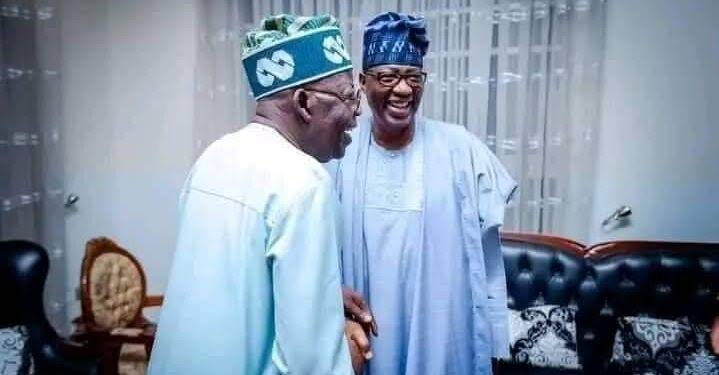
Politics rewards those who show up when it matters. The appointment of Senator Gbenga Daniel as Deputy Zonal Coordinator I (South West) of the Contact and Mobilisation Directorate of the APC Presidential Campaign Council is, in my view, a case of the right man being handed the right assignment.
Also read: GFF@25: OGD Medical Outreach Targets 15,000 Beneficiaries Across Ogun East
Consider the timing. Ogun State politics is currently thick with intrigue, rival camps and loud posturing. In such seasons, a leader’s actions say more than his supporters’ press statements.
President Bola Ahmed Tinubu has, once again, spoken through action: Senator Daniel is his friend and ally, and he is trusted with one of the most sensitive committees in the campaign. Those still trying to read political tea leaves in Ogun would do well to read this one clearly.
The Contact and Mobilisation Directorate is not ceremonial. It is where goodwill is converted into Permanent Voter Cards, and where PVCs are converted into votes.
With Borno State Governor, Prof. Babagana Zulum, leading the committee, the party has signalled that it takes this assignment seriously.
For the South West, the message is plain: the region must deliver for the President, whose lasting impact depends on the votes it brings.
Daniel is well suited to that task. He is a former Governor of Ogun State and the Senator representing Ogun East, but his political weight has never stopped at the boundaries of one senatorial district. It is felt across Ogun and throughout the South West.
He also knows national campaigns from the inside, having served as Campaign Director-General for former Vice President Atiku Abubakar. That is not experience one acquires from the sidelines.
Nor is he a politician who surfaces only at election time. Through the BATOGD Movement, which he founded, he is currently running an unprecedented medical outreach, and he is known for economic empowerment programmes that touch ordinary lives.
Mobilisation works best when it is built on genuine presence in communities, and that is exactly what he brings.
He will not work alone. Niyi Adebayo, Segun Oni and Akinwunmi Ambode share the zonal leadership with him, and each has points to prove.
The South West team is well prepared and well recommended, and the healthy competition among these political veterans may well be the region’s biggest asset.
The challenge now is delivery. Appointments are easy to celebrate; results are what history records.
Also read: GFF@25: OGD Medical Outreach Targets 15,000 Beneficiaries Across Ogun East
If Senator Daniel brings his experience, his grassroots network and his reputation as a mobiliser to bear on this task, the South West will have little reason to fear for the outcome.
For now, one conclusion stands: Gbenga Daniel is a leader to reckon with.

THERE have been low-quality rumours, and preponderous propaganda circulating that Senator Henry Seriake Dickson has been meeting at unholy hours with the All Progressives Congress with the sole intention to sell the Nigeria Democratic Congress, NDC, to Bola Ahmed Tinubu and his flock.
It is not true. Those regurgitating these stale tales sourced from the same origins which have challenged NDC, castigated its candidates, and tested things NDC in court, have refused to understand that NDC is not for sale. No matter the price.
The rumours and blackmail are admissions that the election that Tinubu thinks he has enough “strategies” to win, will be fiercely contested by NDC with the Peter Obi and Dr Rabiu Musa Kwankwaso partnership which thoroughly terrifies Tinubu reducing him to new incoherences.
What those attacking Dickson would fail to disclose is what they have offered, just as they are desperate to have him in the ruling party. He has always said, which he did again when he left the Peoples Democratic Party, PDP, with regrets over the party’s unwillingness to resolve its issues, that joining Tinubu’s party was never an option.
A further lie told about Dickson is that he cannot be bought – he has no price. Again, Dickson has a price which they miss when they parlay their desperation to have him with an eye on the devastation of the common good.
Dickson stands with the people and for the people. He has come too far in this to ruin his politics with promises of positions and elite prosperity.
He would not be allies with those who entrench policies that cast Nigerians into deeper poverty, scramble for Nigeria’s resources as if the country has a few more years before expiring yet broadcast fairy tales of their nationalism and sacrifices.
When Dickson calls himself a federalist and progressive, he is not throwing words about or striving to grab the next headline. His political and personal life has built bridges across Nigeria. Those bridges are useful as he aspires for a Nigeria where no man is oppressed.
Dickson has always stood for service, inclusiveness, the common good, governance that cares for many, and the use of education as a pulley to get millions of our people out of grinding poverty.
As a young lawyer practising in Port Harcourt, he experienced, first-hand, how governments – military or civilian – were not about the welfare of the people. The Ogoni, and Ijaw struggle for their voices to be heard in decisions on the use of the oil and gas resources that wasted their environments, hit him harder with government’s killing of Ken Saro-Wiwa and his kinsmen without waiting for the appeal window in the matter to close.
“I am not one who is scared of standing alone or afraid of saying NO when NO is the right answer. My political life is defined by service, courage of conviction, compassion, patriotism, consensus-building, and steadfastness, while living a simple life,” Dickson said of himself.
Those qualities are the price of Dickson for which he has won prizes. Those who have such convictions and are interested in investing in searches for solutions that would improve the conditions of Nigerians and enhance Nigeria’s global standing are his allies.
Dickson’s presence in politics is primed around the people, service, integrity, prudent use of state resources for greatest good of the people, and accountability.
He is also shameless about bringing up the ruinous mining practices in the Niger Delta which while delivering billions of Dollars to federal coffers have diseased many places in the region and made them uninhabitable.
In August 2025, John Tucker Mugabi Sentamu, now 76, Ugandan, retired Anglican Bishop, and Life Peer, who was Archbishop of York and Primate of England from 2005 to 2020, delivered the summary of the report on the almost irredeemable devastation of the environment in Bayelsa State and the Niger Delta, in a quivering voice that appeared propelled by anger at what human beings can do to other human beings so they could profit from oil and gas exploitation.
Dickson commissioned that investigation when he was Governor of Bayelsa State and required scientific evidence for his duels to draw Nigeria’s attention to how oil and gas exploration was killing the peoples of the Niger Delta. He expected Nigeria to reverse the situation.
Nigeria has not cared even with available weighty evidence like the Sentamu report. Pollution of the Niger Delta remains a marginal issue for the multiple agencies assumed to cater for the region.
Oil was at the centre of a key decision that Dickson made in 2002 when he left the Alliance for Democracy, AD, the legacy party under which Tinubu was Governor of Lagos for eight years. AD transmuted to Action Congress of Nigeria and eventually All Progressives Congress.
In 1998, as pioneer Chairman of AD in Bayelsa State, and its National Legal Adviser, by 2002, Dickson built the party with lean resources to produce a Senator, a Member in the House of Representatives, and three seats in the State House of Assembly in 1999 due to his dedication, commitment, strategy and the people’s belief in him.
He disagreed with the national leadership of the AD after Chief Bola Ige, the Attorney-General of the Federation, an AD member, instituted the onshore/offshore case which was against the agreement made with Dickson and his associates when they chose AD over other parties.
Senator Dickson considered the suit against the interests of Bayelsa, the Ijaw Nation and the Niger Delta, and that his membership of AD was therefore no longer tenable.
The latest version of Dickson that encapsulates his growth over the years was laid bare at the 10 May 2026 inaugural National Convention of NDC, a party he formed with like minds to liberate Nigerians from the vice grip of the All Progressives Congress.
“We have assembled at a defining moment in the life of our nation – a time of worsening insecurity, economic hardship, deepening poverty, growing national division, and declining public trust in government and institutions.
Our duty in the NDC is to reverse these dangerous trends,” Dickson, NDC’s National Leader told delegates at the very successful, inaugural National Convention of NDC in Abuja.
“The NDC was founded as an ideological party determined to do politics differently – politics of service, politics of dialogue, politics of consensus-building, politics of inclusion, politics of respect for all Nigerians, politics of unity rather than division, and politics that restores dignity to our people and pride to our nation.
“All of us gathered here today have a long history of sacrifice and service, particularly within the opposition. We have endured intimidation, propaganda, deprivation, blackmail, harassment, and countless obstacles in our democratic journey. And if those pressures did not break us before, they will not break us now, and they will never break us,” Dickson said, pointing out that NDC was a product of the dogged years of focus, vision, integrity transparency, sacrifices, that are the ingredients of his politics.
Politics for the people, politics of service, not to self, but to the people. Politics that protects those without voices or who when they speak, louder interests drown their concerns, remain his message.
Dickson has nothing to do with the ruling party. His focus is to work with friends and allies to remove the burdens that the ruling party has unapologetically heaped on Nigerians.
The realisation that Tinubu’s days are numbered, is leading him and his supporters to unleash all sorts of distractions on the opposition as “Tinubu must go” appears on apparels and in native songs that echo the agonies of our peoples across regions and religions.
Finally…
TINUBU keeps shifting the goalposts. From crashing transport fares to celebration of the CNG buses, and reduction of fuel prices at the sprinkling of NNPC stations across Nigeria. Nigerians are not fooled. They will vote out Tinubu in 2027.
WATCH the kidding and napping of the Tinubu government over 42 school kids abducted in Askira Uba Local Government Area of Borno State since 15 May 2026, 149 days. Nothing is being done about it, as Amnesty International keeps reminding Nigerians.
PARENTS of 20 NYSC members who were kidnapped on the ever-busy Onitsha-Owerri Road, on their way to Abia State to commence service, claimed they paid at least N5 million each as ransom to secure the release of their wards. Imo State Government insists no ransom was paid. Who then in Owerri organised the collection of the ransom and advised the parents to convert the money to US Dollars to enhance portability?
PLEASE answer this question honestly: How has Tinubu’s government improved your life?
MY condolences to families, friends, and the Nigerian Air Force, NAF, on the death of officers and civilians who were in its craft that crashed in Igbokoda, Ondo State. May the Almighty rest them. The calls for auditing of maintenance records of NAF’s fleet deserve attention.
ISIGUZO is a major commentator on minor issues.
The kidnapping of 20 prospective National Youth Service Corps (NYSC) members travelling to their orientation camps on October 1 – Nigeria’s independence anniversary – should make Nigerians pause and ask a fundamental question: Is the present structure of compulsory national service still appropriate for the Nigeria of today?
Thankfully, the corps members, according to media reports, were released six days later at Amakohia Ubi Village, Imo State, by the Nigeria Police Force, in collaboration with other security agencies, although there are allegations that ransoms were paid. To be clear, I align myself with the objectives of the NYSC.
However, there is an urgent need to review the mechanism through which those objectives are pursued in view of the profound changes in Nigeria’s security, infrastructure and socioeconomic environment. The federal government has approved a package of reforms which is a welcome development, but it should not end there – a serious public debate about NYSC’s future is urgently needed.
The NYSC was established in 1973, in the aftermath of the Nigerian Civil War, with an important national purpose.It was conceived as an instrument for rebuilding trust, promoting national integration and encouraging young Nigerians to live, work and serve outside their immediate cultural and geographical environments.
That was a bold and visionary idea. For generations of Nigerian graduates, NYSC has provided an opportunity to experience another part of the country, make new friends across ethnic and religious boundaries, contribute to communities and develop a deeper understanding of Nigeria’s diversity.
The institution therefore deserves neither sentimental protection nor casual dismissal.
Nigeria has changed
The Nigeria of 1973 is not the Nigeria of 2026. When NYSC was introduced, travelling between states did not carry the same level of kidnapping risk that Nigerians now confront on some highways. Today, insecurity has transformed the meaning of interstate travel and national service for young graduates.
Kidnapping has become a major threat on some roads while banditry, armed robbery and other forms of criminality have made some routes particularly dangerous. The deterioration of major highways has also compounded the problem.
For NYSC participants, this is especially troubling because their movements are not entirely voluntary. They are mobilised, posted and expected to report to designated locations which creates a peculiar responsibility for government.
When the state requires a young graduate to travel hundreds of kilometres to another part of the country, it assumes a corresponding responsibility for that person’s safety. A young Nigerian should not have to choose between obeying a statutory national-service requirement and protecting himself or herself from a credible security threat. That is at the heart of the matter.
National service should not become a national security risk
Besides the compelling argument that the NYSC scheme should be retained, national integration should not require exposing young people to unnecessary danger.
If a highway is notorious for kidnapping, why should a group of young graduates be forced to travel through it simply because their posting letter says they must report to an orientation camp hundreds of kilometres away?
It is sad that inter-state travel has become longer and more hazardous primarily because our roads are badly maintained. Criminals know when large numbers of young Nigerians will be travelling to orientation camps, making them predictable targets.
Every time a prospective corps member is kidnapped, families experience an agonising period of uncertainty. Parents wait for information; siblings panic, and families may be forced into ransom negotiations and payments. The young people themselves, who are supposed to be embarking on an exciting transition into professional life, suddenly become victims of a security crisis they did not create.
There is something fundamentally wrong when national service becomes a source of anxiety for parents. It is like sending their children on a suicide mission.
The roads matter
The security debate cannot be separated from the condition of Nigeria’s roads. A bad road in an insecure environment becomes both an infrastructure and security challenge. Vehicles travelling on poorly maintained roads move slowly while broken-down vehicles become stranded. Traffic bottlenecks create opportunities for criminals, forcing drivers to stop at unsuitable locations. Long journeys become overnight journeys.
A functional road network is therefore part of national security. The federal government and state governments must recognise that the safety of Nigerians travelling between states depends not only on police presence but also on the quality of the roads, availability of emergency services, communication networks and rapid-response capability.
For NYSC members, the challenge is even greater because their movements are structured and predictable. The solution cannot simply be to deploy more security personnel every time corps members travel. That may be necessary in the short term, but it does not address the underlying question of whether the current deployment architecture remains sensible with horrible roads.
Review the mechanism
There is a danger in allowing the debate to become a simple choice between “keep NYSC” and “abolish NYSC.” That is too simplistic. A better approach, in my view, is to preserve the objective while reviewing the mechanism to achieve the same objectives.
The current mechanism is the compulsory deployment of graduates across state boundaries for a year, including movement to orientation camps and places of primary assignment. As part of the review, we can introduce a more flexible deployment system based on security assessments. States and local government areas could be categorised according to independently verified security conditions. Deployment to areas classified as high-risk could be suspended until adequate security conditions are restored.
Another option is to reduce compulsory inter-state movement while creating stronger incentives for voluntary cross-regional service. The programme could also incorporate more local and digital service opportunities, particularly for graduates whose skills can be deployed remotely.
There is also a case for shorter orientation periods and better-organised transportation for those who must travel across state boundaries. Instead of leaving young graduates to make long interstate journeys independently, the government can provide secure, coordinated transportation to orientation camps.
Insurance, emergency evacuation arrangements and compensation mechanisms should also be strengthened.
We should not throw away what works
It is important to acknowledge that NYSC has contributed significantly to Nigerian society. Teachers, doctors, engineers, lawyers, journalists, administrators and entrepreneurs have served communities far from their places of origin through the scheme.
On a personal note, I did my youth service in Awka, in the old Anambra State before the creation of Enugu State, and I enjoyed the warm reception accorded me throughout my stay.
In many rural communities, corps members have filled important gaps in education, healthcare, agriculture and community development. For some Nigerians, the NYSC experience remains one of the few structured opportunities to live outside their ethnic or regional environment and build relationships across Nigeria’s diversity – a valuable experience indeed.
At a time when ethnic and regional identities sometimes dominate public discourse, a programme that encourages young Nigerians to see themselves as members of one national community should not be discarded.
But precisely because the objective is valuable, the mechanism must be protected from becoming obsolete. Institutions survive when they adapt.
Moving forward
A review of the scheme should examine the programme’s objectives, cost, security implications, deployment patterns, economic value and relevance to the modern labour market.
If the government cannot guarantee reasonable security for interstate mobilisation, it should have the courage to suspend deployment along dangerous routes or into high-risk areas. This should not be interpreted as an attack on NYSC; it is an invitation to save it from becoming trapped in the assumptions of another era.
What does national service mean in 21st-century Nigeria? We can achieve both national unity and public safety at the same time, but the government should prioritise improving inadequate infrastructure and strengthening our security architecture.
NYSC was created because Nigeria needed a mechanism to bring its young people together after a devastating national conflict. More than five decades later, Nigeria still needs national cohesion, but the country also needs to recognise that the environment in which NYSC operates has changed dramatically.
We should preserve the spirit of national service without treating its existing structure as untouchable. No national programme should be more important than the safety of the citizens it was created to serve.
The time has therefore come to redesign the NYSC scheme and make it fit for purpose. That is the conversation we should be having and it should begin now.
-
Politics3 years ago
13 Ondo Assembly Members Disown Endorsement of Aiyedatiwa
-
Politics3 years ago
APC Group, Ondo Govt, Quarrel Over Money for Endorsement
-

 Trending News5 years ago
Stop unsavoury, inciting statements – DSS warns
-

 Others5 years ago
Adron Homes Celebrates 10 Years Of Housing Excellence
-

 Humanity5 years ago
President Buhari Commiserates With Ambassador Maureen Tamuno Over The Loss Of Her Father
-

 Others7 years ago
EX- CUSTOMS BOSS, IBRAHIM MERA’S DWINDLING FAME
-

 Business2 years ago
Bigi Carbonated Soft Drinks Treats 40 Consumers to an Epic Easter Movie Hangout
-

 Business2 years ago
Wema Bank Shines at Global SME Finance Forum Conference Awards 2024 …Awarded: • SME Financier of the Year (Africa) • Platinum Award for Best Financier for Women Entrepreneurs (Africa)