
Business
Six Things You Should Know About E-Naira


In June 2021, the Central Bank of Nigeria (CBN) ascribed stability to the banking system as an advantage of adopting its soon to be launched digital currency, e-Naira.

The CBN’s decision followed two years of contemplation on digital currency technology. Additionally, the CBN’s intention to achieve 80% financial inclusion by the end of 2021 is another motivation to launch digital money.
While there is much information about this digital currency which is soon to be launched, below are six things you should know about the nature of this innovation:
E-Naira is purely digital
The e-Naira would be a Central Bank Digital Currency (CBDC) which means that while it is regulated by the CBN, it is a token that would only exist in digital and electronic form.
E-Naira is universally transferable
The CBDC would be eligible for local and international transfers with little to no time lag and cheaper transaction fees than physical currencies. Also, it would allow you to transfer existing funds in your bank to your digital currency account.
E-Naira has a myriad of economic advantages
With the e-Naira, Nigerians can engage in easier cross-border trade, as well as enjoy a cheaper and faster inflow of remittances. Also, a digital currency would provide more financial opportunities for Nigerians as they would be able to create new business opportunities and financial products and services.
According to the CBN, another perk of the e-Naira is a reduction in the cost of operations and cash management. It would also leave a clearer footprint of digital transactions, making it easier for financial institutions to track transactions.
Financial Institutions would still be relevant
The digital currency would be implemented through a two-tiered model which would enable a structure that leaves room for public-private partnership. Just like the physical currency, the CBN will design the e-Naira but disseminate it through regulated financial institutions, which would then provide digital cash to individuals and businesses.
E-Naira not a Cryptocurrency
While all cryptocurrencies are digital currencies, it is important to note that not all digital currencies are cryptocurrencies. The e-Naira would be regulated by the Central Bank of Nigeria, but cryptocurrencies are not regulated by any government.
Implementation is on track
A recent development in the process of implementing digital currency is the selection of a technical fintech partner, Bitts Inc. After a thorough selection process, as prescribed by the Nigeria Public Procurement Act, Bitts Inc. emerged as a partner to the CBN for this innovative project.
Bitts Inc. prioritises the creation of payment systems that ensures an increase in social inclusion, financial inclusion and overall sustainable economic growth; the excellence in their operation methods has earned them acknowledgment from the Bretton Woods Institutions – IMF/World Bank. This is one of the reasons the CBN enlisted them for this crucial exercise.
Also, the company was the first fintech to digitize a national currency on a blockchain by creating a synthetic CBDC with the support of the Governor, Central Bank of Barbados and the country’s Minister of Finance.
As Nigeria counts down to her 61st Independence Day celebration, citizens can look forward to the start of a digital era where the CBN prioritises making financial operations more citizen-centric.



Oando Plc, under the leadership of its Group Chief Executive, Jubril Adewale Tinubu, has recorded a significant improvement in its operating performance, returning to profitability at the operating level as revenue rose to ₦2.78 trillion in the first nine months of 2026.
The indigenous energy company reported revenue of ₦2.776 trillion for the nine months ended September 30, 2026, representing a nine per cent increase from the ₦2.541 trillion recorded during the corresponding period of 2025.
The latest unaudited results, released on October 30, also showed a substantial recovery in gross profit, which increased to ₦174.5 billion from ₦29.8 billion in the previous year.
One of the most notable developments was the company’s return to operating profit. Oando recorded an operating profit of ₦159.7 billion, reversing the operating loss of ₦109.7 billion reported in the corresponding period of 2025.
The improvement reflects stronger performance across its operations, supported by higher production volumes, improved realised prices and the absence of a significant fair value loss recorded in the previous year.
The figures provide an indication of the progress made by the company as it continues to pursue its expansion and operational efficiency objectives under Tinubu’s leadership.
Oando’s production performance also improved during the reporting period. Average daily production increased by 14 per cent to 42,985 barrels of oil equivalent per day, compared with 37,614 barrels in the corresponding period of 2025.
The growth was supported by higher output from crude oil, natural gas and natural gas liquids operations.
The company also reported a 22 per cent reduction in production operating costs, which fell to $15.39 per barrel of oil equivalent from $19.67 recorded a year earlier.
Facility uptime improved to 96.1 per cent from 85 per cent, indicating greater reliability across its production infrastructure.
These improvements reflect the impact of drilling activities, workover programmes and efforts to restore previously constrained facilities. Oando said the measures helped increase production and improve operational efficiency across its enlarged asset base.
During the period, the company generated ₦285 billion in cash from operations and invested ₦110.7 billion in capital expenditure, with a significant portion directed towards drilling activities across its operated OML 60–63 assets.
Its seven-well drilling programme for 2026 also progressed, with two new wells completed and brought on stream, while workovers and additional drilling activities continued.
Oando further reported an improvement in its debt position, with total borrowings declining by 20 per cent from ₦2.70 trillion at the end of December 2025 to ₦2.16 trillion as of September 30, 2026.
Net debt also fell by ₦286 billion to ₦1.99 trillion during the nine-month period.
The reduction forms part of the company’s broader capital management strategy, which is aimed at lowering acquisition-related debt, reducing financing costs and strengthening its balance sheet.
Despite the stronger operating performance, however, Oando’s profit after tax declined by 47 per cent to ₦106.5 billion, compared with ₦201.3 billion recorded in the corresponding period of 2025.
The company attributed the decline largely to the swing from net finance income in the previous year to net finance costs in 2026, alongside the continuing burden of acquisition-related debt.
Its results showed finance costs of ₦244.2 billion during the period, while the company also recognised a tax credit of ₦181.1 billion arising from the reversal of previously recognised tax provisions.
The figures underline the distinction between Oando’s improved operating performance and the financial pressure it continues to face from its debt obligations.
Nevertheless, the return to operating profitability, higher production, lower unit operating costs and declining borrowings represent important developments in the company’s financial and operational position.
For Tinubu, who has remained central to Oando’s corporate transformation, the latest results provide further evidence of the company’s efforts to consolidate its position in Nigeria’s energy industry and expand its presence across Africa.
The company has also outlined plans to continue its seven-well development programme, sustain production reliability and strengthen its financial position through an equity-raising initiative.
With its operating performance improving and debt reduction remaining a priority, Oando’s next challenge will be to translate its production and revenue growth into stronger bottom-line earnings while managing the cost of financing its expansion.

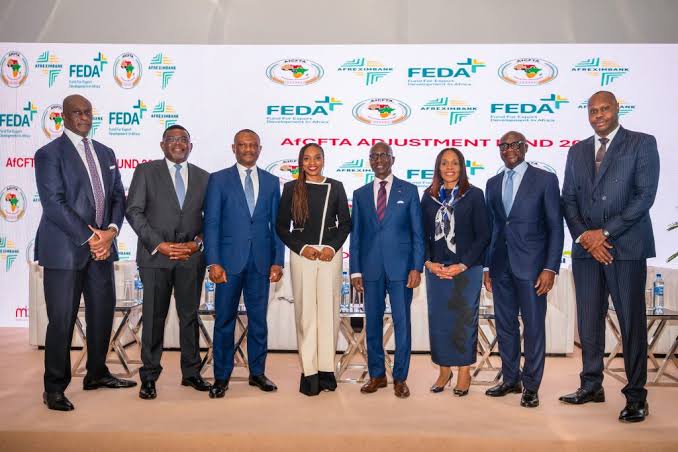
Ehi Braimah urges Afreximbank and AfDB to strengthen Africa’s economic integration through trade finance, infrastructure and industrial investment

Nigerian Breweries celebrates its 80th anniversary with an N80m consumer reward initiative and the unveiling of Legendary Christmas 2026
-
Politics3 years ago
13 Ondo Assembly Members Disown Endorsement of Aiyedatiwa
-
Politics3 years ago
APC Group, Ondo Govt, Quarrel Over Money for Endorsement
-

 Trending News6 years ago
Stop unsavoury, inciting statements – DSS warns
-

 Others5 years ago
Adron Homes Celebrates 10 Years Of Housing Excellence
-

 Humanity5 years ago
President Buhari Commiserates With Ambassador Maureen Tamuno Over The Loss Of Her Father
-

 Others7 years ago
EX- CUSTOMS BOSS, IBRAHIM MERA’S DWINDLING FAME
-

 Business3 years ago
Bigi Carbonated Soft Drinks Treats 40 Consumers to an Epic Easter Movie Hangout
-

 Business2 years ago
Wema Bank Shines at Global SME Finance Forum Conference Awards 2024 …Awarded: • SME Financier of the Year (Africa) • Platinum Award for Best Financier for Women Entrepreneurs (Africa)