
Opinion
The Revolution of Tax Reform by Zacch Adedeji


By Seun Oloketuyi

In the turbulent tide of Nigeria’s economic history, few reforms have stirred both anticipation and anxiety like the 2025 tax revolution — a bold and uncompromising reimagination of the country’s fiscal framework. At the helm of this seismic shift stands Zacch Adedeji — not just a reformer, but the architect of a new tax era, quietly redrawing the lines of Nigeria’s economic destiny.
For decades, Nigeria’s tax system has been marred by inefficiency, distrust, and dysfunction. At the federal level, the Federal Inland Revenue Service (FIRS) operated as the government’s main tax collection agency, burdened by overlapping mandates, poor technological infrastructure, and a public perception of corruption and intimidation. While businesses struggled under multiple and unpredictable levies, citizens remained skeptical — and in many cases, completely disengaged from the tax ecosystem. With a tax-to-GDP ratio hovering embarrassingly around 6 percent — far below the African average — Nigeria’s fiscal foundation was both weak and unsustainable.
Then came 2025.
In what will undoubtedly be remembered as one of the boldest fiscal restructurings in the nation’s history, President Bola Tinubu, guided by the strategic brainwork of Adedeji, signed into law a comprehensive package of reforms that did not merely patch up old wounds but fundamentally rewrote the anatomy of tax administration in Nigeria. On June 26, 2025, the FIRS — once the colossus of tax collection — was legislatively dissolved. In its place emerged a new body, the Nigeria Revenue Service (NRS), designed from the ground up to reflect autonomy, accountability, and modernity.
But this reform was never just about replacing an agency. It was a complete ideological realignment. Where FIRS was a gatekeeper, the NRS is a facilitator. Where the former enforced compliance through coercion and opacity, the latter aims to cultivate a culture of voluntary participation, supported by digitization, transparency, and a renewed sense of civic duty.
Zacch Adedeji’s role in this transformation cannot be overstated. A Harvard-trained economist and former Commissioner for Finance in Oyo State, he is no stranger to structural reform. But what he has orchestrated at the federal level is nothing short of revolutionary. Under his leadership, tax reform has moved from policy abstraction to lived reality. He has not only dismantled the old machine — he has engineered a new one, and taught it how to breathe.
Adedeji’s reform ethos is anchored on equity and simplicity. Gone are the days when business owners were subjected to arbitrary taxes from overlapping authorities. The new regime harmonizes previously fragmented laws into a single, clear framework, while also establishing digital platforms that remove the need for physical interaction with tax officials — a breeding ground for corruption in the past. Under the NRS, filing and paying taxes is no longer a murky maze but a predictable, transparent process.
Yet the reforms go deeper still. For the first time, Nigeria’s tax structure acknowledges the need for citizens to have a voice. With the creation of the Tax Ombudsman and an independent Tax Appeal Tribunal, individuals and businesses now have formal channels to challenge, appeal, and resolve tax disputes without fear or undue pressure. These are not merely cosmetic additions. They represent a philosophical shift — from tax as oppression to tax as dialogue.
Unsurprisingly, not everyone welcomed the revolution. Resistance was loudest from within Nigeria’s political structure itself. In particular, governors from the northern region, notably those from the Hausa-Fulani bloc, raised concerns that the proposed reforms — especially the redistribution model for Value Added Tax (VAT) — would place their states at a disadvantage. There were debates, walkouts, and threats of constitutional confrontation. But the reforms were designed not to favour one region over another, but to bring uniformity and fairness to a system that had long been used as a political weapon.
What ultimately broke the resistance was Adedeji’s insistence on data, not drama. Backed by empirical evidence, he demonstrated how the current system penalised productivity and entrenched inefficiency, and how the new model — if embraced — would expand the national purse in a way that lifted all boats. He made it clear: this wasn’t a Lagos-centric agenda. It was a Nigerian one.
Now, the focus shifts to implementation — the Achilles heel of Nigerian policy history. Can the NRS live up to its potential? Will transparency hold, or will old habits crawl back in through new cracks? These are legitimate questions. But for the first time in a long time, there is a sense that something fundamentally different is taking shape. That the ground beneath Nigeria’s economy is no longer shifting from crisis to crisis but stabilizing into something firmer — a structure built not on oil receipts or international loans, but on the shared contribution of its own people.
It is important to remember that tax reform, no matter how technical or sweeping, is ultimately about trust. Governments tax because they must, but citizens pay because they believe — or at least hope — that what they give up will return to them in the form of roads, schools, hospitals, and peace of mind. For years, that trust was broken. Today, it is being painstakingly rebuilt — not through rhetoric, but through law, logic, and leadership.
Zacch Adedeji has not just led a reform. He has sparked a revolution. And if Nigeria sees it through — if it nurtures the culture this reform intends to plant — then perhaps the history books will look back at 2025 not just as the year Nigeria changed its tax laws, but the year Nigeria changed its destiny.


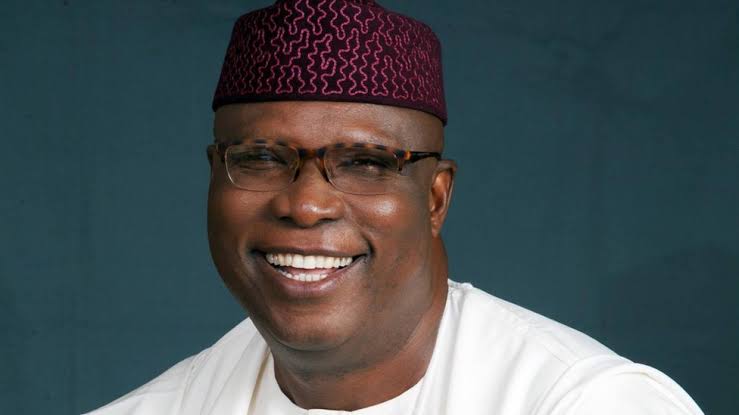
Former Senator Babafemi Ojudu has raised concerns about the rising cost of running for political office in Nigeria, saying the financial demands of elections are increasingly shutting out capable candidates who lack access to wealthy political patrons.
Also read: Sijibomi Ogundele: From Luxury Real Estate Disruption to a Hard-Won Road to Redemption
Ojudu made the remarks in Seun Oloketuyi’s forthcoming book, How to Win an Election in Nigeria, which is set to be released on September 6.
Ojudu said the situation has created a system where money and connections can matter more than a candidate’s popularity, competence or record.
He noted that campaign spending was once largely associated with the practical business of running an election, including mobilising supporters, printing campaign materials, placing adverts and deploying polling agents. But according to him, that has changed considerably.
“Today, capital is heavily absorbed by elite-level transactional politics,” Ojudu said.
He argued that candidates without access to powerful political networks or godfathers can find themselves pushed aside, even when they have the support of the people.
“Without access to elite financing networks or powerful patrons, even the most capable, ethical, and publicly embraced aspirants find themselves locked out of the race,” he said.
Ojudu’s concern is that the situation is beginning to affect the quality of candidates available to voters.
When the ability to raise huge sums becomes a major requirement for securing a ticket and mounting a competitive campaign, many people with the capacity to serve may never get the opportunity to contest.
“When money and institutional backing outweigh appeal, public-interest candidates without godfather leverage are sadly reduced to spectators,” he said.
He believes the problem cannot be solved simply by asking politicians to spend less. For him, stronger enforcement of campaign finance rules and wider electoral reforms are needed to address the growing financial pressure around elections.
“Until comprehensive campaign finance enforcement and structural electoral reforms are instituted, the cost of mounting a credible election will continue to not favour popular candidates,” Ojudu said.
His comments raise a difficult question about Nigeria’s democracy: how many potentially good candidates are being kept out of politics simply because they cannot afford the price of entry?
Also read: Sijibomi Ogundele: From Luxury Real Estate Disruption to a Hard-Won Road to Redemption
That is one of the issues Ojudu examines in his reflections on Nigeria’s changing political landscape.
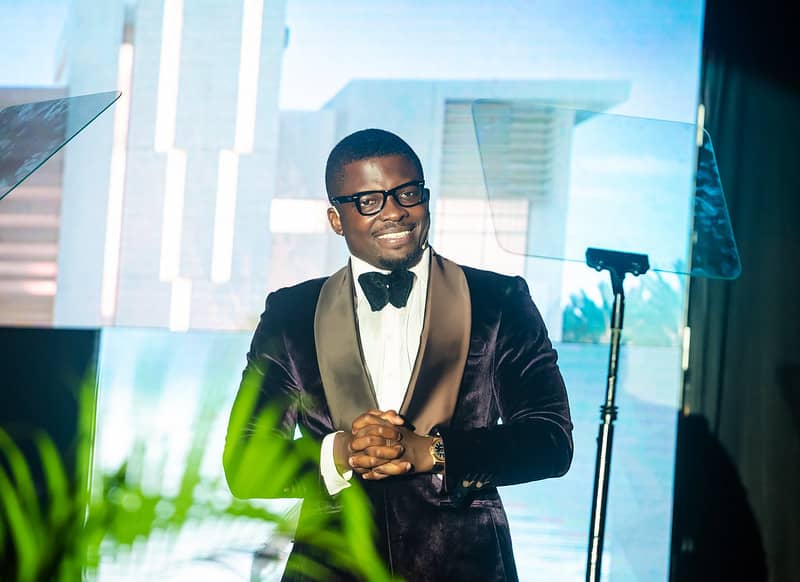
By Adebayo Adeoye,
Take a cursory look at the entrepreneurial journey of Dr. Sijibomi Ogundele, Chairman of Sujimoto Group, and one thing becomes apparent: his story has been defined by an uncommon appetite for ambition, reinvention and the pursuit of possibilities.
Also read: RSSOSA National President, Aare Adetola Emmanuelking, Celebrates Damola Aiyeola at 60, Commends His Legacy of Service
For Ogundele, the journey to prominence in Nigeria’s luxury real estate space did not happen by accident. It was fuelled by a desire to build enduring value and leave an imprint on an industry he believed had enormous untapped potential.
When he ventured into luxury real estate, the proposition was, at the time, regarded by some as audacious.
Yet, rather than be constrained by conventional thinking, Ogundele pursued his vision with characteristic determination.
The eventual emergence of Sujimoto Construction marked the beginning of an enterprise that would seek to redefine perceptions of luxury property development in Nigeria.
Over the years, Sujimoto has become one of the more recognisable names in Nigeria’s high-end real estate market, with developments designed to push the boundaries of architecture, luxury and lifestyle.
Ogundele’s approach has been largely built around a simple philosophy: identify opportunities where others see obstacles and pursue them with conviction.
It is a philosophy that has served him well, but one that has also been tested in recent years.
Running a business in Nigeria has never been for the faint-hearted.
For operators in capital-intensive sectors such as real estate, the combination of inflation, currency volatility, escalating construction costs, constrained purchasing power and softer demand can quickly transform an ambitious expansion strategy into a significant financial challenge.
Sujimoto was not insulated from these realities.
According to Ogundele, the company endured an exceptionally difficult period during which it went almost three years without selling a single unit, even as it continued to carry substantial operational commitments.
He disclosed that monthly overheads were about N126 million, while broader operational obligations exceeded N500 million.
To sustain its projects, retain its workforce and meet commitments to suppliers, contractors and clients, the company relied on financing from commercial banks, private lenders, friends and family.
Some of the facilities, he said, eventually carried effective costs of as much as 100 per cent, placing additional pressure on the company’s liquidity.
For an entrepreneur whose public image has long been associated with confidence, flamboyance and big-ticket developments, it was undoubtedly a sobering chapter.
Yet, Ogundele’s response to the crisis appears to have been less about retreat and more about restructuring.
After what he described as 14 months of intense financial pressure, the Sujimoto chairman disclosed that the company had repaid more than N40 billion owed to banks and private lenders.
He has also pledged that all legitimate outstanding obligations will be cleared by January 1, 2027.
The claims represent a significant development in a story that, until recently, was defined largely by the pressures confronting the company.
For Ogundele, however, the repayment journey is not merely about settling financial obligations.
It is also about restoring confidence, protecting relationships and demonstrating that an enterprise can confront a difficult season without necessarily abandoning its long-term vision.
The completion and handover of the Lucrezia development, he has said, remains an important illustration of that commitment.
At a time when the company’s finances were under pressure, delivering on a major development was both a commercial responsibility and a test of credibility.
Perhaps the more revealing part of Ogundele’s experience is the lesson he says he has taken from it.
The entrepreneur now appears more conscious of the risks inherent in aggressive expansion funded largely by debt.
The next phase of Sujimoto’s growth, according to him, will place greater emphasis on liquidity management, sustainable capital structures and strategic partnerships.
That thinking is expected to influence the financing architecture of the proposed 69-storey Leonardo luxury residential development, one of the company’s most ambitious projects.
The experience has also offered a broader lesson about entrepreneurship in an unpredictable market. Vision, after all, is only one component of building a sustainable business.
Capital discipline, risk management, resilience and the ability to adapt when circumstances change are equally important.
Ogundele’s story therefore transcends the glamour often associated with luxury real estate.
Behind the spectacular buildings, ambitious concepts and carefully curated lifestyle is the less glamorous reality of managing payrolls, servicing debt, meeting construction obligations, satisfying clients and navigating a volatile economy.
It is this less visible side of the story that makes his recent experience particularly instructive.
The businessman who once attracted attention for challenging the conventions of Nigeria’s luxury property market has now found himself confronting another kind of challenge: proving that the same determination that built the brand can also help rebuild its financial foundations.
For Ogundele, the road ahead may therefore be less about proving that he can dream big and more about demonstrating that big dreams can be supported by resilient and sustainable financial structures.
His journey is a reminder that entrepreneurial success is rarely a straight line. There are seasons of expansion, moments of triumph and, sometimes, periods when survival itself becomes the greatest test of leadership.
Ogundele has tasted all three.
And as Sujimoto enters what its chairman hopes will be a new chapter, the story is no longer simply about the man who sought to redefine luxury real estate.
Also read: RSSOSA National President, Aare Adetola Emmanuelking, Celebrates Damola Aiyeola at 60, Commends His Legacy of Service
It is increasingly about an entrepreneur learning, through experience, that enduring success is measured not only by the heights one reaches, but also by the strength and discipline with which one navigates the descent, and finds the courage to rise again.
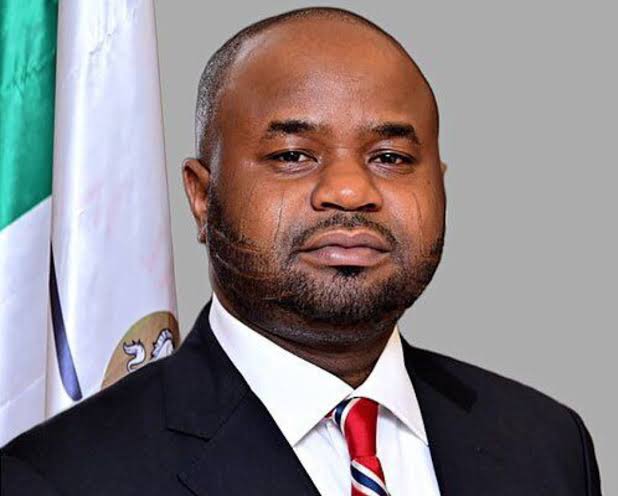
By Seun Oloketuyi,
The appointment of Zacch Adedeji as Deputy Director of Fundraising in the All Progressives Congress’ 2027 Presidential Campaign Council has raised eyebrows, particularly because he currently heads the Nigeria Revenue Service.
Also read: MOWCA Champions Sustainable Blue Economy Growth in Niger Delta
Former Senator Dino Melaye has already announced plans to challenge the appointment in court, arguing that Adedeji’s role as head of the country’s revenue agency could create a conflict of interest.
It is a question worth asking.
But there is another question that seems to be missing from the conversation:
Why can’t Zacch Adedeji do it?
Why should his appointment automatically be viewed through the lens of suspicion simply because he heads the country’s revenue service?
The concern about the separation between public office and partisan politics is understandable. But so is the need to look at the individual involved, his professional background and the record he has built over the years.
This is not a new political relationship
Adedeji did not suddenly become associated with the Tinubu administration because his name appeared on the campaign council list.
Before becoming Chairman of the Nigeria Revenue Service, he served as President Bola Ahmed Tinubu’s Special Adviser on Revenue.
Before his move to Abuja, he was Commissioner for Finance in Oyo State under the administration of the late Governor Abiola Ajimobi. He also served as Executive Secretary and Chief Executive Officer of the National Sugar Development Council.
His career has largely revolved around finance, revenue and public administration.
So, when the APC needed people for different parts of its campaign structure, including fundraising, choosing someone with a long background in finance and revenue administration was hardly an unusual decision.
The political affiliation is not a secret either.
Adedeji has worked closely with the current administration for years. His appointment to the campaign council is therefore not a sudden transformation from technocrat to politician. It is another political role for someone who has already been closely associated with the administration.
But what about his record?
This is where the conversation should go beyond the title he currently holds.
Adedeji is a first-class graduate of Management and Accounting from Obafemi Awolowo University. He went on to obtain further qualifications, including a master’s degree and a doctorate, and also had a career in the private sector before moving into public service.
His record includes work at Procter & Gamble, where he rose to a senior finance position, his time as Oyo State Commissioner for Finance, his leadership of the National Sugar Development Council and, later, his appointment as Special Adviser on Revenue to the President.
When he was appointed to head the Federal Inland Revenue Service in 2023, the Presidency described him as having had “meritorious service” as Oyo State Commissioner for Finance and as head of the National Sugar Development Council.
President Tinubu also publicly praised his leadership of the revenue agency in January 2026, citing reforms, automation, staff development and his role in meeting revenue targets.
These things do not make anyone beyond scrutiny.
But they are part of the picture.
And if the conversation is going to be about whether Zacch Adedeji should be trusted with responsibility, then his record should count too.
Integrity cannot be replaced with assumption
The easiest thing in politics is to assume the worst.
A public official joins a campaign structure and immediately the question becomes: What is he going to do with his office?
That question is fair.
But there is a difference between asking whether there could be a conflict of interest and concluding that a person will abuse his office.
Those are not the same thing.
So far, the controversy surrounding Adedeji’s appointment has centred on the possibility of a conflict between his public position and his campaign responsibility. Melaye has said he wants the courts to test that question.
That is his right.
But the existence of a question does not automatically amount to evidence of wrongdoing.
Adedeji should be held accountable if he crosses the line. If public resources are used for partisan purposes, if his official position is abused or if the law is breached, those actions should be dealt with.
But until then, there is also room to judge him on what he has actually done.
Why fundraising?
There is another part of the argument that deserves attention.
Fundraising requires financial knowledge, relationships, organisation and an understanding of how money is mobilised and accounted for.
Adedeji’s entire professional background is built around those areas.
He has worked in corporate finance. He has managed public finances. He has been involved in revenue administration at both state and federal levels.
That experience may be precisely why he was considered suitable for the position.
The fact that the role is political does not erase the skills he has acquired throughout his career.
Public office and political participation
Of course, the bigger question remains whether a serving head of a federal revenue agency should participate formally in a presidential campaign.
That is a legitimate debate.
But it should be a debate about rules and principles, not an assumption that Adedeji himself lacks integrity.
If existing public service rules prohibit the role, then those rules should be applied.
If they do not, then the argument should not be built around the assumption that a public officer will inevitably misuse his position.
There is also a difference between being politically involved and using government resources for political purposes.
The latter would be a serious breach.
The former, depending on the applicable rules, is a question of political participation.
Those distinctions matter.
So, what is the real issue?
Perhaps the real issue is not Zacch Adedeji’s competence.
It is not his experience either.
And it certainly should not be an assumption about his character.
The real issue is whether the law and public service rules permit someone in his current position to take up the role he has been given.
That is a question that can be answered with facts, regulations and, if necessary, a court ruling.
But while that question is being debated, it is worth remembering who Zacch Adedeji is.
He is an accountant who has spent much of his career dealing with finance and revenue. He has worked in the private sector, served as a state commissioner, headed a federal government agency and advised the President on revenue before becoming head of the country’s tax administration.
His supporters see a professional with the experience and discipline required for the job.
His critics see a public official whose political role needs closer scrutiny.
Both views can exist at the same time.
But criticism should not become condemnation before there is evidence of wrongdoing.
If Zacch Adedeji has the experience, the professional record and the confidence of his party to take on a fundraising role, then perhaps the better question is not “Why Zacch Adedeji?”
Perhaps it is simply:
Why can’t he do it?
Who Is Zacch Adedeji?
Dr. Zacch Adelabu Adedeji is a Nigerian accountant, tax administrator and public officer who currently serves as Executive Chairman of the Nigeria Revenue Service.
Born on January 8, 1978, in Oyo State, Adedeji began his academic journey with a National Diploma in Accountancy from the Federal Polytechnic, Ede.
He proceeded to Obafemi Awolowo University, where he earned a first-class degree in Management and Accounting. He later obtained a master’s degree and a PhD in Accounting from the same university. He also attended the Harvard Kennedy School of Government for an executive course in economic development.
His professional career began in the private sector with Procter & Gamble, where he held senior finance positions, including Corporate Finance Manager for West Africa.
At 33, he was appointed Commissioner for Finance in Oyo State by the late Governor Abiola Ajimobi, a position he held from 2011 to 2015. He later became Executive Secretary and Chief Executive Officer of the National Sugar Development Council.
Adedeji subsequently served as Special Adviser to President Bola Ahmed Tinubu on Revenue before his appointment in September 2023 as Chairman of the Federal Inland Revenue Service.
With the transition from FIRS to the Nigeria Revenue Service, he now heads the country’s central tax administration agency.
His career has largely been built around accounting, corporate finance, taxation, public revenue and fiscal policy — experience that is central to the argument over why he was selected for a fundraising role in the APC campaign council.
APC 2027 Presidential Campaign Council
The APC’s 2027 Presidential Campaign Council brings together senior party figures, serving governors, lawmakers, ministers, technocrats and other political stakeholders.
At the top of the structure is President Bola Ahmed Tinubu, who serves as Chairman.
Vice President Kashim Shettima and APC National Chairman Nentawe Yilwatda serve as Vice Chairmen.
Senator Abdulaziz Yari is the Director-General, while Governor Hope Uzodimma is Secretary. Senator Surajudeen Ajibola Basiru serves as Deputy Secretary, with Hadiza Bala Usman as Assistant Secretary.
The campaign structure also includes the following:
Finance and Fundraising
– Governor Dapo Abiodun — Director, Fundraising
– Zacch Adedeji — Deputy Director, Fundraising
– Farouk Gumel — Deputy Director II, Fundraising
– Dr Jamila Bio Ibrahim — Secretary, Fundraising
– APC National Treasurer — Secretary II, Fundraising
– Governor Sheriff Oborevwori — Director, Finance/Treasurer
– Ahmed Usman Ododo — Deputy Director, Finance/Treasurer
– Abubakar Kabir Bichi — Deputy Director II, Finance/Treasurer
– Tanimu Yakubu — Secretary, Finance/Treasurer
Zonal Campaign Coordinators
– Senator Bassey Otu — South-South
– Ndubuisi Mbah — South-East
– Governor Babajide Sanwo-Olu — South-West
– Governor Umar Bago — North-Central
– Senator Modu Sheriff — North-East
– Governor Uba Sani — North-West
The wider campaign structure also features prominent figures across election planning, mobilisation, legal affairs, media, strategic communication, creative-sector mobilisation, youth and women mobilisation, health, sports, diaspora affairs and other areas.
Among the notable names are Senate President Godswill Akpabio, Speaker Tajudeen Abbas, Governor Mai Mala Buni, Senator Adams Oshiomhole, James Abiodun Faleke, Shehu Dikko, Joseph Yobo, Ali Nuhu, Zack Orji, Betta Edu, Ayodele Olawande, Abike Dabiri-Erewa, Ali Pate and Hannatu Musawa, among others.
The campaign’s legal team includes Muiz Banire, SAN, as Director, with Lateef Fagbemi, SAN, Ibrahim Shema, Worgu Boms and Kingsley Tochukwu Udeh, SAN, among others, also listed within the legal structure.
The size and range of the campaign council underline the scale of the APC’s 2027 political operation.
And within that structure, Zacch Adedeji has been given a role that sits directly within one of the campaign’s most financially sensitive directorates.
That is why his appointment has attracted attention.
But it is also why his professional background matters.
The debate may continue over whether a serving revenue chief should participate in a political campaign. That question deserves an answer.
Also read: MOWCA Champions Sustainable Blue Economy Growth in Niger Delta
But so does the other question that has received far less attention:
If Zacch Adedeji’s experience is in finance, revenue and public administration, and there is no established evidence that he has abused his office, why should his participation automatically be treated as suspicious?
That, perhaps, is the real issue
-
Politics2 years ago
13 Ondo Assembly Members Disown Endorsement of Aiyedatiwa
-
Politics2 years ago
APC Group, Ondo Govt, Quarrel Over Money for Endorsement
-

 Trending News5 years ago
Stop unsavoury, inciting statements – DSS warns
-

 Others5 years ago
Adron Homes Celebrates 10 Years Of Housing Excellence
-

 Humanity5 years ago
President Buhari Commiserates With Ambassador Maureen Tamuno Over The Loss Of Her Father
-

 Others7 years ago
EX- CUSTOMS BOSS, IBRAHIM MERA’S DWINDLING FAME
-

 Business2 years ago
Bigi Carbonated Soft Drinks Treats 40 Consumers to an Epic Easter Movie Hangout
-

 Business2 years ago
Wema Bank Shines at Global SME Finance Forum Conference Awards 2024 …Awarded: • SME Financier of the Year (Africa) • Platinum Award for Best Financier for Women Entrepreneurs (Africa)