
Opinion
Imo North: Araraume, the right man for the job


By Jimmy Enyeh

Senator Ifeanyi Godwin Araraume as the middle name connotes has literally won so many battles through God, dedication, perseverance and hardwork. He has to the admiration of his admirers conquered the business, politics and academics terrains.
He is not your run-of-the-mill politician and also not given to the arrogance of power and the idiotism of conquest.
Araraume despite his towering image and enviable status has remained selfless, unassuming and accessible. Little wonder, party faithful from his senatorial district adore him with quantifiable passion.
In spite of not having the advantage of incumbency, he won the APC Imo North Senatorial primary in a landslide across 64 wards and this has proven that he’s a political juggernaut who’s in touch with the grassroots.
Based on this, many commentators argue that Araraume is the right man for the job. But even in victory, his political enemies have not relented as his detractors have gone to town with the tale that Araraume had withdrawn from the race.
The likeable politician may have paid his dues in politics, and this much was attested to by many as one of the reasons for his victory at the primary.
The elite consensus on Araraume’s qualification and competence to represent Imo North Senatorial district may have been succinctly expressed when Barrister Martin Chukwueke, SAN said of Araraume “It was Francis Bacon, the great British philosopher of the Renaissance who once said that some are born great, some achieve greatness, while others have greatness thrust on them. As for Senator Araraume, Bacon’s second offering applies to him, he achieved greatness by finding grace of Almighty God. Without mincing word, Araraume is the best man for the job of representing Imo North at the Senate.
Though many spoken to have described him as the best man for the job, that may still need further qualification!
Does his resume support the claim of being the best hand for the constituents of Imo North at the Senate?
Yes, as further investigations have revealed. Araraume was appointed the Chairman, Board of Management of the Nigerian National Petroleum Company Limited (NNPC Ltd.), in the wake of implementation of the Petroleum Industry Act (PIA). He was the senator who represented Imo North at the 9th Nigerian National Assembly from 1999- 2007 running on the People’s Democratic Party (PDP) platform.
According to Chima Nwokocha, his two terms in the Senate has made him ” the most competent and experienced among those vying for the position. He understands the working of the Senate, not to talk of his extensive network that cut across party line in the Senate. All this will count for him if he wins the general election, and by God’s grace, he will win.
After taking his seat in the Senate in June 1999, Ararume was appointed to committees on Communications, Police Affairs, Federal Character, Finance & Appropriation, Information and Niger Delta (vice chair) among others.
He has proven that with determinationand honesty, it is possible to surpass expectations with accomplishments that are in awe and too numerous hence difficult to capture all in this piece.
There are some notable accomplishments associated with Ararume while in the Senate. For instance, he fashioned and presented the Presidential Library Bill in the senate; fashioned and presented the Bill for the Establishment of Coastal Guards and Arming of Nigeria Security Civil Defence Corps (NSCDC).
Araraume was instrumental to the amicable resolution of some of the major political, ethnic and religious conflicts in the country, particularly in the Niger Delta between 1999 and 2007.
He equally advised the Senate severally on the adoption of the Legislative Approach to conflict resolution; participated in several fora both locally and internationally to press for the cancellation of Nigeria’s foreign debts by Creditor Nations; acted as a key member of a group of Legislators who worked and implemented strategies for harmony between the Legislature and the Executive; participated in the passage of major bills, ratification of treaties and agreement by the Senate between 1999 and 2007.
In addition, Araraume participated in Local and International Workshops/Seminars on parliamentary practice and procedures; participated actively in the conception and passage of the Bill that gave birth to the Niger Delta Development Commission (NDDC); played a major role in the inclusion of Imo and Abia States in NDDC.
It is therefore, not strange when he received the Best Serving Senator of the South East (2003 – 2007) award by Encomium Magazine and NATIONAL WAVES’ Life Time Achievement Award among others.
Janet Afigbo, a doctoral student of psychology said “Araraume believes that the essence of holding political appointment either elective or appointive is to bring development to the people and to touch their lives positively and meaningfully. In view of that he has secured many employment opportunities /political appointments for sons and daughters of his constituency and Imo state in general.
Besides awarding scholarships and providing educational support for some students, he singlehandedly built a secondary schools, constructed roads and build churches.
He also provided transformers and ensured the electrification of some communities in Imo while still serving as a senator of Federal Republic of Nigeria.
As a man, who maximizes every opportunity, Senator Ararume, used his good offices as National Commissioner on the Board of Nigerian Communication Commission representing South East to secure employments opportunities for sons and daughters of this country inspective of their tribe or religion.
His words: “My major target in politics is to attract massive development to my great Constituency, vigorously pursuing human capital development and institute programmes and policies that will better the lives of my constituents’ ndi Imo and Nigeria in General. Pursuant to that target, he has acquitted himself creditably and proved that politics is mainly for service to the people and not for personal aggrandizement being a wealthy son of Okigwe before getting involved in politics.
Nwokocha noted that for a man that once contested for governorship of his state, ” must have travelled many miles politically. He actually won the PDP primaries in 2007 to run for governor of Imo State. The party chose to run Charles Ugwu in his place. Araraume protested this decision and secured a Supreme Court ruling in his favour. But the shenanigans of the party in Imo state robbed him of his victory by expelling him.
Olu Anjorin, a political scientist said of his expulsion at the time. ” There’s no doubt that PDP in Imo state in 2007 backstabbed their best candidate, Ifeanyi Araraume, whose political stature as a giant made his detractors looked like dwarfs.
” That singular incident of expulsion and their choice chose not to field a candidate, left the field open for Ikedi Ohakim of the Progressive Peoples Alliance (PPA).
For a man to claim eminence in qualification to represent his people must have demonstrated capacity to manage business concerns.
Benson Abariye, watcher of Imo politics said Araraume is actually ” a rounded political figure who actually looms large in a triad of political experience, business success and resounding academic achievement.
Apart from being member of many boards, he has flourished in private business. No wonder, The National Waves publisher stated that Araraume’s business acumen was exceptional
“Senator Araraume has performed excellently well in the business sector through Exclusive Stores and other flourishing companies and this made him a role model to many people”
Ararume was born on December 16, 1958 at Isiebu, Umuduru in Isiala Mbano Local Government Area of Imo State, Nigeria to late Marcus Ararume and Adaezi Grace Ararume (Nee Anyiam). He started his formal education at Saint Christopher Primary School, Umuluwe, Ajirija in Isiala Mbano. He completed his secondary education at Dick Tiger Memorial Secondary School, Amaigbo after previously enrolling at Sapele Technical College, now in Delta State. He earned a Bachelor of Science degree in business administration from Liberty University in Lynchburg, Virginia and a Masters Science Degree (M.SC) in International Relations from the University of Benin. He has PhD degree.
■ Jimmy Enyeh is a journalist and publisher


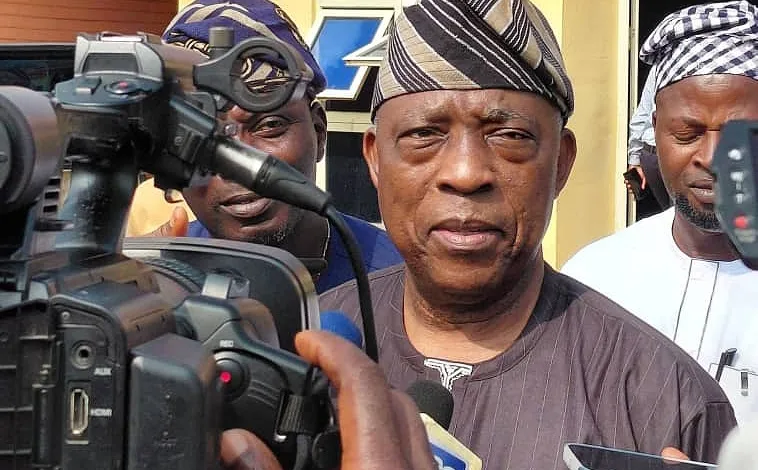
Veteran journalist and Chairman of Gaskia Media Limited, Dare Babarinsa, has called on Nigeria to sustain its informal power-rotation arrangement between the North and South, arguing that the system remains important for political stability and national unity.
Babarinsa said the presidency should return to the North in 2031 and move back to the South in 2039, maintaining that the arrangement should remain in place until Nigerians develop a more suitable alternative.
He made the position known on Monday, November 2, while delivering a public lecture at the Press Centre, Iyaganku, Ibadan, as part of activities marking the 60th anniversary of the Oyo State Council of the Nigerian Union of Journalists (NUJ).
Speaking on the theme of Nigeria’s political arrangement and the future of the media, Babarinsa acknowledged criticisms of the rotational presidency, particularly from those who believe that every qualified Nigerian should be allowed to contest for the highest political office regardless of region.
However, he argued that Nigeria’s political circumstances make power rotation a practical arrangement for maintaining stability, even if it may not always produce the most suitable candidate.
According to him, the arrangement emerged from political negotiations ahead of the return to civilian rule in 1999, following the deaths of former military Head of State, General Sani Abacha, and the presumed winner of the June 12, 1993 presidential election, Chief Moshood Abiola.
Babarinsa recalled that after Abacha’s death in 1998, General Abdulsalami Abubakar assumed leadership and introduced a transition programme aimed at ending military rule by May 29, 1999.
He said the death of Abiola, who was detained by the military government, created concerns about the political future of the Yoruba people and influenced discussions over the region that should produce Nigeria’s first civilian president after military rule.
The journalist disclosed that he was among members of the Idile Oodua resistance movement who supported the position that the South-West should produce the first president under the new democratic arrangement.
He said he was subsequently mandated by members of the group to consult the late Ooni of Ife, Oba Okunade Sijuwade, who told him that traditional rulers across the country were also holding consultations on the matter.
According to Babarinsa, the discussions contributed to the emergence of two Yoruba presidential candidates in the 1999 election: former President Olusegun Obasanjo of the Peoples Democratic Party (PDP) and Chief Olu Falae, who contested under the Alliance for Democracy and All Peoples Party coalition.
He also recalled that former Vice-President Alex Ekwueme disagreed with the arrangement, arguing that the South-East could not be bound by an agreement reached principally between political interests in the North and South-West.
Babarinsa said he agreed with Ekwueme’s interpretation that power should rotate between the North and South rather than among the six geopolitical zones.
He explained that the arrangement had continued through successive administrations, including the emergence of former President Goodluck Jonathan following the death of President Umaru Yar’Adua and the subsequent election of former President Muhammadu Buhari.
With President Bola Tinubu currently in office, Babarinsa argued that the existing arrangement should be sustained, with power returning to the North after the current administration and subsequently moving back to the South.
To support his argument, he compared Nigeria’s power-sharing arrangement with the confessional system adopted in Lebanon in 1943, under which key political offices were allocated to different religious communities to promote political balance.
He said Nigeria could learn from such arrangements, insisting that political compromises sometimes become necessary in countries with diverse ethnic, religious and regional interests.
“If we intend to keep Nigeria, then we need to make this special arrangement work until future generations are able to make a better arrangement,” he said.
Babarinsa reflects on Ibadan’s journalism legacy
Beyond the political question, Babarinsa used the lecture to examine the history of journalism in Ibadan and the contribution of the city to the development of Nigeria’s media industry.
He described Ibadan as a major centre of political and media influence, noting that its newspapers had produced some of the country’s most prominent journalists, editors and public commentators.
He recalled the establishment of the Nigerian Tribune in 1949 by Chief Obafemi Awolowo and the creation of the Sketch newspaper group in 1964 by the then Premier of the Western Region, Chief Ladoke Akintola.
He also highlighted the contributions of prominent journalists, including Felix Adenaike, Segun Osoba and Peter Ajayi, whom he described as the Three Musketeers of the Nigerian media during the Second Republic.
According to him, the trio wielded considerable influence in the industry through their leadership positions at the Tribune and Sketch newspaper groups.
Babarinsa also acknowledged the contributions of former journalists and columnists, including Alhaji Lateef Jakande, Chief Bola Ige, Chief Olabisi Onabanjo, Aare Afe Babalola and Dr Tai Solarin.
He said the history of journalism in Ibadan was closely connected to the political development of the country, recalling the debates on issues such as the International Monetary Fund loan, diarchy and rotational presidency.
The journalist urged members of the profession to preserve that tradition by ensuring that the media remained a platform for informed public debate and the promotion of ideas capable of strengthening Nigeria.
Media organisations urged to embrace digital transformation
Addressing the challenges facing the industry, Babarinsa warned that traditional media organisations must urgently adapt to the changing media environment or risk losing relevance.
He said the internet had disrupted conventional news production and distribution, creating new opportunities while also allowing unregulated online platforms to compete with established media organisations.
According to him, several traditional newspapers have established online platforms, but their digital presence has not translated into the level of revenue needed to sustain their operations.
He cited the decline of once-dominant media organisations such as the Daily Times and Sketch as examples of the changes that have reshaped the industry.
Babarinsa recalled that Sketch newspaper had a daily circulation of about 60,000 copies during the 1970s and 1980s but had since ceased publication, with its former premises converted into a shopping mall.
He also expressed concern over declining newspaper readership among young Nigerians, warning that a society with an increasingly uninformed population could struggle to appreciate and defend democracy.
The Gaskia Media chairman said media organisations must follow their audiences into the digital space and develop business models that can sustain quality journalism.
He disclosed that his organisation had also decided to strengthen its online presence through the publication of a digital magazine, beginning with an online news blog.
Journalists urged to defend democracy and uphold professional standards
Babarinsa further reminded journalists of their role in Nigeria’s democratic development, particularly during the struggle against military rule.
He said members of the Nigerian press had suffered imprisonment, exile and other forms of persecution in the fight for the restoration of democracy, with some journalists paying the ultimate price.
He maintained that journalists therefore had a responsibility to protect the democratic system and ensure that the country’s electoral processes remained credible.
With the 2027 general election approaching, he urged media professionals to play their part by providing accurate information and encouraging informed public participation.
The Independent National Electoral Commission has scheduled the presidential and National Assembly elections for January 16, 2027, while governorship and State Houses of Assembly elections are fixed for February 6, 2027.
Babarinsa said journalists must remain committed to the fundamental principles of the profession, stressing that factual accuracy should remain central to news reporting while allowing room for responsible advocacy.
He urged journalists to advocate for the national interest, rather than restrict their work to positions that may be politically convenient.
Calls for greater inclusion of young journalists and women
Looking towards the future, Babarinsa called for greater opportunities for young journalists and women in the profession, saying the industry must deliberately prepare a new generation of media leaders.
He cited the careers of prominent journalists who assumed major editorial and management positions at relatively young ages, including Peter Enahoro, Olusegun Osoba, Yemi Ogunbiyi, Yakubu Mohammed, Ray Ekpu and Adamu Ciroma.
According to him, the history of Nigerian journalism demonstrates that young professionals have consistently played important roles in driving the industry forward.
He urged established media practitioners to listen to younger colleagues, particularly members of Generation Z, and create opportunities for them to contribute to the future of the profession.
Babarinsa also called for more deliberate efforts to bring women into leadership positions, noting that the industry could no longer remain dominated by men.
He expressed optimism about the future of journalism, despite concerns over poor remuneration, declining newspaper circulation and competition from digital platforms.
The veteran journalist concluded by urging the profession to embrace change, drawing attention to the need for innovation in newspaper production, technology and audience engagement.
Quoting a principle he attributed to Professor Ladipo Adamolekun, Babarinsa said the media industry must adapt to changing realities to remain relevant.
“Adapt or Die!” he declared.

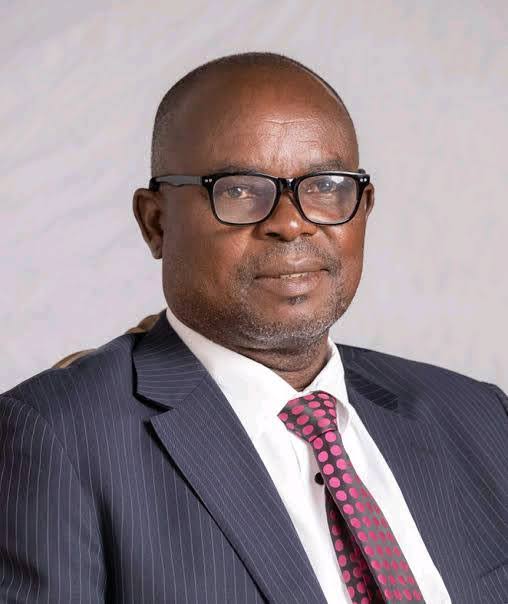
Bola Bolawole questions Nigeria’s democratic future, citing poverty, illiteracy, corruption and political rivalry as obstacles to credible elections

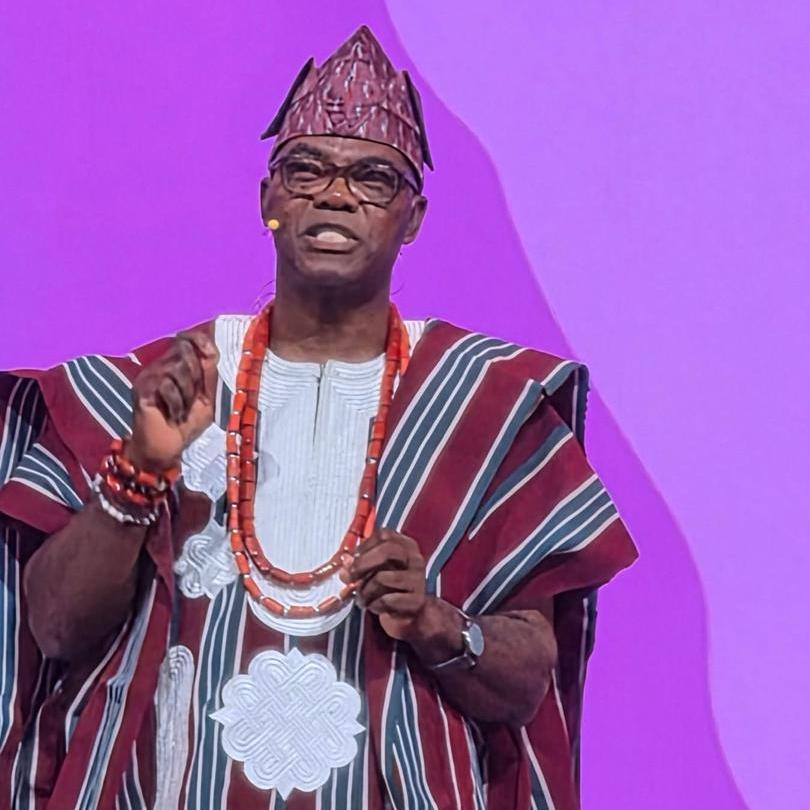
The All-Nigeria Rotary Peace Summit will examine how good governance, justice and equity can help Nigeria build lasting peace
-
Politics3 years ago
13 Ondo Assembly Members Disown Endorsement of Aiyedatiwa
-
Politics3 years ago
APC Group, Ondo Govt, Quarrel Over Money for Endorsement
-

 Trending News6 years ago
Stop unsavoury, inciting statements – DSS warns
-

 Others5 years ago
Adron Homes Celebrates 10 Years Of Housing Excellence
-

 Humanity5 years ago
President Buhari Commiserates With Ambassador Maureen Tamuno Over The Loss Of Her Father
-

 Others7 years ago
EX- CUSTOMS BOSS, IBRAHIM MERA’S DWINDLING FAME
-

 Business3 years ago
Bigi Carbonated Soft Drinks Treats 40 Consumers to an Epic Easter Movie Hangout
-

 Business2 years ago
Wema Bank Shines at Global SME Finance Forum Conference Awards 2024 …Awarded: • SME Financier of the Year (Africa) • Platinum Award for Best Financier for Women Entrepreneurs (Africa)