
Economy
Nigeria Bank Liquidity Crisis Looms as Cash Demand Surges, Rates Spike


Nigeria bank liquidity crisis fears grow as rising cash demand, OMO auctions, and limited inflows push NIBOR rates above 26%, with smaller banks under pressure

Nigeria’s banking sector is facing mounting liquidity pressures as a surge in cash demand from the public and private sectors strains available funds, raising fears of a Nigeria bank liquidity crisis and tighter credit conditions.
Also read: Naira Exchange Rate Decline Continues with 19 Kobo Dip Against Dollar
Daily Sun investigations reveal that increased government disbursements, corporate tax remittances, and pre-inflation consumer withdrawals are driving the spike in currency demand, forcing banks—especially mid-tier lenders—to activate contingency plans and slow new loan approvals.
Despite last week’s N258 billion in maturing Treasury bills and N600 billion in OMO maturities, liquidity was drained by a massive N2.1 trillion OMO sale by the Debt Management Office (DMO), effectively mopping up excess cash from the system.
The strain was immediately visible in money market rates:
NIBOR overnight rate: 26.92%
1-month: 27.71%
3-month: 28.38%
6-month: 29.14%
Collateralised lending rates also tightened, with the Open Buy Back (OBR) at 26.50% and Overnight (O/N) at 27.00%.
The Treasury bills secondary market saw yields rise 15bps to 17.91%, while the NITTY curve showed mixed movement, with 1-month, 3-month, and 6-month tenors climbing but the 3-month segment dipping.
At last week’s CBN NT-Bills auction, demand outstripped supply, but allotments fell short of offers, with the 364-day paper’s stop rate rising to 16.50%.
The DMO’s OMO auction saw an overwhelming N2.20 trillion subscription against a N600 billion offer, with the 245-day tenor clearing at a steep 23.70%.
Analysts warn the squeeze will likely deepen this week, with no major maturing instruments to inject fresh liquidity. Banks are expected to lean heavily on the interbank market, already under strain.
Cowry Asset Management noted that the CBN’s aggressive mop-up is part of its inflation fight, but it risks pushing banks toward extreme conservatism, potentially impacting the wider economy.
“The CBN is walking a tightrope,” said one policy analyst. “This is not a crisis yet, but it is a critical inflection point.”
Also read: Dollar To Naira Exchange Rate Today 17 November 2021
While no official CBN statement has been issued, insiders suggest an emergency liquidity injection is being considered if market conditions deteriorate further.


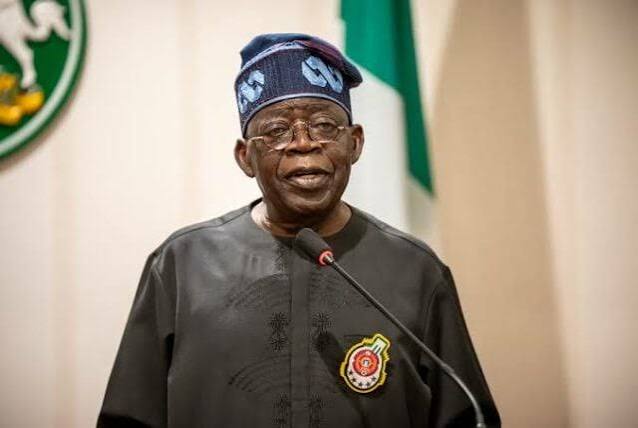
Nigeria investment in youth and local industries is vital to job creation, says FG, urging public-private partnerships and regional industrialisation
The Federal Government has called for increased investment in youth development, small and medium-sized enterprises, technology and local industries to create jobs and strengthen Nigeria’s economic competitiveness.
Also read: Osun amotekun dismisses officer over gross misconduct
The Minister of State for Foreign Affairs, Ambassador Sola Enikanolaiye, made the call during a panel discussion titled “From Trade to Value Chains: Building Regional Industries to Compete Globally” at the 32nd Nigerian Economic Summit, held under the sub-theme, “Invest Nigeria”.
In a statement issued on Tuesday and signed by his Special Assistant on Digital Media and Public Diplomacy, Raphael Oni, Enikanolaiye said Nigeria needed stronger partnerships between the public and private sectors to mobilise the capital required for sustainable economic growth.
He argued that the country must move beyond trading raw materials towards building industries that process local resources into finished products for domestic consumption and export.
According to the minister, investment from both domestic businesses and foreign sources would be necessary to expand industrial capacity, create employment opportunities and improve living standards.
“In advancing our country, we don’t talk enough to one another in terms of constructive conversation and dialogue. We believe that partnership which allows government to engage deeper and stronger with the private sector is critical. Government alone cannot alone raise the resources needed for shared prosperity,” he said.
Enikanolaiye added that domestic capital mobilisation was as important as attracting foreign investment.
He identified Nigeria’s youthful population as a major asset that could accelerate industrialisation if supported by investments in education, skills development, innovation and entrepreneurship.
“Our youth population is very critical – a vibrant population. We need to invest more in human capital, focusing on Small and Medium Scale Enterprises, technology, innovation and creativity. By so doing, we will be able to generate more employment for the youth and also raise more wealth and income,” he said.
On foreign policy, the minister said the administration had reordered its four-point 4D doctrine to place the welfare and prosperity of Nigerians at the centre of the country’s international engagements.
The framework focuses on Demography, Development, Democracy and Diaspora.
Enikanolaiye said democratic governance should produce tangible economic benefits for citizens rather than remain an end in itself.
“Democracy is good, but it is a means to an end, not an end in itself. Democracy must deliver on core priorities of economic development and economic prosperity to our people,” he said.
The minister also emphasised the importance of macroeconomic stability and reliable economic data in helping businesses assess investment opportunities and make long-term plans.
He said Nigeria had recorded improvements in macroeconomic stability and that inflation was coming down, although he did not provide supporting figures in the statement.
Enikanolaiye further called for reforms to make the Ministry of Foreign Affairs more responsive to Nigerians and strengthen its engagement with businesses.
He said cooperation between the government and private sector, alongside partnerships with neighbouring countries and other international markets, could help Nigeria expand its industrial base and improve its access to regional and global markets.
Also speaking at the summit, the President of the Economic Community of West African States Commission, General Birame Diop, called for greater emphasis on industrialisation to create jobs and strengthen regional trade.
His remarks were delivered by the ECOWAS Commissioner for Economic Affairs and Agriculture, Dehpue Yenpea Zuo.
Diop argued that trade agreements alone could not deliver widespread employment and economic growth without industries capable of processing raw materials and producing goods.
“Trade agreements do not create jobs; industries do,” he said.
He noted that intra-African trade accounted for about 15 per cent of the continent’s total trade, compared with more than 60 per cent in Europe and Asia.
He attributed the gap partly to the limited scale of regional industries.
According to Diop, the regional market, with more than 300 million consumers, provides an opportunity for West African manufacturers to expand production before competing across the continent under the African Continental Free Trade Area.
He outlined four priorities for advancing regional industrialisation: implementing existing trade agreements, including commitments on border management; developing value chains in sectors where West Africa has a competitive advantage; improving access to finance for businesses and producers; and measuring progress through jobs created and goods processed within the region.
Also read: Osun amotekun dismisses officer over gross misconduct
Diop said converting trade commitments into productive industries would be essential to expanding employment, increasing regional economic activity and strengthening West Africa’s competitiveness in global markets.

Cash outside Nigerian banks rose to N4.92tn in September 2026 as Nigeria’s broad money supply increased to N146.6tn, CBN data show
Cash outside Nigerian banks rose to N4.92tn in September 2026, an increase of N48.73bn from the N4.87tn recorded in August, according to monetary data published by the Central Bank of Nigeria.
Also read: UCL: Nico Paz Scores Twice as Como Crush Man United
The latest figures also showed an expansion in Nigeria’s broad money supply, which increased to N146.6tn in September from N139.09tn in the previous month.
The growth represents an increase of N7.51tn within one month, reflecting a broader expansion in the amount of money circulating across the economy.
The CBN data further showed that narrow money, which consists of currency in circulation and highly liquid deposits, rose to N44.05tn in September from N43.11tn in August.
Cash held outside banks refers to physical currency kept by individuals and businesses rather than within the banking system.
Broad money, by contrast, covers a wider range of monetary assets, including cash, demand deposits, savings and time deposits, as well as foreign currency deposits.
Nigeria’s broad money supply increased by 18.3 per cent between January and September, rising from N123.95tn to N146.6tn, the data indicated.
The latest increase followed the CBN’s decision in September to reduce its benchmark interest rate by 350 basis points, bringing it down from 26.5 per cent to 23 per cent.
The reduction was reported as the largest cut in the benchmark rate since December 2006.
Despite the rate cut, the Monetary Policy Committee retained the Cash Reserve Requirement for commercial banks at 45 per cent and merchant banks at 16 per cent.
The committee also maintained the 75 per cent reserve requirement on non-Treasury Single Account public-sector deposits.
The Cash Reserve Requirement determines the proportion of eligible deposits that banks must hold as reserves with the central bank.
It is one of the monetary policy tools used to influence banking-sector liquidity and credit conditions.
The rise in cash outside Nigerian banks formed part of the broader increase in money supply.
Also read: UCL: Nico Paz Scores Twice as Como Crush Man United
However, the figures alone do not establish why households and businesses held more physical cash or how much of the increase was driven by spending, savings behaviour or other economic factors.

-
Politics3 years ago
13 Ondo Assembly Members Disown Endorsement of Aiyedatiwa
-
Politics3 years ago
APC Group, Ondo Govt, Quarrel Over Money for Endorsement
-

 Trending News5 years ago
Stop unsavoury, inciting statements – DSS warns
-

 Others5 years ago
Adron Homes Celebrates 10 Years Of Housing Excellence
-

 Humanity5 years ago
President Buhari Commiserates With Ambassador Maureen Tamuno Over The Loss Of Her Father
-

 Others7 years ago
EX- CUSTOMS BOSS, IBRAHIM MERA’S DWINDLING FAME
-

 Business3 years ago
Bigi Carbonated Soft Drinks Treats 40 Consumers to an Epic Easter Movie Hangout
-

 Business2 years ago
Wema Bank Shines at Global SME Finance Forum Conference Awards 2024 …Awarded: • SME Financier of the Year (Africa) • Platinum Award for Best Financier for Women Entrepreneurs (Africa)