
Economy
Tinubu’s Fiscal Governance Reforms Seek to Rebuild Trust, Drive Growth


Tinubu’s fiscal governance reforms aim to restore public trust, promote transparency, and shift Nigeria’s economy towards inclusive and sustainable growth

Tinubu’s fiscal governance reforms were the central theme on Monday as President Bola Ahmed Tinubu reaffirmed his administration’s determination to restore public trust and reshape Nigeria’s economic future through transparency and responsible financial practices.
Also read: President Tinubu Pushes for State Police, Calls for Urgent Constitutional Reform to Tackle Insecurity
Speaking at a national conference on public accounts and fiscal governance in Abuja, Tinubu, represented by Minister of State for Finance, Doris Uzoka-Anite, stated that his policies aim to drive inclusive development by tackling structural inefficiencies and redirecting national resources to critical sectors.
He defended the removal of fuel subsidy, describing it as a difficult but necessary decision.
“In 2022 alone, Nigeria spent over ₦4 trillion on fuel subsidies, more than our entire capital expenditure. It was unjust and fiscally unsustainable,” he said.
According to the President, funds saved from the subsidy removal have been channelled into infrastructure, public transport, and targeted interventions, all aligned with the broader Tinubu fiscal governance reforms.
The President also noted that the newly enacted tax laws would simplify compliance, expand the tax base, and eliminate leakages through digitisation.
These measures, he said, are designed to support small businesses and enhance national revenue without overburdening the informal sector.
“There is now better coordination between fiscal and monetary policies,” Tinubu added. “We are addressing inflation by removing bottlenecks in food supply chains and boosting domestic production.”
Senate President Godswill Akpabio, represented by Senator Abdul Ningi, charged the Public Accounts Committees of the National Assembly to strengthen their oversight functions, saying, “Without accountability, there will be no prosperity.”
In his remarks, Speaker of the House of Representatives Tajudeen Abbas, represented by House Leader Julius Ihonbvere, decried Nigeria’s unresolved fiscal infractions. He revealed that over ₦300 billion flagged in audit reports remains unrecovered.
“We are refining our processes and promoting real-time tracking to ensure compliance,” Abbas said. “Fiscal responsibility cannot thrive where there are no consequences for mismanagement.”
Chairman of the Senate Public Accounts Committee, Senator Ahmed Wadada, called for a renewed national commitment to financial integrity. He emphasised the importance of transparency, saying, “Public funds must be seen as a sacred trust.”
Wadada added that the Tinubu fiscal governance reforms must go beyond policy and translate into measurable outcomes for Nigerians, especially in education, healthcare, and infrastructure.
Hon Bamidele Salam, Chairman of the House PAC, echoed this sentiment, urging all public officials to move from rhetoric to results. “Making public funds work for public good must be more than a mantra,” he said.
Also read: Tinubu Backs INEC With New Abuja Complex To Boost Electoral Integrity
The conference, themed “Fiscal Governance in Nigeria: Charting a New Course for Transparency and Sustainable Development”, highlighted how these reforms are shaping a more accountable and inclusive economy.


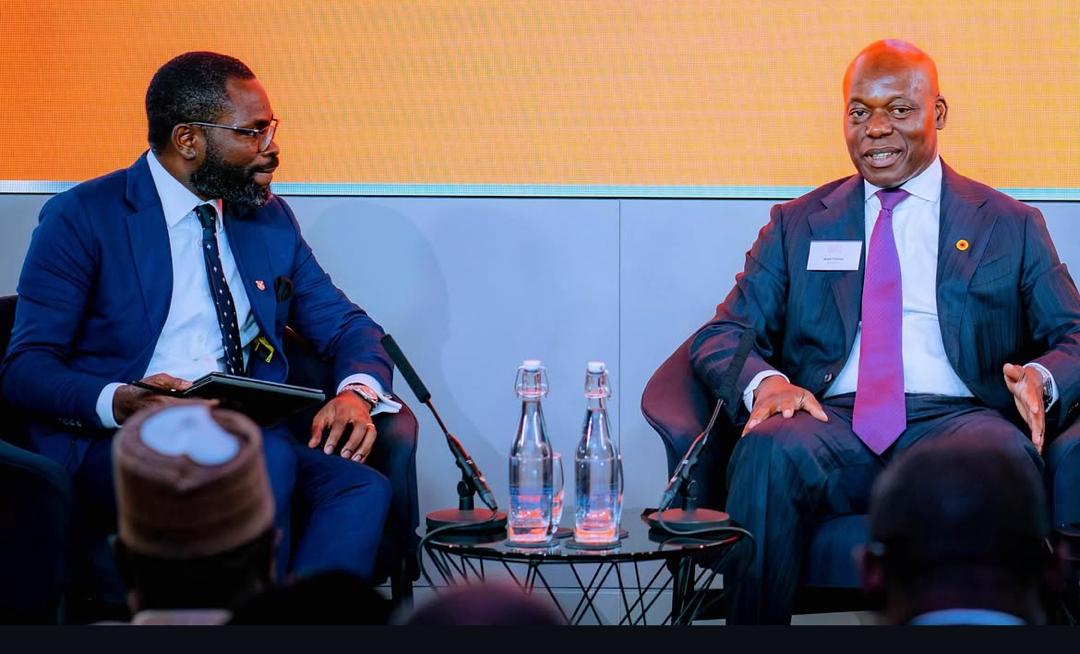
The Oando chief says transparency and stronger institutions are essential for African businesses seeking long-term international capital
Economy
Governor Dauda Lawal Join VP Shettima’s Delegation to Benin Republic, Seeks Industrial Model to Boost Zamfara’s Agric Zones

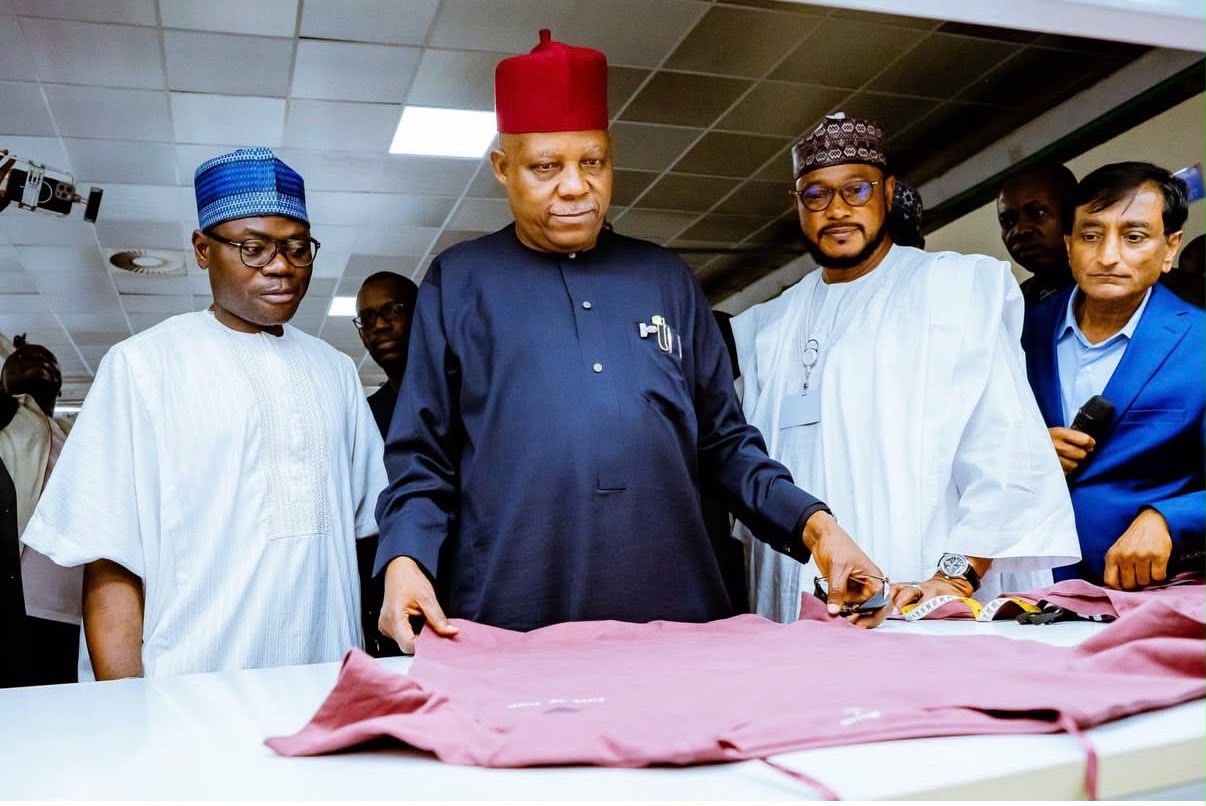
Zamfara State Governor Dauda Lawal has described the Glo-Djigbé Industrial Zone (GDIZ) as a practical blueprint for transforming Zamfara state’s agricultural sector, as he joined Vice President of Nigeria, Senator Kashim Shettima and five other governors on a working visit to the Benin Republic industrial hub on Friday.
The delegation toured the 1,640-hectare public-private industrial platform, inspecting integrated textile and agro-processing facilities where locally produced cotton is converted into yarn, fabric and finished garments while cashew and soybean are processed for domestic and export markets. GDIZ, developed by the Beninese government and ARISE Integrated Industrial Platforms, has created more than 25,000 jobs since production began in 2021.
For Governor Lawal, who presides over an agrarian state with vast arable land and a strong comparative advantage in crop production, the visit presented an opportunity to draw direct lessons for Zamfara’s agricultural transformation agenda.
“Zamfara holds a strong comparative advantage in agriculture. We grow all crops in the state, we are not limited to soybeans. We have the land and it is fertile,” Governor Lawal had told global investors at the Africa Investment Forum in Morocco last November, where he signed a strategic Memorandum of Understanding with the Ministry of Finance Incorporated (MOFI) to drive large-scale agricultural transformation under the INTEGRANIUM Initiative.
The GDIZ visit is aimed at strengthening the implementation of Nigeria’s Special Agro-Industrial Processing Zones Programme, drawing practical lessons from Benin’s approach to agricultural value addition, industrial infrastructure, investment mobilisation and export-oriented production. Particular attention was given to the textile park’s integrated production system covering cotton spinning, weaving, fabric processing and garment manufacturing. Governor Lawal believes that Zamfara State can benefit from the $370 billion worth of global cotton valuation by ensuring Zamfara grows more cotton and can also lead the charge by reviving moribund textile manufacturing hubs and value chain which could generate millions of jobs, expand non-oil exports and stimulate economic activities.
Governor Lawal’s participation in the delegation aligns with Zamfara’s recently launched 10-year Development Plan (2025–2034), which envisions the state becoming “a benchmark for transformative economic growth, not merely for Nigeria, but the continent of Africa”. The plan prioritises maximising Zamfara’s agricultural and natural resource strengths through partnerships, mechanised farming, agro-processing and value chains to create jobs, improve food security and reduce poverty-driven insecurity.
Governor Lawal was also in company of other state Governors like; Hope Uzodimma (Imo), Caleb Mutfwang (Plateau), AbdulRahman AbdulRazaq (Kwara), Dikko Radda (Katsina), and Umar Namadi (Jigawa). The visit is expected to inform the development of garment-training facilities and dedicated processing infrastructure near agricultural production communities across Nigeria.

-
Politics2 years ago
13 Ondo Assembly Members Disown Endorsement of Aiyedatiwa
-
Politics2 years ago
APC Group, Ondo Govt, Quarrel Over Money for Endorsement
-

 Trending News5 years ago
Stop unsavoury, inciting statements – DSS warns
-

 Others5 years ago
Adron Homes Celebrates 10 Years Of Housing Excellence
-

 Humanity5 years ago
President Buhari Commiserates With Ambassador Maureen Tamuno Over The Loss Of Her Father
-

 Others7 years ago
EX- CUSTOMS BOSS, IBRAHIM MERA’S DWINDLING FAME
-

 Business2 years ago
Bigi Carbonated Soft Drinks Treats 40 Consumers to an Epic Easter Movie Hangout
-

 Business2 years ago
Wema Bank Shines at Global SME Finance Forum Conference Awards 2024 …Awarded: • SME Financier of the Year (Africa) • Platinum Award for Best Financier for Women Entrepreneurs (Africa)