
Opinion
Three Years of President Bola Ahmed Tinubu: Reform, Progress and Work in Progress

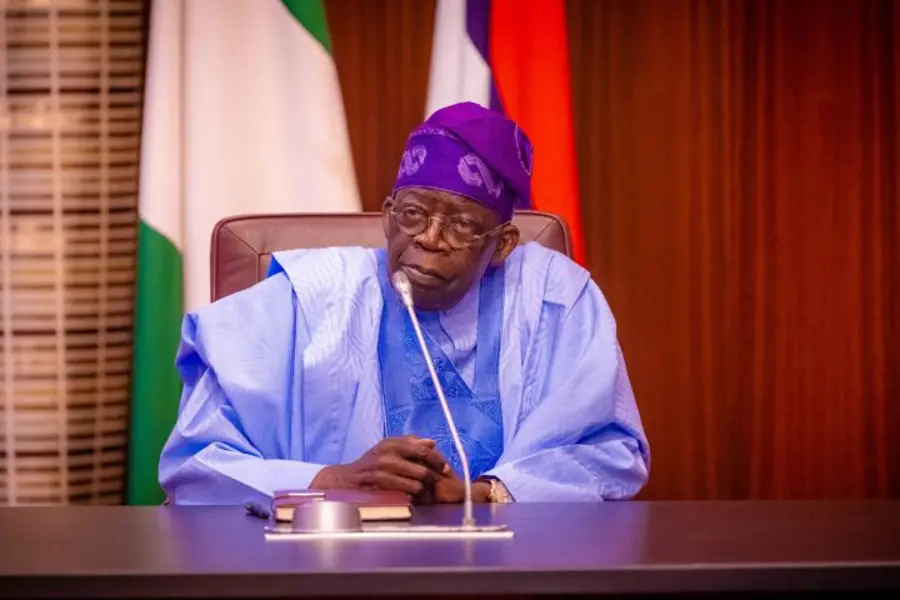
Tinubu economic reform gains: Nigeria records progress in fiscal, infrastructure and energy reforms, with inflation and insecurity still challenging
Reform, Renewal and the Repositioning of Nigeria (2023–2026)
Also read: Chief Abiola Ogundokun Visits President-Elect, Bola Ahmed Tinubu

INTRODUCTION
On May 29, 2023, Nigerians entrusted the leadership of the nation to President Bola Ahmed Tinubu at one of the most difficult periods in Nigeria’s modern economic history.
The country faced a crippling fuel subsidy regime, mounting debt obligations, a fragmented foreign exchange market, weak investor confidence, insecurity, deteriorating infrastructure, declining industrial productivity, inflationary pressure, and severe strain on public finances.
The administration inherited an economy many analysts described as structurally weak and fiscally distressed.
Foreign exchange obligations had accumulated into billions of dollars. Fuel subsidy payments had become unsustainable. NNPCL remittances into the Federation Account had weakened significantly. States struggled financially. Local governments had little developmental impact at the grassroots. Several sectors of the economy were surviving largely through borrowing and unsustainable government intervention.
Under previous administrations, many states struggled repeatedly to pay salaries. During the Jonathan administration, over twenty-seven states reportedly faced severe salary payment challenges. Under former President Muhammadu Buhari, bailout interventions became necessary for several states, while Ways and Means financing expanded significantly as government increasingly relied on Central Bank financing to sustain the economy.
At one point, debt servicing reportedly consumed almost all federal revenues, while the country borrowed heavily to sustain fuel subsidies and recurrent obligations.
Nigeria was also operating a multiple exchange-rate system widely criticised as vulnerable to corruption, arbitrage, leakages, and unfair access to foreign exchange.
Crude oil production faced serious challenges, oil theft expanded, pipelines deteriorated, and even future crude production was reportedly committed in advance under forward-sale arrangements.
From his very first day in office, President Bola Ahmed Tinubu signalled that difficult decisions would be required to stop what many viewed as national economic bleeding.
His declaration that “fuel subsidy is gone” immediately defined the tone of an administration prepared to undertake painful but structural reforms rather than continue unsustainable economic practices.
Many observers believe the President faced two choices: either continue the old system and join the cycle of unsustainable spending, or confront the structural distortions directly.
The administration chose the more difficult path.
Three years later, Nigeria still faces major economic and security pressures, but many Nigerians, investors, development institutions, and private sector stakeholders believe the country is undergoing one of the boldest economic and institutional reform programmes since the return to democracy in 1999.
This assessment examines the administration under three broad categories:
THE BEST
Areas where reforms have produced the strongest visible structural impact.
BETTER
Areas showing major progress and positive institutional direction.
GOOD / WORK IN PROGRESS
Areas where reforms are ongoing but where Nigerians still expect deeper results and broader national impact.
THE BEST
1. Fiscal Reforms & Financial Restructuring
One of the biggest structural reforms under the administration has been the removal of fuel subsidies and the strengthening of public revenues.
The reforms significantly increased allocations to states and local governments through FAAC.
In May 2023, the final FAAC allocation under the Buhari administration was approximately ₦600 billion.
By June 2023, the first full month under President Tinubu, approximately ₦1.9 trillion reportedly entered the Federation Account, with about ₦1.2 trillion shared among the three tiers of government while substantial reserves were retained.
Average Monthly Gross FAAC Allocation to States
2023 — ₦379 billionQ1 2026 — ₦816.41 billionIncrease — +115.4%
Average allocations to the 774 local governments reportedly now exceed ₦400–₦500 billion monthly in several periods.
As a result:
States now execute larger infrastructure projects
Salary payments improved significantly
Local projects increased
Social intervention programmes expanded
Dependence on salary bailout funds reduced substantially
Today, many states are so financially stronger that several are competing to:
Build airports
Establish state airlines
Expand transportation systems
Develop industrial corridors
Upgrade healthcare and education infrastructure
Nigeria is gradually attempting to build its economy from the bottom up.
However, stronger transparency and accountability are still required.
2. Electricity Autonomy & Energy Reforms
One of the most historic constitutional reforms under the administration has been electricity autonomy for states.
Before President Tinubu, states could not independently generate, license, regulate, and fully manage electricity markets within their territories.
Today, every state now possesses greater constitutional authority to:
License electricity operators
Generate power
Regulate electricity markets
Build state electricity systems
As a result, many states are now competing among themselves to become the first to achieve stable 24-hour electricity supply.
This reform fundamentally changed electricity from being almost exclusively controlled at the federal level to becoming a shared national development responsibility.
The administration also intensified:
Rural electrification
Renewable energy projects
Transmission improvements
Metering reforms
Independent power investments
The CNG initiative also emerged as a major transportation and energy reform designed to reduce fuel costs and improve affordability.
Private sector participation expanded significantly through:
Dangote Group
BUA investments
Independent energy investors
Aliko Dangote also announced long-term electricity ambitions capable of contributing up to 20,000MW over time.
3. Oil, Gas & Refining Transformation
The oil and gas sector witnessed major restructuring.
Nigeria gradually moved away from heavy dependence on imported refined petroleum products toward becoming an emerging exporter through:
Dangote Refinery
Refinery rehabilitation
Increased local refining capacity
One of the most strategic interventions was allowing local crude transactions in naira for domestic refining support.
This policy helped reduce pressure on foreign exchange demand while supporting local refining operations.
Pipeline restoration improved significantly.
Oil theft reportedly reduced sharply through:
Enhanced surveillance
Metering reforms
Security coordination
Crude Oil Production
2023 — 1.19 million bpd2026 — 1.49 million bpdIncrease — +25%
NNPCL reforms under Mr. Bayo Ojulari introduced stronger professionalism and operational restructuring.
4. Infrastructure Revolution & Railway Expansion
The administration embarked on some of the largest infrastructure projects in modern Nigerian history.
Signature Projects
Lagos-Calabar Coastal Highway
Sokoto-Badagry Super Highway
Railway modernisation projects
Federal highways and bridges
Both mega highways include future rail infrastructure integration.
Expected Benefits
Tourism growth
Coastal industrialisation
Agricultural logistics
Interstate commerce
Housing expansion
Marine economy growth
Regional integration
Between 16 and 18 states are expected to benefit directly from the Sokoto-Badagry corridor.
The administration also granted railway autonomy to states.
Before these reforms, rail transportation remained largely under exclusive federal control.
Today, states can:
Develop rail systems
Partner with investors
Expand transportation infrastructure
Lagos State is already taking major advantage of this reform through rail expansion.
Nigeria’s long-term railway master plan is expected to significantly reduce:
Transportation costs
Human movement costs
Logistics expenses
Cargo movement challenges
5. Education Revolution & Human Capital Development
One of the administration’s most transformative interventions has been in education.
Key Programmes
NELFUND
3MTT
TVET
DL4ALL
The student loan programme is increasingly viewed as a major game changer.
Many Nigerians now believe that any child can begin and complete tertiary education regardless of financial background.
JAMB applications reportedly rose significantly partly due to expanded access to educational financing.
Students in several programmes also receive monthly support stipends.
In addition:
Federal technical and vocational schools became tuition-free
Students receive upkeep support
Technical education expanded nationwide
Every state now has expanded technical and vocational opportunities through federal government interventions
The administration’s broader objective appears aimed at moving Nigeria from a purely consumption-driven economy toward industrialisation and skills-based production.
Another major achievement is industrial peace within tertiary education.
Unlike previous years marked by prolonged ASUU strikes, students who entered universities in 2023 are progressing toward graduation without nationwide disruptions.
6. Local Government Autonomy & Regional Development
One of the most historic governance reforms under the administration was direct allocation to local governments.
This reform has the potential to:
Deepen grassroots governance
Improve accountability
Expand rural infrastructure
Strengthen the micro economy
The six regional development commissions also represent deeper decentralisation of development planning.
Each geopolitical region now possesses stronger institutional platforms to coordinate:
Regional infrastructure
Economic planning
Development priorities
Strategic investments
7. Banking, Capital Market & Financial Stability
The administration introduced major banking recapitalisation reforms through the Central Bank of Nigeria.
The reforms strengthened:
Bank balance sheets
Investor confidence
Industrial financing capacity
Long-term lending potential
Nigerian Stock Market Growth
May 2023 — 52,751.432026 — 249,738.84Growth — +373%
Nigeria’s stock market became one of the strongest-performing markets globally during the period.
Foreign Reserves
2023 — Approximately $3–4 billion under severe pressure levels2026 — Approximately $48–49 billion
The administration also reportedly:
Cleared major FX backlogs
Stabilised the CBN
Reduced direct monetary financing
Cleared IMF obligations
Nigerians can increasingly use naira bank cards internationally in selected countries without relying heavily on cash dollars or pounds.
BETTER
8. Telecommunications & Digital Economy
The digital economy received major policy attention.
Major Achievements
National fibre optic backbone expansion
Rural telecom infrastructure growth
Data hosting improvements
Broadband expansion
Increased digital connectivity
Nigeria is gradually positioning itself as a major digital economy hub in Africa.
9. Aviation & Ease of Doing Business
Before 2023, several foreign airlines threatened to reduce operations due to trapped funds.
The administration cleared major obligations and restored confidence.
Aviation Improvements
More direct international flights
Aircraft leasing partnerships
Aviation maintenance investments
Airport automation reforms
Nigeria’s aviation industry is now among the fastest-growing aviation markets globally.
Ease of Doing Business Reforms
Visa-on-arrival systems
Contactless passport processing
Airport automation
Cross-border banking expansion
10. Economic Diversification
Nigeria is gradually moving away from dependence on a mono-product oil economy.
Growth sectors increasingly include:
Agriculture
Mining
Telecommunications
Manufacturing
Housing
Technology
Marine economy
Aviation
Logistics
Mining reforms attracted increasing international attention.
The administration maintains that reforms are opening doors for private enterprise to help drive Nigeria toward a one-trillion-dollar economy.
Over two million Nigerians are reportedly working directly or indirectly across federal, state, and local government infrastructure and development projects nationwide.
GOOD / WORK IN PROGRESS
11. Inflation & Cost of Living
Despite reforms, inflation and purchasing power remain major concerns.
Inflation Rate
2023 — 20.06%2026 — 15.69%
Though inflation moderation is positive, many Nigerians still face:
High food prices
Transportation costs
Energy costs
Reduced purchasing power
However, food inflation has moderated compared to peak crisis periods.
The reforms remain painful for many households.
Citizens must also recognise that stable electricity, telecommunications, and modern infrastructure require realistic pricing and sustainable investment.
12. Security Challenges
Security investments increased substantially through:
Military hardware
Surveillance systems
Intelligence coordination
Forest guards recruitment
However:
Banditry
Kidnapping
Terrorism
Organised crime
remain major national concerns.
One of the most significant security improvements recorded during the period occurred in Nigeria’s South-East region.
When President Tinubu assumed office in 2023, many parts of the region were heavily affected by insecurity, armed separatist violence, illegal militia activities, and the enforcement of sit-at-home orders every Monday.
In several areas, criminal elements and armed groups had created severe fear within communities, disrupted businesses, paralysed economic activities, and challenged state authority.
However, through increased cooperation between the Federal Government, security agencies, and South-East governors, major security operations were intensified across the region.
Several militia camps were dismantled, many suspects were arrested and prosecuted, while enforcement of illegal sit-at-home orders weakened significantly.
State governments in the region also took firmer positions by insisting that:
Markets must open
Citizens must return to work
Economic activities must continue normally
As a result, the 2025 festive season in many South-East states was widely regarded by residents and travellers as one of the safest and most economically active periods in recent years.
Many Nigerians travelled across the region by road during the Christmas and New Year celebrations with significantly improved confidence compared to previous years.
Important National Reflection
Insecurity must never be tribalised, sectionalised, politicised, or trivialised.
Nigeria’s enemies are common enemies.
Those who benefited from:
Subsidy scams
Oil theft
Foreign exchange arbitrage
Economic sabotage
Corruption networks
may naturally resist reforms threatening entrenched interests.
The administration itself survived intense political and economic pressures during the reform process.
Many Nigerians believe there is still coordinated resistance against ongoing reforms.
Yet there remains belief that the country can overcome these challenges.
RECOMMENDATIONS
To strengthen ongoing reforms and deepen national impact, the following recommendations deserve serious consideration:
1. Strengthen Local Government Transparency
Quarterly financial reports should be mandatory for all local governments
Mid-year and annual performance reports should be publicly accessible
Quarterly town hall meetings should become compulsory
Citizens should have direct access to budgets and procurement details
Monitoring and accountability systems should be strengthened
2. Expand Informal Sector Enumeration
Claims that Nigeria has over 140 million unemployed people may not fully capture the realities of Nigeria’s large informal economy.
Millions of Nigerians operate daily within informal and self-employed sectors without formal CAC registration.
These include:
Vulcanisers
Tailors
Mechanics
Food vendors
Carpenters
Electricians
Barbers
Hairdressers
Plumbers
Fishermen
Meat and fish sellers
Market traders
Kiosk operators
Phone accessory sellers
Business centre operators
Informal transport workers
Security guards in estates and private homes
Gatemen
Street and traffic vendors
Many of these citizens earn daily income and support families despite not appearing within formal employment databases.
Therefore:
Every local government should establish local economic and statistical enumeration units
Informal businesses should be properly documented
Local economic data should be updated regularly
Grassroots business activities should be integrated into national economic planning
A stronger grassroots statistical framework will improve:
Economic planning
Tax administration
SME support
Credit access
Skills development
Social intervention targeting
3. Security & Community Intelligence
While awaiting constitutional approval for state policing:
Governors should strengthen Ministries of Security
Competent Security Commissioners should be appointed
Community intelligence systems should expand
Citizens must cooperate more closely with security agencies
4. Grassroots Economic Inclusion
Local contracts should primarily benefit qualified indigenous residents of local governments.
The objective should be to ensure that:
More money circulates within communities
Local businesses grow
Youth employment expands
Micro economies become stronger
The people must directly see and feel development.
FINALLY
Three years into office, President Bola Ahmed Tinubu’s administration presents a record defined by:
Fiscal restructuring
Banking reforms
Infrastructure expansion
Energy reforms
Educational interventions
Housing expansion
Agricultural modernisation
Technology development
Capital market growth
Telecommunications expansion
Security reforms
The administration maintains that these reforms are opening doors for private enterprise to thrive while positioning Nigeria toward long-term economic transformation.
Nigeria is not yet where it desires to be.
But many Nigerians believe the country is far from where it started the journey in 2023.
There is growing belief that there is now visible light at the end of the tunnel.
Ultimately, history will judge the Tinubu years not merely by reforms announced or projects initiated, but by whether these reforms eventually translate into:
Better living standards
Lower poverty levels
Stronger institutions
Greater national unity
Sustainable prosperity
Increased employment
Social stability
The journey remains difficult, but the nation must continue navigating carefully, patiently, and collectively toward stability and prosperity.
Also read: Tinubu’s Aide Sunday Dare to Deliver TheGazelleNews’ Anniversary Lecture
Let us keep hope alive and navigate the rivers safely.


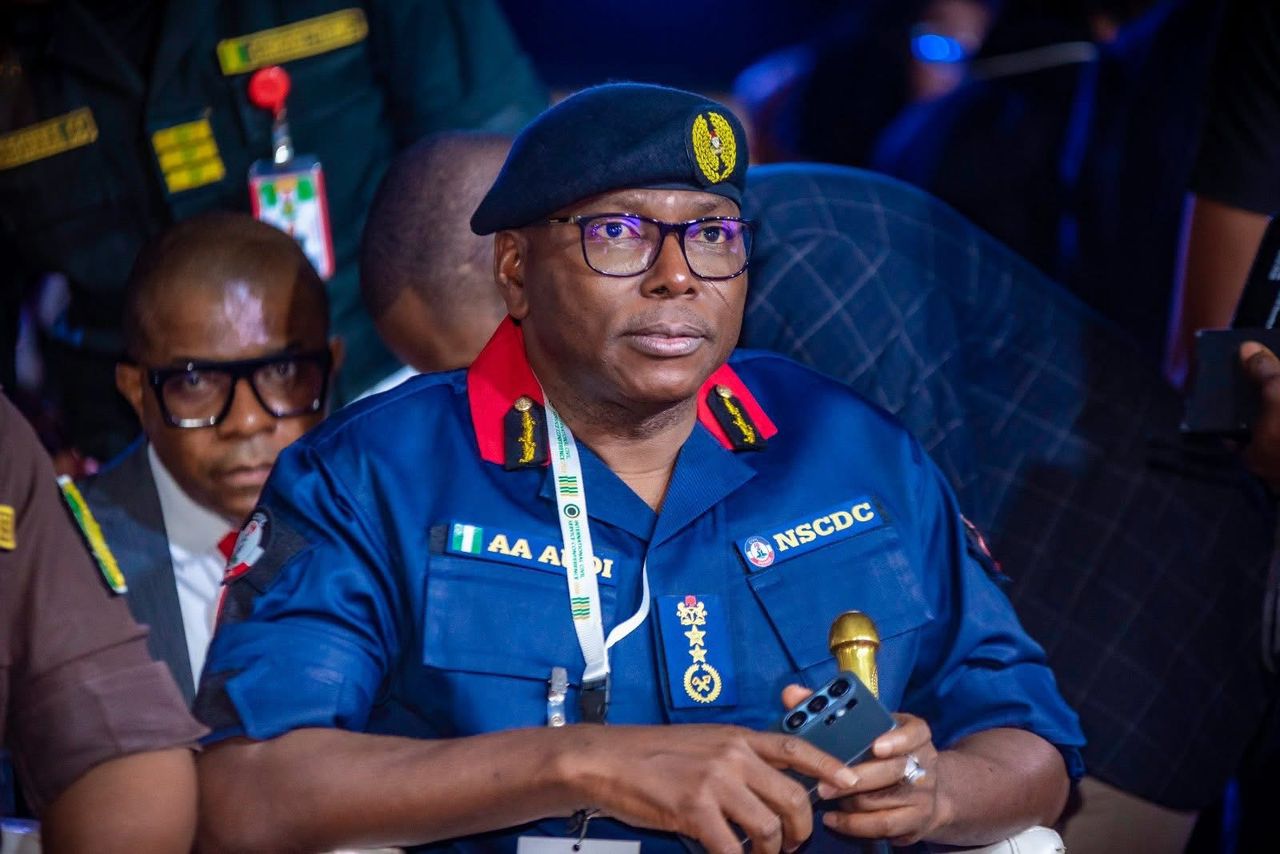
NSCDC Economic Defence Reform under Audi strengthens Nigeria’s critical infrastructure protection and boosts Renewed Hope economic security strategy

Opinion
Re: Hamzat and the Future of Lagos: A Response to Bolaji Sanusi’s Tirade Against Sanwo-Olu, Justice Forum and Faleke

By Animashaun Rilwan
The article titled “Hamzat and the Future of Lagos” by former Managing Director of the Lagos State Signage and Advertisement Agency (LASAA), Barrister Bolaji Sanusi, reveals the mindset of a man seemingly desperate for attention and convinced that such attention can only be achieved by attacking individuals and institutions he believes are responsible for his unrealised political ambitions.
Sanusi’s direct assault on structures and personalities from which he has benefited in the past—and from which he still appears eager to benefit if given the opportunity—offers a revealing insight into the mentality of entitlement. His article reeks of vengeance and vindictiveness against perceived political adversaries whom he blames for his personal political setbacks.
To better understand the motivation behind the article, it is important to examine who Bolaji Sanusi is. A journalist by training, he became known through his columns in the now-defunct National Life newspaper and later The Nation. Through his media engagements, he became closely associated with the political media machinery of President Bola Ahmed Tinubu and subsequently enjoyed the benefits of that political relationship.
That relationship culminated in his appointment as Managing Director of LASAA in 2016 by the Lagos State Government—the same government and political establishment he now seeks to disparage.
One is therefore compelled to ask: why is Sanusi attacking Governor Babajide Sanwo-Olu?
It is on record that the Sanwo-Olu administration has delivered significant infrastructural and developmental projects across various sectors of Lagos State since assuming office. Is Sanusi unaware of the Blue and Red Rail Lines that have transformed public transportation in Lagos? Is he oblivious to the extensive road infrastructure projects executed across the state? Has he forgotten the completion of the Bola Ahmed Tinubu Administrative Centre in Alausa? Or the Tolu School Complex, reputed to be the largest school complex in West Africa?
Certainly, Barrister Sanusi is aware of these achievements. However, he has chosen to ignore them in pursuit of a personal vendetta, apparently fuelled by his inability to secure a place in Governor Sanwo-Olu’s cabinet after the 2023 elections.
Equally puzzling is his attack on Rt. Hon. James Abiodun Faleke.
As a lawyer and former editor, Barrister Sanusi should appreciate that certain allegations and insinuations should not be casually made against individuals without evidence. Public commentary should be guided by facts, not emotions.
It is no secret that Sanusi has not forgiven Faleke, whom he reportedly blames for his inability to secure the APC chairmanship ticket in Ojokoro LCDA. That grievance appears to have found expression in his latest article.
Sanusi accuses Faleke of imposing candidates and promoting only his loyalists. Imposed who and where? Faleke only gets involved in settling disputes and working with the party leadership to get to a compromise solution, if and when possible. It is sad that Sanusi conveniently ignores the fact that Faleke has never operated outside the established structures of the party. Decisions attributed to him are made within the framework of consultations with the leadership of the APC in Lagos State.
Indeed, Faleke’s political resourcefulness, commitment to party discipline, and ability to build consensus were among the reasons for his recent elevation into the highly respected Governance Advisory Council (GAC). Perhaps Barrister Sanusi overlooked that fact.
It is also absurd and intellectually shallow to blame Faleke for President Tinubu’s loss in Ikeja during the 2023 presidential election. The voting pattern witnessed in that election was neither peculiar to Ikeja nor attributable to any one individual. The party leadership has a clear understanding of what transpired during that election cycle and has since taken note of the relevant lessons.
The question is simple: did that voting pattern occur only in Ikeja? The answer is no. We understand the narrative being pushed and where it is coming from. At the appropriate time, those issues will be adequately addressed.
Reports from Ojokoro LCDA indicate that until the local government election period, Sanusi was largely absent from grassroots politics in Ifako-Ijaiye and Ojokoro. Many local stakeholders reportedly did not know him as an active participant in the political affairs of the area. Rather, he was reputed for boasting about his connections at the highest levels of the political hierarchy and his ability to secure outcomes from the top.
When the time came for the local government elections, party leaders in the council collectively settled on their preferred candidate. Why Sanusi would now blame Faleke for a decision jointly taken by party leaders in his own local government remains difficult to comprehend.
His hostility towards the Justice Forum is equally understandable. He served as a prominent media figure for a faction of the Mandate Movement and, has chosen to become the mouthpiece of a very small, militant arm of the mandate group. The truth is that both groups are working together in most Local governments across the state in the larger interest of the party.
It is important to state that the leadership of the APC in Lagos State is currently focused on rebuilding trust, strengthening internal cohesion, and restoring confidence among party members. These efforts involve consultations with respected leaders and elders both within and outside the Governance Advisory Council. Encouragingly, those efforts are already yielding positive results.
Rather than attempting to undermine these initiatives, Barrister Sanusi should join hands with party leaders in strengthening the unity and progress of the APC.
His allegations against the Justice Forum also collapse under the weight of facts.
Has Sanusi forgotten that the APC House of Representatives ticket in Ojo Federal Constituency was won by a member of the Mandate Movement? Ojo happens to be the home local government of Pastor Cornelius Ojelabi, whom many identify with the Justice Forum. If the Justice Forum truly manipulates outcomes as alleged, why was a Mandate Movement member allowed to emerge at the expense of the aspirant from the group?
Similarly, in Alimosho, the candidate perceived to enjoy the support of the Justice Forum and who was also the incumbent was denied the ticket in favour of another aspirant from a different political tendency. How then does one reconcile that with allegations of systemic injustice by the Justice Forum?
In Agege, the candidate that won APC House of Representatives ticket was the sole aspirant. It was Hon Faleke and others who worked hard to achieve this consensus. The candidate is of Mandate caucus. This is the story across the state.
The facts simply do not support his claims.
At a time when the party is working hard to consolidate unity and prepare for future electoral contests, divisive commentaries such as this do little to advance the collective interest of progressive politics in Lagos State.
We therefore call on Barrister Bolaji Sanusi to channel his considerable energy, intellect and communication skills towards promoting unity, cohesion and constructive engagement within the party rather than deepening divisions through personal grievances disguised as political analysis.
Attention is not earned through bitterness. Leadership is not demonstrated through division. If the goal is a stronger APC and a better Lagos, then all stakeholders must rise above personal disappointments and work together in the interest of the party and the state.
Animashaun Rilwan, a public affairs analyst, writes in from Lagos
-
Politics2 years ago
13 Ondo Assembly Members Disown Endorsement of Aiyedatiwa
-
Politics2 years ago
APC Group, Ondo Govt, Quarrel Over Money for Endorsement
-

 Trending News5 years ago
Stop unsavoury, inciting statements – DSS warns
-

 Others4 years ago
Adron Homes Celebrates 10 Years Of Housing Excellence
-

 Humanity4 years ago
President Buhari Commiserates With Ambassador Maureen Tamuno Over The Loss Of Her Father
-

 Others7 years ago
EX- CUSTOMS BOSS, IBRAHIM MERA’S DWINDLING FAME
-

 Business2 years ago
Bigi Carbonated Soft Drinks Treats 40 Consumers to an Epic Easter Movie Hangout
-

 Business2 years ago
Wema Bank Shines at Global SME Finance Forum Conference Awards 2024 …Awarded: • SME Financier of the Year (Africa) • Platinum Award for Best Financier for Women Entrepreneurs (Africa)