
Economy
Nigeria’s Forex Market Inflows fall Sharply Amid Rising Foreign Dependence

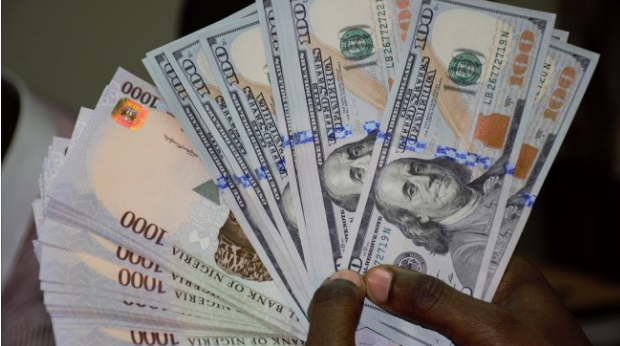
Nigeria forex market inflows 2025 dropped 28.1% in June, exposing rising dependence on foreign investors as local dollar sources like CBN and exporters pull back

Nigeria’s official foreign exchange market recorded a sharp drop in dollar inflows in June 2025, with total supply falling to \$4.84 billion—a 28.1 per cent decline from May’s \$6.74 billion.
Also read: Black Market Dollar To Naira Exchange Rate Today 6th December 2021
Data from FMDQ, analysed by Cordros Securities, shows that the reduction was driven by falling local contributions. Inflows from domestic sources dropped by 61.4 per cent to \$2.11 billion, the lowest in four months, now accounting for just 43.7 per cent of total FX inflows.
Individual contributions fell steeply by 91.6 per cent, while the Central Bank of Nigeria (CBN) reduced its supply by 77.2 per cent. Exporters and importers also pulled back significantly, with a 74.4 per cent drop in their inflows. Non-bank corporate contributions slipped by 17.6 per cent.
Meanwhile, foreign sources of FX increased by 116.8 per cent to \$2.73 billion in June, the highest in more than two years. Analysts attribute this rise to renewed confidence among foreign portfolio investors (FPIs), driven by high interest rates and ongoing foreign exchange reforms.
“The sharp drop in local contributions, especially from the CBN and exporters, suggests that confidence among domestic actors is fragile,” said David Adonri, Vice-Chairman of Highcap Securities. “The rise in foreign inflows is mainly ‘hot money,’ which can reverse quickly.”
Since assuming office, CBN Governor Olayemi Cardoso has reduced direct intervention in the forex market, favouring a market-driven exchange rate. However, the latest data shows that local players are yet to compensate for the central bank’s withdrawal.
Johnson Chukwu, Founder of Cowry Asset Management, echoed concerns about overreliance on foreign funds.
“If foreign investors perceive any risk, whether global or domestic, they will exit, putting renewed pressure on the naira,” he said.
Cordros Securities expects foreign portfolio inflows to remain strong in the near term due to attractive OMO auction rates and increased investor confidence. Still, they warned that global uncertainty or stalled reforms could jeopardise this trend.
“The lingering global trade uncertainties remain a downside risk to inflows from foreign counterparts,” their report stated.
Also read: Dollar To Naira Exchange Rate Today 17 November 2021
Experts say unless Nigeria strengthens domestic FX sources such as non-oil exports and diaspora remittances, the current forex strategy could prove unsustainable.





-
Politics3 years ago
13 Ondo Assembly Members Disown Endorsement of Aiyedatiwa
-
Politics3 years ago
APC Group, Ondo Govt, Quarrel Over Money for Endorsement
-

 Trending News5 years ago
Stop unsavoury, inciting statements – DSS warns
-

 Others5 years ago
Adron Homes Celebrates 10 Years Of Housing Excellence
-

 Humanity5 years ago
President Buhari Commiserates With Ambassador Maureen Tamuno Over The Loss Of Her Father
-

 Others7 years ago
EX- CUSTOMS BOSS, IBRAHIM MERA’S DWINDLING FAME
-

 Business2 years ago
Bigi Carbonated Soft Drinks Treats 40 Consumers to an Epic Easter Movie Hangout
-

 Business2 years ago
Wema Bank Shines at Global SME Finance Forum Conference Awards 2024 …Awarded: • SME Financier of the Year (Africa) • Platinum Award for Best Financier for Women Entrepreneurs (Africa)